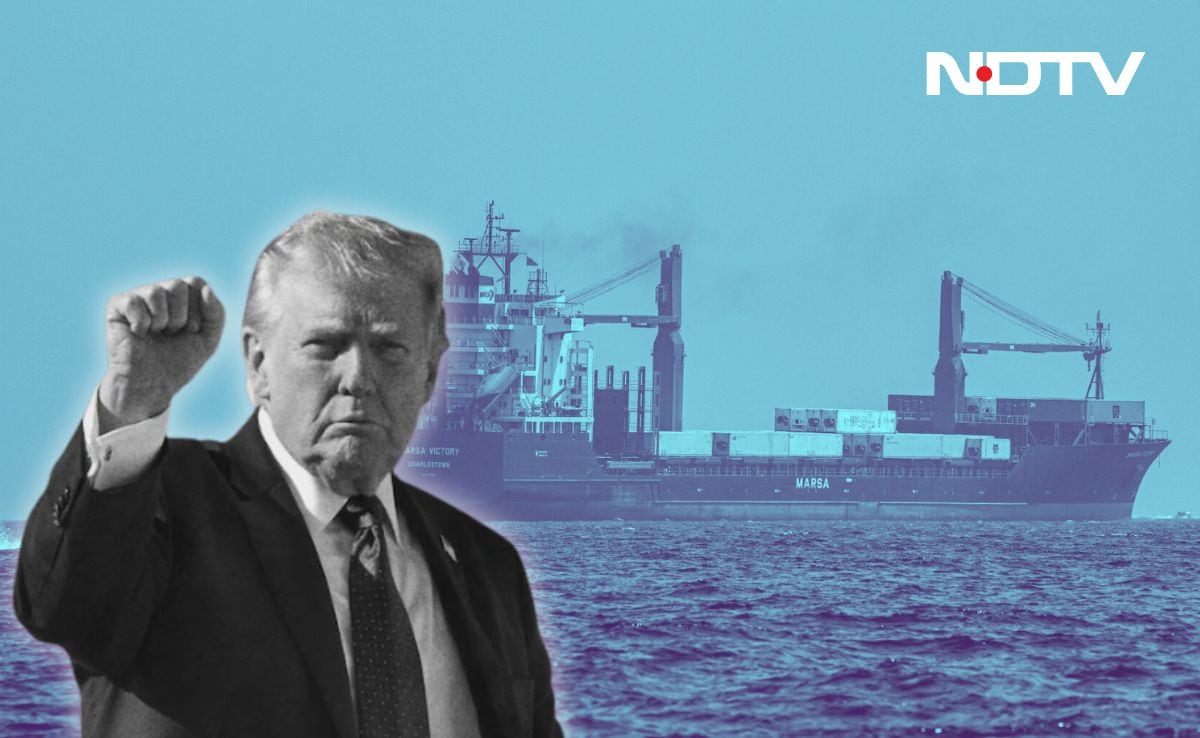
The proposal arrived not as a formal treaty, but as a characteristic burst of transactional theater. On April 8, 2026, President Trump signaled a willingness to entertain a "joint venture" with Tehran to charge tolls on every vessel transiting the Strait of Hormuz. The baseline figure floating through the halls of the White House and the Iranian Supreme National Security Council is $1 per barrel of oil, payable in cryptocurrency to evade the very sanctions the United States spent decades refining. By framing a blatant violation of international maritime law as a "beautiful" business deal, the administration is effectively auctioning off the 17th-century principle of Mare Liberum—the free sea—in exchange for a fragile ceasefire.
This isn't just another tariff. It is a fundamental rewriting of the global energy map. The Strait of Hormuz is the world’s most critical chokepoint, a narrow 21-mile neck of water through which roughly 20% of the world's total oil consumption flows daily. For a century, the United States Navy has served as the ultimate guarantor of this passage, ensuring that no state could tax the global commons. Now, the guarantor is considering becoming the collector. In similar updates, we also covered: The Breath Under the Floorboards.
The Mechanics of the Toll Booth
The logistics of this "joint venture" are as modern as they are predatory. Under the reported framework, Iran’s Islamic Revolutionary Guard Corps (IRGC) would transition from a blockading force to a digital customs agency. Tankers would be required to submit cargo manifests via encrypted email before entry. Once the assessment is complete, the vessel has a window of only a few seconds to transfer the toll in Bitcoin or other digital assets.
This speed isn't about efficiency; it is about obfuscation. By using cryptocurrency, the "joint venture" bypasses the SWIFT banking system, making the revenue stream nearly impossible to seize or track for the purposes of future legal judgments. While the White House claims this is a way to "secure" the waterway from "lots of other people," the reality is a co-managed protection racket. If a ship refuses to pay, the threat is no longer a legal fine, but a missile. The Economist has provided coverage on this fascinating issue in great detail.
The End of UNCLOS and the Domino Effect
The legal fallout from this move would be catastrophic for global trade. Since 1994, the United Nations Convention on the Law of the Sea (UNCLOS) has codified the right of "transit passage." This ensures that ships can move through international straits without being hampered or taxed by the bordering states. By greenlighting a toll, the U.S. effectively tears up UNCLOS, signaling to every other littoral state that their local chokepoints are now revenue opportunities.
If Iran and the U.S. can tax the Strait of Hormuz, what stops Egypt from tripling Suez Canal fees overnight? What prevents Indonesia, Malaysia, and Singapore from slapping a "security surcharge" on the Strait of Malacca, which sees even higher volumes of cargo than Hormuz? The precedent established here transforms global shipping from a predictable utility into a series of localized shakedowns.
The Economic Math of a Ceasefire
From a purely transactional standpoint, the administration views the toll as a small price to pay to stop a hot war. Since hostilities began on February 28, 2026, oil prices have sat stubbornly above $112 per barrel. The global economy is choking on energy costs and fertilizer prices are skyrocketing. A $1-per-barrel toll is, in the President’s view, a negligible "fee" compared to the $30 premium added by war risk.
However, the "joint venture" isn't just about the dollar amount. It is about strategic control.
- Verification: Iran gains the right to inspect any vessel to "ensure weapons aren't being transferred."
- Leverage: Tehran can effectively "turn off" the global economy by simply pausing the toll-processing server.
- Funding: The revenue goes directly to the IRGC, the very entity the U.S. has labeled a foreign terrorist organization.
The Great Enrichment Paradox
While the "joint venture" covers the water, the land remains a stalemate. The administration maintains a "red line" regarding uranium enrichment, insisting that Iran must dismantle its nuclear capabilities as part of any long-term deal. But by handing Tehran a digital toll booth that generates billions in untraceable crypto, the U.S. is providing the exact liquidity Iran needs to fund its nuclear ambitions in the shadows.
We are witnessing the birth of a new geopolitical model: the Sovereign Toll-State. In this model, military force is used not to conquer territory, but to secure a percentage of global trade. The "joint venture" isn't a peace treaty; it is a revenue-sharing agreement between two enemies who have realized that taxing the rest of the world is more profitable than fighting each other.
The immediate casualty is not just the price of a gallon of gas. It is the credibility of the United States as the defender of global commerce. If the U.S. Navy becomes the "muscle" for an Iranian-managed toll booth, the era of the open ocean is over. Every nation with a narrow piece of water will be looking at the Hormuz model and wondering why they aren't getting their cut.
The Strait is no longer a highway; it is a storefront. And the world is about to find out exactly how much it costs to keep the doors open.