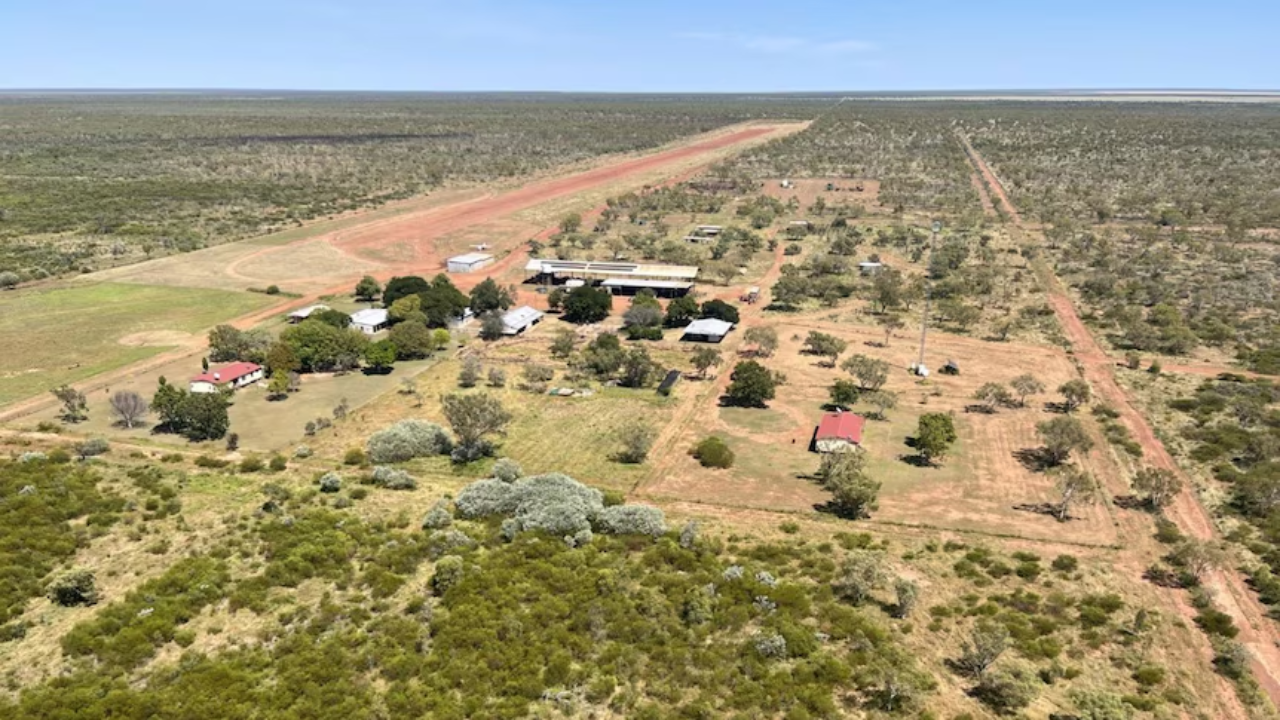
When a Sydney-based agricultural fund and a global commodities powerhouse dropped 40 million Australian dollars on Benmara Station in May 2023, they were not really buying a cattle property. They were purchasing a speculative ticket on the grand transformation of the Australian outback into a corporate carbon balance sheet. Spanning more than 450,000 hectares across the Northern Territory’s Barkly Tableland, the sprawling pastoral lease commanded a price that thoroughly detached it from conventional beef economics.
Three years later, that grand environmental thesis collided with regulatory paralysis, corporate liquidation, and a sobering market correction. Resold for 26 million Australian dollars—a stark 35 percent discount—Benmara Station stands as a monument to the perils of trading real pastoral utility for shifting bureaucratic promises. Don't miss our recent article on this related article.
The asset’s rapid depreciation lays bare a wider structural miscalculation within agricultural real estate. Institutional capital rushed into northern Australia banking on rapid regulatory transitions that never materialized, leaving behind distressed assets, broken syndicates, and a market forced to re-anchor itself in the unglamorous reality of producing beef.
The Anatomy of a Speculative Premium
To understand why a piece of remote territory could command forty million dollars and then shed fourteen million in value, one must look at how carbon credits distorted land valuations across northern Australia. Wealthcheck, an agricultural investment firm managed by Sam Mitchell, partnered with global energy trader Hartree Partners to acquire Benmara at the absolute crest of the carbon farming wave. If you want more about the background of this, Business Insider offers an informative breakdown.
At the time, the strategy appeared deceptively straightforward. The property was registered under the Clean Energy Regulator for a Human Induced Regeneration project. The mechanism was designed to allow pastoralists to generate Australian Carbon Credit Units by modifying livestock density and allowing native vegetation to recover. In theory, an institutional investor could stack revenue streams, collecting carbon offsets while maintaining a secondary cattle operation.
The math, however, relied on a frictionless regulatory timeline. Investors assumed that existing crediting methods would smoothly transition into broader, more lucrative frameworks without interruption. Instead, policy shifts froze the landscape.
The federal government pulled back support for the Human Induced Regeneration method amid widespread criticism over its actual environmental additionality. Canberra promised a replacement framework known as the Integrated Farm and Land Management method. This new system was intended to unify diverse carbon farming activities into a single, scalable compliance architecture.
The rollout stalled. Bureaucratic delays pushed expected implementation dates out by years. For corporate traders accustomed to swift liquidity, sitting on hundreds of thousands of hectares of unproductive land while waiting for government sign-off became untenable. Hartree Partners watched its regulatory horizon evaporate, Wealthcheck collapsed into liquidation, and the 40-million-dollar asset was quietly pushed onto the open market to staunch the bleeding.
When the Ledger Meets the Dirt
The collapse of Benmara’s carbon ambitions triggered a necessary reckoning for the northern pastoral sector. For years, traditional cattlemen found themselves priced out of acquisitions by corporate entities armed with green-fund capital and emissions-offset mandates. These institutional buyers could afford to overpay for land because their internal financial models treated the purchase price as a customer acquisition cost for corporate net-zero targets.
When those targets hit regulatory roadblocks, the valuation models collapsed. A pastoral property cannot sustain a forty-million-dollar valuation on beef production alone when its carrying capacity is engineered around environmental non-activity rather than maximal herd yield. Benmara’s carrying capacity sits at roughly 17,500 adult equivalent cattle. Under standard beef economics, that output cannot justify the capital expenditure required to service inflated acquisition debt, especially when interest rates climb and input costs surge.
The irony of the situation lies in what happened to the land while the corporate entities fought over compliance spreadsheets. Over the final eighteen months of the institutional holding period, the property was heavily destocked. Coinciding with favorable rainfall patterns across the Barkly region, pastures experienced a substantial recovery. Fencing infrastructure was upgraded, and reliable water points were secured.
The incoming buyer, UK-based livestock producer Shaun Davis, did not acquire a functioning carbon ecosystem. He acquired a massive, well-watered, destocked breeding factory with pristine pastures and a herd of clean-skin cattle ready for commercial exploitation. The speculative fat had been completely trimmed off the bones of the enterprise, leaving behind a traditional asset priced for its actual productive output rather than its theoretical environmental financialization.
The Lingering Fallout for Rural Markets
The correction witnessed on the Barkly Tableland signals a broader retreat of speculative capital from regional land markets. Institutional funds are discovering that outback stations are unforgiving investments when administrative approvals stall. Land is not a software platform; it cannot be pivoted overnight when regulatory code fails to compile.
Other large-scale properties that pinned their market valuations to pending carbon permits are experiencing similar downward pressure. Buyers are demanding steep risk discounts, recognizing that political whim and legislative delays can render an offset project worthless before a single credit is minted. The market is shifting away from distant portfolio managers chasing ESG metrics and returning to hands-on operators who understand grass, water, and livestock.
The twenty-six-million-dollar price tag for Benmara Station is not merely a localized bargain. It is a correction that re-establishes the baseline value of land based on what it can actually grow, rather than what an environmental spreadsheet hopes it might yield. As the dust settles over the northern pastoral leases, the rush to financialize the bush has run aground on the hard reality of government delay and the unyielding demands of working the land.