Cardboard.
That is the sound of a $148 mistake hitting the kitchen counter on a Tuesday morning in November. It is not the heavy, magnetic thud of a lacquered keepsake box, nor the crisp rustle of embossed tissue paper that usually accompanies a luxury parcel. It is a hollow, papery rattle. Meanwhile, you can find other developments here: The Quiet Floor Beneath Alphabet Shares (And Why Fear Usually Marks the Bottom).
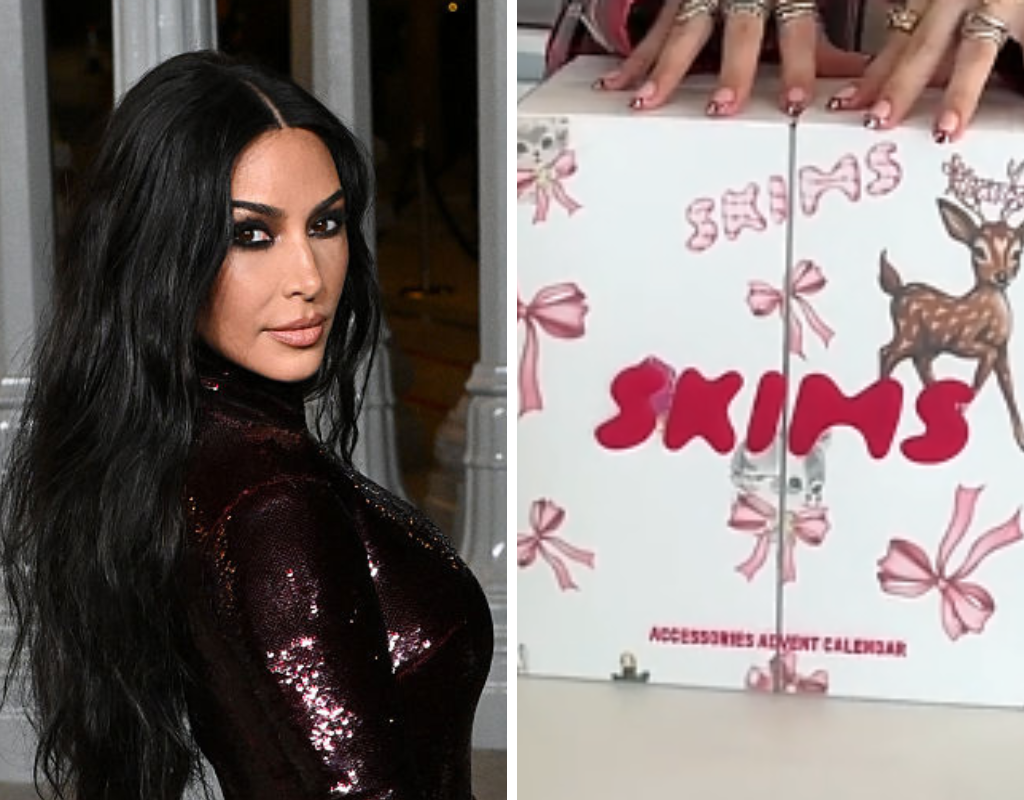
To understand how a mega-brand valued at billions of dollars ended up issuing mass refunds over a box of drugstore hair accessories, you have to picture Maya. Maya is a hypothetical shopper, though she mirrors thousands of real customers who clicked "checkout" the second the drop went live. She works sixty hours a week in a mid-level marketing role, pays too much for rent, and treats herself sparingly. When Kim Kardashian’s empire, SKIMS, announced its holiday advent calendar, Maya did not just buy a box of things. She bought a feeling. She bought twelve days of tiny, curated escapes from her December stress, packaged in the signature neutral, body-hugging aesthetic that had conquered modern fashion.
She paid $148—plus shipping and taxes—expecting miniature versions of the brand’s cult-favorite loungewear, perhaps a travel-sized sculpting bodysuit, a plush sleep mask, or the famously soft socks that usually retail for twenty-something dollars a pair. To see the full picture, check out the recent report by The Wall Street Journal.
Instead, she opened the first perforated door and found a single, unadorned hair tie.
The disappointment was not loud at first. It was a slow, creeping embarrassment. Imagine the quiet sting of realizing you have been outsmarted by a marketing campaign you genuinely admired. Behind door number two sat a pair of basic bobby pins. Behind another, a tiny claw clip you could buy in a bulk pack at any corner pharmacy for four dollars. By the time viral unboxing videos began flooding TikTok and Instagram, the collective confusion had curdled into pure internet outrage.
The Anatomy of an Unboxing Disaster
When the backlash hit, it moved with the terrifying speed of modern social media consensus. Creators who had eagerly set up their ring lights to film aesthetic holiday hauls found themselves staring into the camera in genuine disbelief. One by one, they peeled back the cardboard tabs of the SKIMS Holiday Advent Calendar, holding up minuscule scrunchies, a mini lint roller, and sticker sheets to the lens like forensic evidence.
The math did not work, and consumers are far better at retail arithmetic than executives often assume. If you take $148 and divide it by twelve days, each little cardboard door carries an implied value of roughly $12.33. Even accounting for luxury branding, custom packaging, and the undeniable gravitational pull of the Kardashian name, paying over twelve dollars for two bobby pins crosses an invisible psychological line. It shifts the transaction from an aspirational indulgence to an insult.
I remember the first time I fell for the allure of a celebrity-backed mystery box a few years ago. You stand there holding something shockingly light in your hands, the glossy promotional photos still fresh in your mind, feeling that distinct, hot flush of buyer's remorse in the back of your neck. You are not even angry at the company at first; you are angry at yourself for trusting the illusion. That vulnerability—the admission that we all want to belong to the glossy world brands sell us—is precisely what makes a misstep like this hurt so much.
In the case of SKIMS, the brand built its staggering success on a specific, hard-won promise: superior quality and obsessive attention to detail. Unlike traditional celebrity merchandise, which often slaps a famous name onto cheap blank t-shirts, SKIMS earned real credibility in the apparel industry. Fashion editors praised the fabric technology. Everyday shoppers swore by the fit. The company became a multi-billion-dollar juggernaut precisely because the product matched the hype.
Which is why the advent calendar felt like such a jarring betrayal.
Why Luxury Brands Gamble on the Mystery Box
To see why a powerhouse company would risk its hard-earned reputation on a box of hair elastics, it helps to look at how the holiday retail machine actually operates. Think of a luxury advent calendar as the retail equivalent of a magician’s velvet curtain. In traditional beauty and fashion calendars—pioneered by heritage houses like Jo Malone, Diptyque, and Liberty London—the curtain hides a genuine bargain. Brands use them as loss leaders, packing $500 worth of miniature perfumes and creams into a $250 box to hook customers into buying full-sized bottles in January.
Over the past decade, however, a second, more cynical version of the advent calendar emerged. As inflation squeezed profit margins and holiday competition grew fierce, some brands began treating December mystery boxes not as customer-acquisition gifts, but as high-margin clearance bins.
Consider what happens behind the scenes when a brand designs a promotional item like this. Sourced in bulk from overseas manufacturers, basic hair accessories, mini combs, and branded stickers cost mere pennies per unit to produce. Even when tucked inside a custom-printed cardboard grid, the total cost of goods sold for a twelve-piece accessory box might hover around ten or fifteen dollars. Sell that box for $148, and you are looking at profit margins that software companies would envy.
It is a tempting equation in a boardroom, especially when a brand feels invincible. When your core products sell out in minutes, it is easy to mistake customer loyalty for blind obedience. Executives start to believe that the logo itself is the product, forgetting that the logo only holds power so long as it remains attached to genuine value.
The Turning Point and the Refund
The internet, however, has a brutal way of correcting corporate hubris. Within days of the first unboxing videos going viral, the comment sections across SKIMS’ social media channels transformed into a unified chorus of mockery and frustration. Customers demanded to know if the calendar was a prank. Longtime defenders of the brand admitted they could not justify the price tag.
Faced with a public relations crisis that threatened to stain its lucrative fourth-quarter holiday sales, SKIMS made a rare, swift retreat. The company quietly pulled the advent calendar from its website, scrubbing the listing before more damage could be done. Shortly after, emails began arriving in the inboxes of buyers like our hypothetical shopper, Maya.
SKIMS announced it would issue full refunds to customers who had purchased the $148 calendar—and, in a move designed to extinguish the fire immediately, told buyers they did not even need to ship the boxes back. They could keep the hair ties, the bobby pins, and the cardboard grid for free.
On paper, the refund strategy was a textbook crisis-management maneuver. By eating the financial loss immediately and removing the friction of a return process, the company stopped the bleeding. Nobody was left out of pocket. The immediate financial harm was erased with a few keystrokes from the customer service department.
Yet, when a brand has to pay people back just to make them stop talking about a product, the real cost is never measured on a balance sheet.
The Invisible Price of Broken Trust
Look closely at what actually changed during those forty-eight hours of internet uproar. Consumers have reached a quiet, collective breaking point with what might be called "vibe-based pricing"—the practice of charging luxury premiums for ordinary goods simply because they are wrapped in trending aesthetics.
For years, social media trained shoppers to buy with their eyes first. A beige box, a clean sans-serif font, a blurred campaign photo shot on film—these visual cues became shorthand for quality. You did not need to touch the fabric or inspect the stitching because the brand’s digital aura vouched for it. The SKIMS advent calendar shattered that illusion in real time. Millions of viewers watched ordinary people peel back a luxury facade only to find the exact same plastic hair clips sitting in their own bathroom drawers.
Once a consumer sees behind the curtain, they rarely unsee it. The next time a limited-edition drop is announced, the reflex to click "buy now" hesitates for a fraction of a second. A tiny voice of skepticism enters the chat. Is this actually worth it, or am I paying $148 for cardboard and nostalgia?
That hesitation is poison to hype-driven retail. Modern fashion empires run on momentum and impulse; they rely on the fear of missing out overriding the rational part of the brain that calculates cost-per-wear. By turning its holiday calendar into a punchline, SKIMS inadvertently gave millions of shoppers a masterclass in critical consumerism. It reminded everyone that scarcity is often manufactured, that celebrity endorsements are not quality guarantees, and that behind the slickest marketing campaigns in the world, someone is still trying to sell you a bobby pin for twelve dollars.
Picture Maya again, standing at her kitchen counter a week after the refund hits her bank account. Her $148 is safely back where it belongs, ready to go toward groceries, a winter coat, or a dinner with friends. On the counter beside her coffee mug sits the free advent calendar, half-opened, its cardboard doors flapping slightly in the draft from the window. She reaches in, pulls out one of the plain black elastic bands, and wraps it twice around her wrist. It holds her hair back just fine.