We have satellites orbiting the earth, high-powered supercomputers, and thousands of automated weather stations. Yet, climatologists are desperately digging through dusty 19th-century ship records to understand what our atmosphere is doing right now. Why? Because modern data alone isn't long enough.
Thousands of citizen science volunteers recently tackled a massive archive of British naval records, pulling 255,000 distinct weather observations from logs dating between 1861 and 1865. It sounds like a niche historical archiving project. It is actually a vital lifeline for climate modeling.
Why Modern Instruments Aren't Enough
Climate models need baseline data. If you want to know how much human activity has shifted global weather patterns over the past century and a half, you need a clear picture of what "normal" looked like before heavy industrialization took off.
Reliable, widespread instrumental weather networks didn't exist globally in the 1860s. Meteorological stations on land were sparse, inconsistent, and heavily skewed toward populated European cities. The open oceans were a total blank spot.
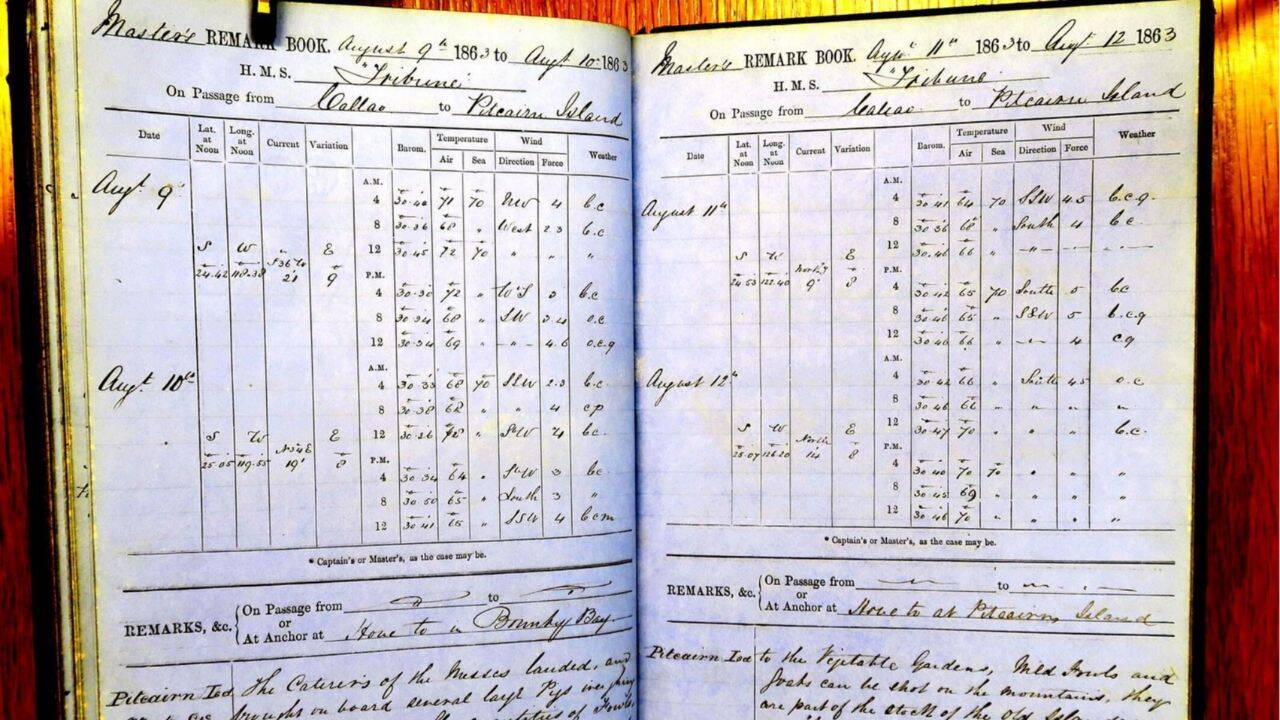
Naval ships filled that void. Royal Navy captains were required by strict maritime protocol to log weather conditions, barometric pressure, wind direction, and sea states multiple times a day, no matter where they were on the globe. Those ink-stained pages represent the only continuous atmospheric record we have from vast stretches of open ocean during the Victorian era.
The Brutal Reality of Transcribing History
Reading a mid-19th-century naval logbook is not for the faint of heart. Most entries were handwritten in dense, sprawling cursive using iron gall ink that often bled or faded over decades. Officers used abbreviations, idiosyncratic spelling, and nautical shorthand that change from one captain to the next.
Automated optical character recognition struggles heavily with this kind of messy historical handwriting. Machines choke on smeared ink, torn pages, and ornate penmanship loops.
That is why human crowdsourcing was essential. A coalition of about 4,500 volunteers spent 18 months meticulously transcribing 190 individual logbooks.
To ensure accuracy, the project relied on redundancy. Every single log page was independently transcribed by multiple volunteers—usually four people for general weather entries and up to six for complex wind observations. Cross-checking these independent entries allowed researchers to catch errors, filter out human misinterpretations, and build a clean, reliable database published in the Geoscience Data Journal.
Translating Old Seamen Talk Into Hard Data
Extracting numbers from old logs required more than just reading words. It meant translating centuries-old maritime terminology into standardized meteorological metrics.
When a captain noted a "fresh breeze" or a "strong gale," researchers mapped those descriptions directly to the Beaufort scale. Volunteers also helped build precise geolocation tables to track historical ship coordinates, filling in minor gaps using simple interpolation when a ship's movement was straightforward and physically plausible.
The resulting 255,000 data points feed straight into global reanalysis systems. These systems combine historical observations with modern data assimilation techniques to build a multi-decadal time machine of the Earth's atmosphere. With this information, scientists can reconstruct historic storms, analyze wave heights, and test whether modern extreme weather events truly exceed anything our ancestors witnessed.
The Mountain of Paper Still Left to Climb
As massive as a quarter-million records sounds, it is just a tiny fraction of what remains trapped in archives worldwide.
Naval repositories, maritime museums, and government vaults across the globe hold millions of uncatalogued logbooks from the Royal Navy, the US Navy, New England whaling fleets, and European maritime services spanning centuries. Many of these documents are deteriorating physically, sitting in boxes where moisture and time slowly erase the handwriting forever.
Bridging the gap between historical preservation and modern atmospheric science requires scaling these citizen science efforts. Combining human volunteers with emerging machine learning correction tools will speed up future transcriptions, but the core mission remains the same. The key to predicting tomorrow's climate extremes is sitting in the bottom of a wooden chest from the 1800s, waiting for someone to open the cover and read what the wind was doing.