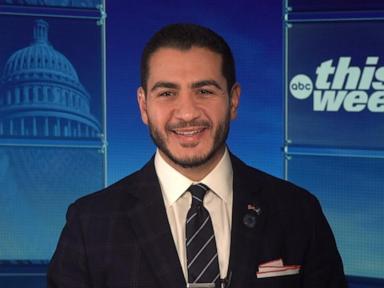
Political headlines love a good cage match, which is why Abdul El-Sayed's comments about working with Donald Trump sparked instant confusion across social media. If you only skimmed the chyron, you might think a prominent progressive physician and former Michigan gubernatorial candidate suddenly decided to cross the aisle and embrace the MAGA movement.
That isn't what happened. Not even close.
When El-Sayed stated that Democrats will work with Trump if "he wants to act serious," he wasn't offering a blank check or softening his progressive stances. He was laying down a conditional challenge rooted in practical governance, economic populism, and the reality of divided power in Washington. Voters in swing states like Michigan are exhausted by performative gridlock, and El-Sayed's framing speaks directly to that frustration while keeping the burden of proof squarely on the White House.
Why Abdul El-Sayed's Conditional Stance Matters Right Now
To understand why this single quote carries weight, you have to look at who said it and where he comes from. Abdul El-Sayed isn't a centrist Blue Dog Democrat looking for cover in a red district. As the former executive director of the Detroit Health Department and a Bernie Sanders-endorsed candidate for Michigan governor in 2018, his progressive credentials are well established.
When someone from that wing of the Democratic Party talks about cooperation with Donald Trump, people pay attention.
The core of El-Sayed's argument is remarkably straightforward. Democrats shouldn't oppose a policy simply because Trump's name is attached to it, nor should they waste political capital fighting every rhetorical skirmish designed to bait them into outrage. Instead, if the administration puts forward serious proposals that genuinely lower costs for working families, protect healthcare access, or rebuild domestic manufacturing, Democrats should be at the table to get them done.
Notice the catch. "If he wants to act serious."
Those six words do all the heavy lifting. In political terms, "acting serious" means moving past culture-war distractions, partisan retribution, and chaotic governing by executive whim. It means bringing actual legislative substance to Congress—bills with real numbers, enforceable protections, and measurable benefits for everyday Americans rather than tax windfalls disguised as populist relief.
What "Acting Serious" Looks Like on Policy
Talk is cheap in Washington. You can tell whether an administration is serious by looking at where the money goes and who gets stuck with the bill. If Democrats are going to test Trump's willingness to govern seriously, the battlegrounds are already obvious.
Healthcare Costs and Prescription Drugs
El-Sayed has spent his entire career focused on public health and healthcare access, including writing extensively on Medicare for All and corporate consolidation in medicine. He knows better than most that American families are getting crushed by out-of-pocket medical expenses and inflated drug prices.
Trump has repeatedly claimed he wants to lower prescription drug costs and take on pharmacy benefit managers, the middlemen who drive up prices at the counter. Democrats have already made progress on this front through the Inflation Reduction Act, which gave Medicare the power to negotiate prices on certain high-cost drugs for the first time.
If Trump wants to act serious, he can back legislation that expands Medicare drug price negotiation to more medications and extends those caps to private insurance plans. Democrats would sign onto that tomorrow. What they won't do is rubber-stamp proposals that gut Medicaid funding or strip away pre-existing condition protections under the Affordable Care Act while calling it "reform."
Trade, Tariffs, and Michigan Manufacturing
Nowhere does the tension between Trump's rhetoric and governing reality hit harder than in the industrial Midwest. In Michigan, trade policy isn't an abstract debate among economists—it decides whether auto plants stay open in Warren and Lansing or close their doors for good.
Both Trump and Rust Belt Democrats share skepticism toward unfettered free trade deals that shipped manufacturing jobs overseas. On paper, there's overlap here. Targeted tariffs, paired with strong labor standards and domestic investment, can protect American workers from unfair foreign competition.
Here's the difference. Broad, erratic tariffs slapped onto allies and raw materials without a coherent industrial strategy act like a massive sales tax on American consumers and wreck domestic supply chains. Acting serious on trade means pairing smart trade enforcement with real investments in domestic battery production, clean energy manufacturing, and union apprenticeships—not starting chaotic trade wars on social media that leave Michigan autoworkers paying more for groceries and trucks.
Junk Fees and Corporate Price Gouging
During campaign cycles, Trump has occasionally flirted with economic populism, from floating caps on credit card interest rates to complaining about high consumer costs. Democrats have been hammering corporate price gouging and hidden "junk fees" for years.
If the White House wants to pass a federal cap on credit card late fees, ban surprise airline and concert charges, or crack down on corporate consolidation in the grocery sector, Democrats have bills ready to go. Passing those measures would deliver immediate, tangible relief to working-class households. Refusing to support them while blaming inflation entirely on political opponents proves the populism was just a talking point.
The Trap of Performative Opposition
Part of why El-Sayed's message resonates is that Democrats have struggled at times to distinguish between principled resistance and reflexive opposition.
During Trump's first term, Democratic leaders frequently found themselves reacting to every daily controversy, tweet, and provocation. While opposing genuinely harmful policies is essential, treating every single moment as a five-alarm fire eventually numbs the public. Worse, it allows Trump to cast himself as the outsider fighting an entrenched establishment that hates him more than it cares about helping voters.
El-Sayed's approach flips that dynamic on its head.
By saying "we'll work with you if you're serious," Democrats position themselves as the adults in the room. They signal to independent and swing voters—especially the working-class voters in Michigan, Wisconsin, and Pennsylvania who decide presidential and congressional elections—that their priority is results, not partisan point-scoring.
If Trump actually delivers a serious bill to lower childcare costs or protect union pensions, Democrats get to claim credit for helping pass it. If Trump refuses to negotiate in good faith and pushes partisan tax cuts for billionaires instead, Democrats have clear, undeniable proof that he wasn't serious about helping working people. Either way, the contrast becomes unmistakable.
Where Democrats Must Draw a Hard Line
Willingness to negotiate on economic relief does not mean compromising on foundational rights or democratic norms. Even the most pragmatic voices in the Democratic coalition recognize that certain lines cannot be crossed without destroying the party's credibility and harming the communities it represents.
You can't "compromise" on civil rights. You can't meet halfway on attacks against immigrant families, mass deportation sweeps that tear apart local economies, or efforts to undermine voting access. And you certainly can't trade away reproductive freedom or LGBTQ+ protections in exchange for a minor tweak to the tax code.
El-Sayed's own record makes clear that conditional cooperation has strict boundaries. Throughout his career in Detroit and across Michigan, he has been vocal about environmental justice, protecting marginalized communities, and defending public institutions from privatization. Working with an administration when interests align on pocketbook issues is smart politics; legitimizing abuses of executive power or erosions of constitutional rights is surrender.
Smart legislators hold both ideas at once. They fight tooth and nail against harmful executive actions in the courts and in Congress while keeping the door open for specific legislative deals that tangibly improve people's lives.
Why Voters in Swing States Are Watching Closely
If you spend time talking to voters outside the cable news bubble, one theme comes up over and over again. People are tired. They're tired of politicians who treat government like a reality television show, and they're deeply cynical about whether anyone in Washington actually cares about the cost of rent, groceries, or insulin.
In places like Macomb County or Grand Rapids, voters split their tickets regularly. In 2024, plenty of Michigan voters cast ballots for both Trump and Democratic Senator Elissa Slotkin on the exact same day. Those voters aren't ideological purists. They're pragmatists who want leaders willing to work across party lines when it helps their families and push back when politicians overreach.
When Abdul El-Sayed frames Democratic strategy around seriousness and results, he's speaking directly to that electorate. He's reminding both his own party and the public that politics isn't supposed to be a team sport where you root against the country just to deny the other side a win.
How to Tell If Washington Is Actually Getting Serious
As legislative battles unfold in Congress, you don't need to rely on pundits to figure out whether Trump or congressional leaders are acting in good faith. Watch the mechanics of how bills are written and who sits in the room.
- Look at the budget math. Serious proposals pay for themselves or target benefits toward middle- and low-income households. Proposals that explode the deficit to fund corporate rate cuts while slashing food assistance or healthcare aren't serious bipartisan efforts.
- Watch committee markups, not press conferences. Real governing happens in committee rooms where amendments are debated and bipartisan text is hammered out. When leadership bypasses regular order to ram through partisan wish lists, cooperation is dead on arrival.
- Follow the industry lobbyists. If major pharmaceutical companies, Wall Street banks, and corporate monopolies are celebrating a bill's passage, working families probably got sold out—no matter how populist the speeches sound.
Abdul El-Sayed's challenge to Donald Trump strips away the noise and puts the test right where it belongs. Democrats don't need to guess at Trump's intentions or chase every headline; they just need to put concrete, worker-first bills on the table and force the White House to show whether it actually wants to govern.