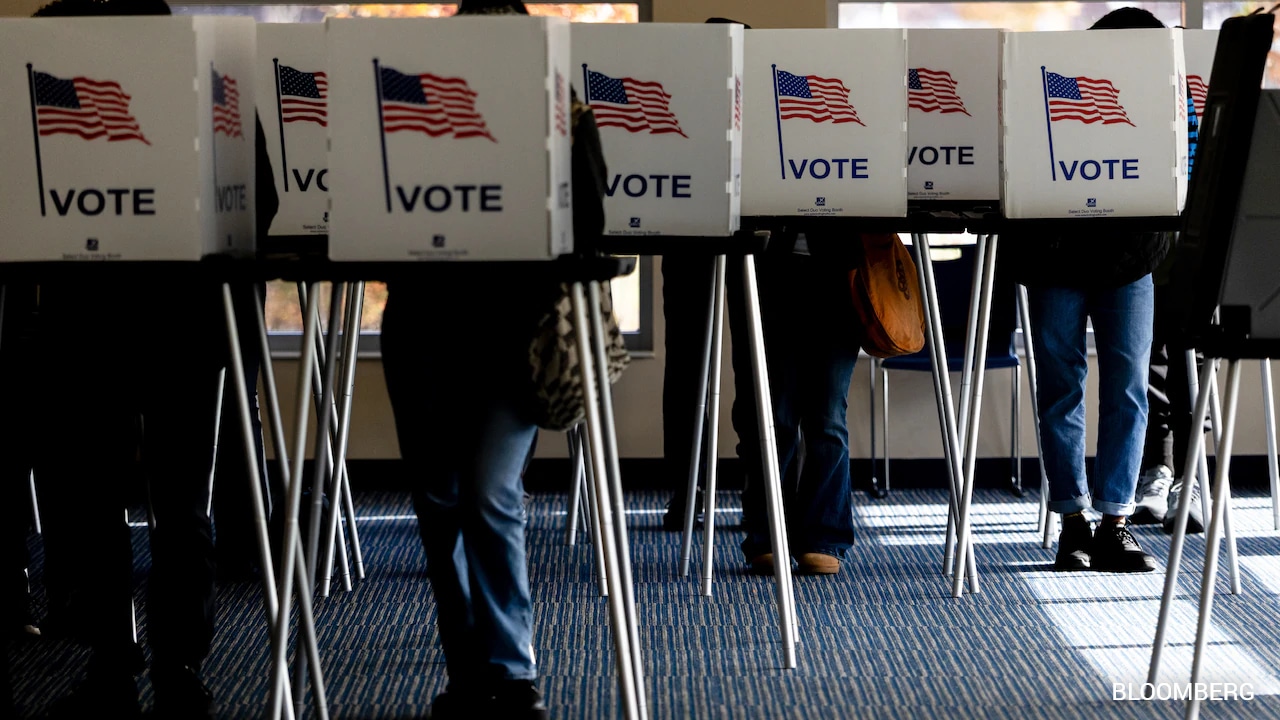
In Michigan Democratic politics, the loudest conversation isn't happening on the debate stage. It is happening in the silence between two names. When Abdul El-Sayed campaigns across the state, he speaks extensively about corporate monopolies, healthcare access, and working-class economic survival, yet he deliberately avoids mentioning Representative Haley Stevens, even as party operatives, donors, and political observers frame their dynamic as the defining fault line of Michigan’s Democratic coalition.
This refusal is not accidental. It is a calculated strategic choice rooted in modern campaign mechanics, donor dynamics, and the fragile arithmetic of statewide primaries in a battleground state.
To understand why El-Sayed avoids engaging directly with Stevens—and why political insiders cannot stop analyzing the contrast between them—you have to look at how Michigan’s Democratic Party has fractured and reassembled since 2018.
The Anatomy of Strategic Silence
Campaigns run on oxygen. Every time a candidate mentions an opponent or a rival faction by name, they transfer attention, legitimacy, and media framing to that target.
In political communications, this is known as asymmetric framing. When a progressive populist like El-Sayed—a physician, former Detroit health director, and 2018 gubernatorial contender—is asked about a mainstream, suburban-anchored Democrat like Stevens, engaging directly forces him onto terrain defined by party-insider horse-race coverage rather than policy grievances.
Reporters want conflict. They want a clean, two-person narrative that pits the Bernie Sanders-aligned left against the moderate, establishment wing represented by suburban Oakland County Democrats. Stevens, who flipped a historically Republican congressional seat in 2018 and built a reputation around manufacturing policy and mainstream Democratic orthodoxy, serves as the natural foil in that storyline.
El-Sayed’s team understands a basic rule of earned media: if you answer the question about your rival, the headline becomes about your rival. If you pivot back to systemic economic frustration, you keep control of the microphone.
Yet silence creates its own gravity. The more El-Sayed sidesteps questions about Stevens, the more political reporters, strategists, and rival campaigns treat the omission as proof of an underlying collision.
Two Coalitions Sharing One Party
Michigan’s Democratic electorate is not a monolith. It is an uneasy alliance of distinct geographic and ideological blocs that rarely agree on priorities, even when they unite in general elections.
On one side sits the progressive grassroots coalition, concentrated in university towns like Ann Arbor and East Lansing, urban cores in Detroit, and younger, multiracial organizing networks across Wayne and Washtenaw counties. This bloc views politics through the lens of structural reform—Medicare for All, aggressive climate action, corporate accountability, and skepticism toward traditional party fundraising. El-Sayed became the standard-bearer for this movement during his 2018 gubernatorial run, capturing more than 340,000 primary votes despite being heavily outspent.
On the other side sits the suburban pragmatic coalition, centered in Oakland and Macomb counties—the exact turf where Haley Stevens rose to prominence. Voters here tend to be older, college-educated suburbanites and moderate union households who prioritize institutional stability, incremental economic growth, domestic manufacturing incentives, and general-election electability against Republicans.
In a hypothetical or emerging statewide contest—whether for U.S. Senate or higher executive office—these two coalitions cannot simply ignore each other. Neither bloc holds enough raw primary votes to win comfortably without peeling off pieces of the other’s base or dominating turnout in their own stronghold.
That mathematical reality explains why everyone in Lansing and Washington watches Stevens and El-Sayed in the same breath. Even when they are not formally running head-to-head in every cycle, they represent the two competing theories of how Democrats win Michigan.
Why Political Insiders Force the Comparison
If El-Sayed refuses to bring up Stevens, why does the rest of the political ecosystem insist on pairing them together?
Three forces drive the fixation:
- Donor signaling and PAC alignment. Major Democratic fundraising networks—ranging from national establishment PACs to grassroots small-dollar bundlers—require clear ideological proxies to decide where to deploy early money. Comparing El-Sayed’s grassroots fundraising model against Stevens’ institutional donor network gives financiers a shorthand for risk assessment.
- The post-2024 electoral autopsy. Following razor-thin margins in Michigan across recent federal cycles, Democratic strategists have fiercely debated why working-class turnout slipped in industrial counties and why Arab American and younger voters expressed deep alienation in southeast Michigan. El-Sayed’s profile speaks directly to those disillusioned constituencies, while Stevens’ record reflects the traditional suburban-swing strategy.
- Media narrative efficiency. Political journalism thrives on binary matchups. A complex debate over industrial policy, healthcare economics, and foreign policy alignment is hard to summarize in a 600-word dispatch. Framing the story as "El-Sayed versus the Stevens wing" compresses ideological friction into recognizable personalities.
This dynamic traps both figures in a persistent narrative loop. Stevens rarely needs to attack El-Sayed directly because institutional allies and pundits already cast her as the pragmatic default. Meanwhile, El-Sayed’s refusal to take the bait frustrates reporters looking for fireworks, which paradoxically generates more coverage about his refusal to engage.
The Trap of Early Primary Engagement
History in Michigan Democratic primaries offers clear warnings about what happens when candidates swing too early or too aggressively at intra-party rivals.
In 2018, Gretchen Whitmer largely avoided getting bogged down in direct, personal back-and-forths with El-Sayed during the gubernatorial primary. She focused relentlessly on infrastructure ("fix the damn roads"), maintained institutional support, and allowed El-Sayed and third candidate Shri Thanedar to split the outsider and progressive lane. Whitmer won the primary decisively by staying above the fray while her opponents fought for oxygen.
Similarly, in competitive congressional primaries across southeast Michigan—including Stevens’ own high-profile 2022 primary clash against fellow incumbent Andy Levin following redistricting—direct confrontation only paid off once ballots were imminent and voters were forced to make a binary choice. Before that window opens, attacking a fellow Democrat often alienates the undecided primary voters who dislike intra-party warfare.
El-Sayed’s current posture reflects lessons learned from 2018. Back then, he spent substantial energy defending his progressive credentials against skeptics and navigating comparisons to establishment frontrunners. Today, his messaging is tighter, more populist, and disciplined around bread-and-butter grievances: medical debt, utility rate hikes, and corporate consolidation.
By refusing to utter Stevens’ name, he avoids validating the premise that his candidacy is merely a protest against moderate Democrats. Instead, he frames his movement as a broad working-class critique aimed upward at corporate power, not sideways at a suburban congresswoman.
Where the Policy Fault Lines Actually Sit
Strip away the horse-race chatter, and the real tension between the El-Sayed and Stevens approaches comes down to how government should intervene in the economy.
Stevens’ legislative brand is built on targeted industrial policy and public-private partnership. Her work on committees dealing with science, space, technology, and workforce development emphasizes federal grants, domestic supply-chain resilience, auto-sector transition support, and strengthening existing institutions. It is a model designed to reassure business leaders, moderate suburbanites, and traditional trade unions that Democrats can manage capitalism responsibly.
El-Sayed’s worldview rests on structural decommodification and anti-monopoly enforcement. Drawing on his background as a public health official and epidemiologist, he treats healthcare, housing, and basic utilities not as market sectors to be nudged with subsidies, but as public goods distorted by corporate profit extraction. His rhetoric targets pharmacy benefit managers, private equity roll-ups, and utility monopolies directly.
These are not minor stylistic differences. They represent fundamentally different answers to why Michigan families feel squeezed despite strong macroeconomic headlines.
| Dimension | Abdul El-Sayed Approach | Haley Stevens Approach |
|---|---|---|
| Core Geographic Base | Urban cores (Detroit), university hubs (Ann Arbor), diverse working-class precincts | Inner-ring and outer-ring suburbs (Oakland County), moderate swing districts |
| Economic Philosophy | Anti-monopoly reform, public-option/single-payer healthcare, utility regulation | Targeted federal investment, manufacturing incentives, workforce training |
| Fundraising Model | Small-dollar digital donors, progressive grassroots networks | Institutional PACs, traditional Democratic donor networks, bundled contributions |
| Primary Rhetoric | Systemic disruption, populist accountability | Institutional competence, bipartisan legislative delivery |
Voters in a Democratic primary do not necessarily read white papers, but they intuitively recognize the difference between someone promising to disrupt the system and someone promising to make the system work better.
The Unspoken Vulnerability on Both Sides
Every political strategy carries a blind spot.
For El-Sayed, the risk of ignoring Stevens and the broader moderate wing is ceiling limitation. A candidate can run a disciplined, inspiring populist campaign and still lose by double digits if they fail to convince pragmatic suburban voters in Oakland, Kent, and Macomb counties that they can survive a brutal Republican general-election onslaught. At some point in any competitive race, silence stops looking like discipline and starts looking like evasion. Voters eventually demand to know why one Democrat is a better bet than another.
For Stevens and the party establishment, the vulnerability is enthusiasm erosion. Relying heavily on suburban margins and institutional endorsements works well when Democratic base turnout is guaranteed. It falters when younger voters, progressives, and key constituencies in Wayne County feel taken for granted or uninspired by incrementalism. Dismissing El-Sayed’s appeal as niche activism ignores the deep dissatisfaction simmering across parts of the Democratic base.
Political analysts who reduce this tension to a personality clash miss the deeper warning sign for Michigan Democrats. The party needs both coalitions firing simultaneously to win statewide in November. If the progressive base stays home, suburban margins cannot carry the state alone. If suburban moderates recoil from progressive rhetoric, urban turnout alone cannot bridge the gap.
Why the Silence Won't Last Forever
In politics, strategic avoidance has an expiration date.
Right now, refusing to talk about Haley Stevens serves El-Sayed’s immediate objective: building an independent narrative, consolidating progressive support, and keeping media attention anchored to his policy platform rather than insider gossip. And for political observers, fixating on Stevens serves an equally predictable purpose: mapping out the inevitable collision between Michigan’s two dominant Democratic factions before a single primary ballot is printed.
Eventually, filing deadlines pass, debate stages go live, and voters demand direct contrasts rather than parallel monologues. When that moment arrives, the quiet discipline holding this standoff together will break all at once, forcing Michigan Democrats to choose not just between two candidates, but between two competing visions of what their party actually stands for.