Justice is rarely loud. It does not sound like the thunder of a mortar shell echoing off the jagged rock faces of the Hindu Kush. It does not sound like the frantic static of a military radio over a smoke-choked ridge in Kunar Province.
Instead, it sounds like the squeak of leather shoes on polished linoleum. It sounds like the dry rustle of legal briefs being turned by a clerk who has seen hundreds of trials just like this one. It sounds like the steady, unhurried voice of a federal judge delivering a number.
Forty-two.
That is the number of years Haji Najibullah, a former Taliban commander, will spend inside a American federal prison cell. For the families of three U.S. soldiers who never came home, and for the colleagues of two journalists who were dragged into the dark, that number represents something resembling a closing chapter. But a chapter closed is not the same as a wound healed. To understand how a man who once held absolute power over life and death in the mountains of Afghanistan ended up in a sterile courtroom in New York, you have to look past the sterile language of the indictment. You have to look at the dirt, the blood, and the long memory of a superpower.
The Ridge at Combat Outpost Keating
To understand the weight of the sentence, we must travel back to 2008. Put yourself in the boots of a nineteen-year-old private from Ohio or Georgia, stationed at Combat Outpost Keating. It was a place designed by nightmares. Nestled at the bottom of a deep bowl, surrounded by towering mountains, the outpost was a target waiting to be hit. The soldiers knew it. The commanders knew it.
Najibullah knew it best of all.
As a local Taliban commander, Najibullah did not fight a conventional war. He fought a war of patience, topography, and ambush. On a blistering day in October 2008, his fighters positioned themselves on the high ground looking down into the valley. They had heavy machine guns, rocket-propelled grenades, and the ultimate tactical advantage.
When the ambush snapped shut, it was total chaos.
Sgt. 1st Class Michael J. Tully. Sgt. Alex Jimenez. Spc. Albert J. Jex. These were not abstract statistics on a Pentagon briefing slide. They were young men with mothers, wives, and futures. Tully was the guy who could fix anything with duct tape and a grin. Jimenez had a family waiting in New York, counting down the days on a kitchen calendar. Jex was the quiet one who surprised everyone with his sudden bursts of sharp humor.
When Najibullah’s men opened fire from the ridges, those futures evaporated in a hail of lead and burning metal. The battle was fought in minutes, but the agony stretched across decades.
Consider what happens next when a soldier dies in a remote valley. The news does not travel via a neatly typed press release. It arrives in the form of a sedan parking outside a suburban home in the middle of the afternoon. It is the sight of two uniform-clad figures walking up the driveway, their hats held precisely at their sides. For the families of Tully, Jimenez, and Jex, that afternoon never truly ended.
The Currency of Fear
But Najibullah’s campaign of terror was not confined to uniform targets. A war like the one fought in Afghanistan relies heavily on controlling the narrative. To do that, you must silence the people who tell the truth.
Enter the journalists.
In the late autumn of that same year, David Rohde, a seasoned reporter for The New York Times, and his Afghan colleague, Tahir Ludin, were trying to understand the human cost of the conflict. They wanted to see past the propaganda from both sides. They arranged what they believed was a safe meeting with a Taliban official.
They were betrayed.
Najibullah’s operatives intercepted them. Imagine the sudden, violent transition from a professional interview to the back of a moving vehicle, a blindfold tied tight enough to bruise the skin. For seven months, Rohde and Ludin were kept in the tribal areas of Pakistan, moved from safehouse to safehouse like pieces of contraband.
They were not treated as prisoners of war; they were treated as currency. Najibullah demanded millions of dollars in ransom. He demanded the release of high-ranking Taliban prisoners held at Guantanamo Bay. He used the psychological lever of their lives to squeeze the American government and a major news organization.
The terror of captivity is not just physical abuse. It is the slow, corrosive certainty that you have been forgotten. It is listening to the footsteps outside your locked door every night, wondering if this is the moment the guard decides you are worth more dead than alive. Rohde and Ludin survived only because they refused to break. In mid-2009, exhibiting a desperate, heart-pounding courage, they managed to scale a wall and escape their captors under the cover of darkness.
They got away. But the man who put them in that room remained at large, a ghost in the mountains.
The Long Arm and the Slow Grind
There is a common misconception about modern warfare that everything happens at the speed of a drone strike. We watch grainy footage on television and assume that justice is delivered in an instant, from fifteen thousand feet in the air.
The reality is far more tedious. And far more relentless.
Najibullah likely believed he was safe. The war shifted. The American military footprint shrunk, then vanished entirely in the chaotic withdrawal of 2021. The Taliban swept back into Kabul, reclaiming the palaces and the ministries. For a man like Najibullah, it must have felt like a victory. The empire had left. He had won.
But the American justice system does not operate on the timeline of political administrations. It operates on the timeline of a bloodhound.
Federal prosecutors in Manhattan had quietly filed an indictment years prior. Investigators from the FBI’s New York Joint Terrorism Task Force kept tracking him, monitoring financial threads, communication splinters, and human intelligence. They waited for him to slip.
The slip came in 2020. Najibullah traveled to Ukraine. He thought he was moving through a blind spot. Instead, he walked straight into an international arrest warrant. He was arrested, put on a plane under heavy guard, and flown across the Atlantic to face the one thing he likely never anticipated: a jury of twelve ordinary citizens in a country he had spent his life trying to destroy.
Inside Room 24B
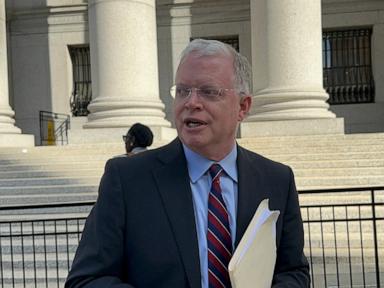
When Najibullah stood in the federal courtroom in lower Manhattan, he was stripped of the theater of insurgency. He did not have his assault rifle. He did not have his cadre of loyal fighters. He wore a standard-issue prison jumpsuit. He looked smaller.
The trial was not a kangaroo court. That is the ultimate irony of the system Najibullah fought so hard to undermine. The very country whose citizens he murdered gave him a defense team, a translator, and the full protection of constitutional due process. The prosecution laid out the evidence piece by piece: satellite data, intercepted communications, testimony from survivors, and the heartbreaking accounts of grieving families.
The defense argued for leniency, pointing to the messy reality of a twenty-year war where lines were blurred and everyone’s hands were dirty. They asked the judge to consider the context of a broken nation.
But U.S. District Judge Paul A. Crotty was not looking at the geopolitical macrocosm. He was looking at the actions of one man who chose to orchestrate murder and kidnapping.
The sentence of forty-two years means that Najibullah, now in his late 40s, will likely spend the rest of his natural life behind the walls of a maximum-security facility. He will trade the vast, open skies of the Hindu Kush for a concrete recreation yard bounded by razor wire.
The Echoes of the Verdict
So, what does this sentence actually change?
It does not bring Michael Tully, Alex Jimenez, or Albert Jex back to life. Their graves remain quiet in the American dirt. It does not erase the nightmares that David Rohde or Tahir Ludin still wake up to on cold mornings. It does not fix the fractured, bleeding state of Afghanistan, which remains trapped in a cycle of poverty and repression under the regime Najibullah helped build.
But the value of this verdict lies elsewhere. It lies in the message it sends to the next generation of commanders who believe that geographic distance and political chaos offer permanent immunity.
The real problem with asymmetric warfare is that the perpetrators assume the costs are asymmetric too. They believe they can strike from the shadows and disappear back into them, while the open society they target must bear all the pain. This trial flips that equation. It proves that the ledger remains open until it is balanced.
As the court adjourned and the spectators filed out into the noisy New York afternoon, the room emptied until only the cleaning staff remained. The judge's gavel lay silent on the wooden bench. The paperwork was boxed up and wheeled down to the archives.
Outside, the city roared on, indifferent to the drama that had just concluded inside. But thousands of miles away, in towns across America where three gold-star families still set one less place at the dinner table, the air felt just a fraction lighter. The man who caused their nightmare had finally run out of places to hide.