You've probably seen the headlines about massive, jet-powered military drones that fly at 50,000 feet and carry laser-guided bombs. They get all the glory in modern defense tech. But while the world stares at the sky looking for giants, the most dangerous shifts in aerial warfare are happening just a few hundred feet off the ground, in near-total silence.
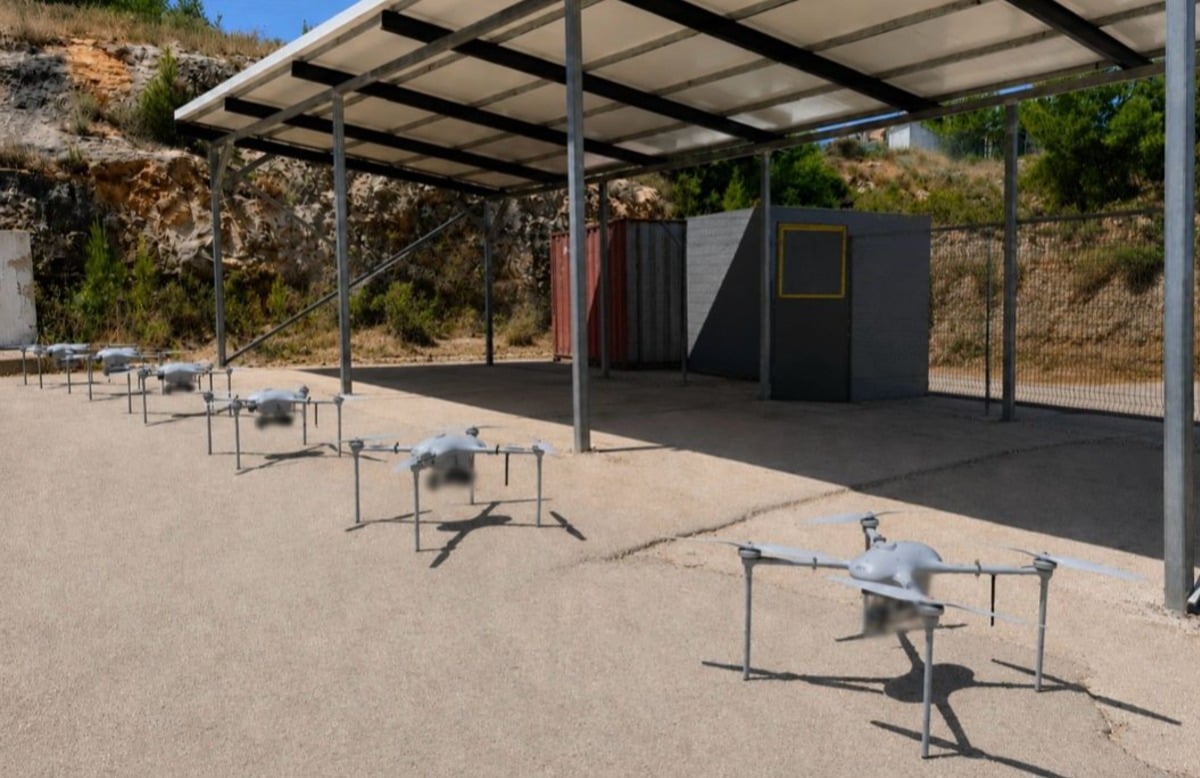
Look at what just happened in Israel. Aero-Sentinel, a boutique drone developer based in Petach Tikva, quietly announced that its new G3 reconnaissance platform wrapped up two weeks of intensive operational training. The twist? They trained with "unnamed security organizations," and the official photos featured heavily blurred external payloads.
This isn't just another routine military exercise. It's a massive deal for anyone tracking how special operations are changing. This company’s production facility was literally struck by an Iranian ballistic missile just two months ago in April 2026. Instead of being hobbled, they’re out in the field testing a platform that flips the script on how intelligence is gathered in hostile territory.
The real story here isn't the mystery buyers. It’s the engineering philosophy driving these machines.
The Auditory Blindspot
Most military planners focus heavily on radar cross-sections. They want to fool the big, expensive anti-aircraft batteries. But when you deploy small, low-altitude drones for close-range intelligence, radar isn't your biggest enemy. Human ears are.
If a drone flies at 300 feet, a standard electric motor makes enough of a high-pitched whine to alert any sentry on the ground. Once someone hears it, they look up, spot it, and shoot it down with standard small arms. Acoustic signature is the ultimate giveaway for tactical unmanned systems.
Aero-Sentinel spent over two decades tackling this specific problem. Their older, smaller model, the G2 Premium, registered a mind-boggling 14.9 decibels during independent testing at a distance of one kilometer. To put that in perspective, a human whisper is about 30 decibels. A quiet library is 40. This drone is literally quieter than a rustling leaf from less than a mile away.
When a machine is that quiet, it doesn't need to fly high. It can skim right over rooftops or tree lines, snapping high-resolution images and sniffing out radio signals without anyone noticing.
What the Blurred Payloads Tell Us
The newly tested G3 model takes this extreme acoustic stealth and scales it up. While the smaller G2 was built for quick, 80-minute tactical scouts, the G3 is a beast meant for long-distance, complex missions. It handles a payload of up to 3 kilograms (about 6.6 pounds).
That weight capacity matters because it lets operators move past basic daylight cameras. You can pack the G3 with heavy electro-optical and infrared sensor packages, or gear meant for electronic warfare.
The digital blurring on the G3’s external gear in the recent training photos tells a very specific story. Standard surveillance cameras don't get blurred out anymore; everyone knows what a gimbaled FLIR camera looks like. When a manufacturer scrubs the image of an external load, they’re usually hiding custom electronic intelligence (ELINT) pods or communications relay equipment.
Open-source intelligence sources have long linked these specific quiet platforms to deep-penetration special operations. During the intense regional friction over the last year, reports surfaced of highly specialized, near-silent drones being used inside contested territories to map out air defense blindspots right before major strikes. If you can fly a sensor package directly next to an enemy radar array without triggering an auditory alarm, you own that airspace.
Smuggling the Battlespace Inside
We are seeing a major shift away from the classic military doctrine of flying drones from distant, secure airbases. The trend now focuses on local infiltration.
Tactical operators don't want to fly a drone 500 miles through heavily defended airspace if they can just carry it across a border in a hard-shell suitcase. The G3’s modular, rapid-deployment design fits this exact reality. Small teams can transport the components through unconventional commercial channels, assemble the drone in an alleyway or a safehouse, and launch it within minutes.
By launching from inside the target area, you bypass the massive early-warning radar networks designed to catch threats coming from across the border. You operate under the radar, literally and figuratively.
Moving Past the Big Tech Hype
If you're managing security risks or evaluating defense tech, stop looking at how far or how fast a drone can fly. Those metrics belong to an older era of warfare. The real value lies in how long a system can stay invisible to the senses of a human guard on the perimeter.
When integrating tactical surveillance tools into high-risk operations, stop relying on standard commercial off-the-shelf drones for sensitive missions. They are loud, their frequencies are easily jammed, and they give away your team's position the second the props spin up.
Your next step should be assessing your operational footprint based on acoustic thresholds, not just visual camo. If your security assets can be heard before they can see, they're already a liability. Seek out modular platforms that prioritize sub-20 decibel signatures and customizable payload bays. True operational dominance belongs to the operators who can sit right above a target, completely unheard, waiting for the perfect moment to move.
The Silent Invasion How Israel's Small Drones Infiltrated Iran explores the tactical use of low-signature, smuggled unmanned systems in deep-penetration operations, illustrating the exact operational concepts underlying the G3's recent secretive training.