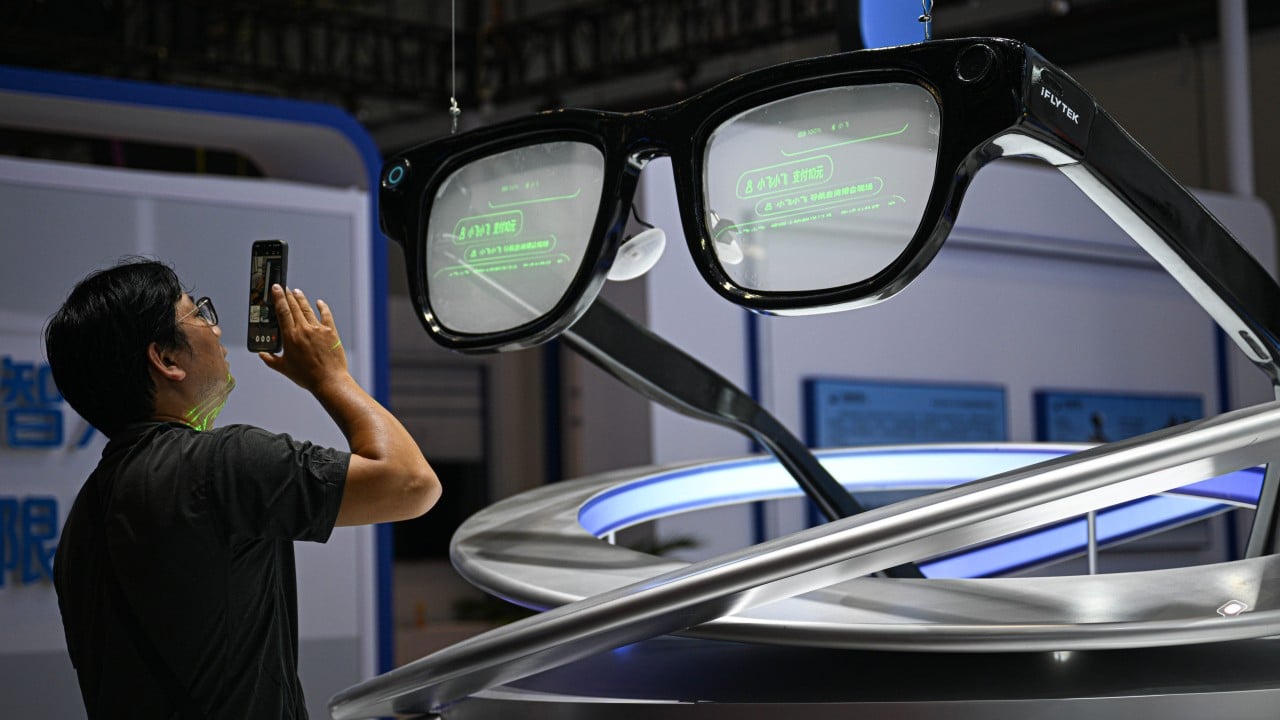
Lower manufacturing costs in China do not automatically unlock mass adoption of AI glasses for travelers because touristic navigation exposes severe latency, thermal, battery, and connectivity bottlenecks. A rigorous assessment of smart eyewear as a travel guide requires separating hardware bill-of-materials compression from field reliability across unfamiliar physical environments. Where basic summaries treat price drops as a direct demand catalyst and list technical flaws in isolation, a structured operating model shows how hardware economics, edge-versus-cloud compute, and environmental friction interact to determine whether a traveler keeps the frames on or drops them back in a bag.
The Cost Function of Smart Travel Eyewear
Hardware pricing in smart glasses rests on four interacting cost layers: optical and sensor components, system-on-chip and memory modules, industrial assembly and supply-chain scale, and ongoing cloud inference expenses. Manufacturing clusters in China compress unit costs primarily through dense component co-location, mature tooling amortization, and aggressive volume pricing on cameras, microphones, and lightweight frames. Lowering upfront retail price reduces customer acquisition friction, especially for discretionary travel accessories where buyers test novelty before committing to daily wear. Also making headlines in related news: Grabbing a Piece of Mars's Moon Is a Glorified Stunt That Misses the Real Prize.
Upfront hardware discounts do not eliminate total cost of ownership or guarantee utility in the field. A lower sticker price can reflect compromises in waveguide optics, low-power image signal processors, or smaller battery cells constrained by weight limits on the bridge and temples. When a traveler buys an inexpensive pair of AI glasses for a trip, the economic trade-off shifts from purchase price to value per active hour. If the device runs out of charge mid-afternoon or misreads street signage in bright sunlight, a lower purchase price only softens financial regret; it does not turn an unreliable tour guide into a dependable tool.
The unit economics of travel assistance also depend on how inference is split between the frames, a paired smartphone, and remote cloud servers. Running multimodal vision and language models continuously in the cloud incurs recurring compute costs that hardware-first pricing models often subsidize or rate-limit. Offloading heavy processing to a phone shifts energy drain and thermal load onto a device already working hard as a mobile hotspot and navigation hub. More details regarding the matter are explored by The Verge.
- Optical and capture hardware: Micro-cameras, inertial measurement units, and bone-conduction or micro-speaker audio assemblies set baseline weight and power draw.
- Compute and memory budget: On-device neural engines handle wake words and basic tracking, while complex scene understanding typically relies on wireless links to external compute.
- Chassis and battery envelope: Wearable ergonomics cap battery capacity, forcing tight trade-offs between form factor, weight balance, and runtime.
- Network and inference overhead: Cellular roaming, congested public Wi-Fi, and round-trip latency govern how quickly visual queries resolve into spoken or visual guidance.
Technical Hitches Under Real Travel Conditions
Travel environments stress wearable electronics in ways indoor demos and short commuter walks rarely replicate. A traveler moves across shifting lighting conditions, noisy transit hubs, uneven cellular coverage, and dense visual scenes packed with menus, transit boards, architectural details, and crowds. Each of these variables compounds small engineering delays into noticeable user frustration.
Latency is the primary failure mode for real-time travel guidance. Asking a wearable assistant about a historic facade, a bus route, or a dish on a menu requires capturing an image or audio clip, transmitting data over a wireless link, running multimodal inference, and synthesizing a response. When round-trip delay stretches to several seconds, the traveler has already walked past the landmark, missed the boarding cue, or felt awkward standing still waiting for an answer.
Thermal dissipation and battery depletion act as a coupled constraint rather than independent specs. Continuous camera capture, wireless streaming, and audio output generate heat inside a compact frame pressed against sensitive skin near the temples and behind the ears. High ambient summer temperatures accelerate thermal throttling, which slows processing or pauses high-resolution capture precisely when outdoor travelers need it most.
Connectivity fragility widens the gap between laboratory performance and street-level utility. International travelers frequently face spotty roaming data, high-latency captive portals, or dead zones inside subway stations, narrow alleys, and rural sites. Without strong local caching, offline fallback modes, or graceful degradation when bandwidth drops, glasses that depend on cloud round-trips stall at critical moments.
Audio, Vision, and Context Breakdowns
Even when network links hold steady, perceptual and contextual errors erode trust quickly. Open-ear speakers struggle against street traffic, wind, and crowded markets, forcing volume increases that leak audio to nearby bystanders or clip speech clarity. Microphones face the inverse problem: isolating a traveler's voice amid background chatter without draining extra power on aggressive noise suppression.
Visual interpretation introduces its own failure modes during travel. Glare on glass display cases, low light inside museums or restaurants, angled street signs, and unfamiliar scripts degrade object and text recognition. An educated hypothesis is that many current systems perform well on clear, centered objects at close range yet falter on wide, cluttered urban scenes where intent is ambiguous. A traveler looking at a plaza might want historical context, directions to a restroom, or a cafe recommendation; guessing wrong breaks the illusion of effortless assistance.
Cause-and-Effect Chain Behind Slow Adoption
Slow adoption of AI glasses as travel guides is not caused by any single flaw in isolation. Instead, a causal chain links hardware compromises and environmental friction to low repeat usage.
- Cost compression shapes hardware trade-offs: Aggressive price targets favor lighter, simpler assemblies and smaller batteries, while complex display waveguides or heavy local compute remain costly.
- Environmental load spikes power and latency demands: Outdoor glare, loud streets, and variable mobile networks force higher sensor gain, audio output, and retries.
- Thermal and battery limits cut active windows: Sustained workloads warm the frames and drain cells faster than a full day of sightseeing requires.
- Delayed or inaccurate responses break social and spatial flow: Waiting on slow answers or hearing wrong guidance slows movement and creates self-consciousness in public spaces.
- High friction pushes travelers back to familiar tools: A smartphone screen or map app is slower to glance at in some situations, yet it remains predictable, legible in harsh light, and capable of offline map storage.
The first limitation of this adoption bottleneck is that novelty masks friction during short trials. A traveler testing AI glasses for ten minutes in a hotel lobby or along a quiet promenade may find the experience promising. The second limitation appears over multi-day itineraries, where charging routines, dead batteries, and intermittent data connections expose the gap between a neat demo and a dependable companion.
Separating Known Facts from Educated Hypotheses
Clear analysis requires separating established engineering and market dynamics from unverified claims about future demand. Known facts include the physical constraints of wearable battery density, the existence of lower-cost hardware supply chains in China, the round-trip latency inherent in wireless cloud vision pipelines, and the severe acoustic and lighting variability of travel settings. It is also a known fact that lower retail prices broaden initial experimentation among cost-sensitive buyers.
Educated hypotheses go further into behavioral and competitive outcomes that require empirical tracking rather than assumption. One hypothesis is that price reductions alone will yield high trial volume but weak retention as travel guides until battery endurance and end-to-end response times improve substantially. A second hypothesis is that hybrid workflows—where glasses handle quick audio prompts and hands-free capture while a paired phone or pre-cached itinerary handles heavy routing and rich visual reference—will outperform pure cloud-dependent glasses on multi-day trips. A third hypothesis is that regional pricing advantages could accelerate adoption in markets with dense urban connectivity and strong domestic hardware ecosystems faster than in cross-border travel scenarios with patchy roaming.
Tactical Evaluation Framework for Travel Use Cases
Evaluating AI glasses for travel should follow a structured operational check rather than relying on spec sheets or promotional clips. Travelers, product teams, and travel operators can apply a four-step sequence to test real-world fitness before scaling reliance.
- Map high-friction travel moments: Identify specific scenarios where hands are full or eyes are busy, such as walking with luggage, navigating transit transfers, or reading unfamiliar signage, and separate them from stationary tasks where a phone already works well.
- Stress-test latency and offline behavior: Measure end-to-end response time on cellular data rather than home or office Wi-Fi, and check what features still function when signal drops or packet loss rises.
- Audit thermal and battery endurance under continuous load: Run realistic outdoor cycles combining camera queries, audio prompts, and movement in warm conditions to find the true hours of active assistance before recharge or cooldown.
- Benchmark error cost against fallback speed: Compare how long it takes to verify or correct a misread sign or wrong turn on the glasses versus pulling out a phone or asking a person locally.
Consider two contrasting travel scenarios using this sequence. On a self-guided walking tour through a compact city center with strong mobile coverage and moderate temperatures, short, voice-first queries about landmarks and menus fit naturally within modest battery and thermal budgets. By contrast, on a full-day excursion involving ferry transfers, weak coastal signals, bright sun, and constant navigation changes, battery drain and network lag turn the device into an extra item to manage rather than a time-saver.
Strategic Play for Builders and Buyers
Hardware makers targeting travel should stop treating low price as a substitute for end-to-end reliability and instead engineer around constrained connectivity, thermal limits, and short interaction windows. The highest-leverage strategic play is to optimize for sub-second, low-bandwidth utility with graceful offline fallbacks and clear phone-hand-off rules—prioritizing dependable battery life and crisp audio in noisy environments over ambitious, always-on visual promises that stall when signal or charge runs low. Buyers and travel planners should treat inexpensive AI glasses as a selective secondary aid for light, connected walking segments rather than a primary navigation system, keeping offline maps and standard mobile tools ready whenever reliability matters most.


