The air tasted of copper and old charcoal. Standing on a ridge overlooking the valley outside of Bordeaux, the heat did not feel like a standard summer afternoon. It felt predatory. It was a heavy, suffocating weight that pressed against the temples and dried the throat before a single drop of water could help.
Down in the basin, the horizon was not blue. It was a bruise of bruised purple and violent orange, churning upward into the stratosphere.
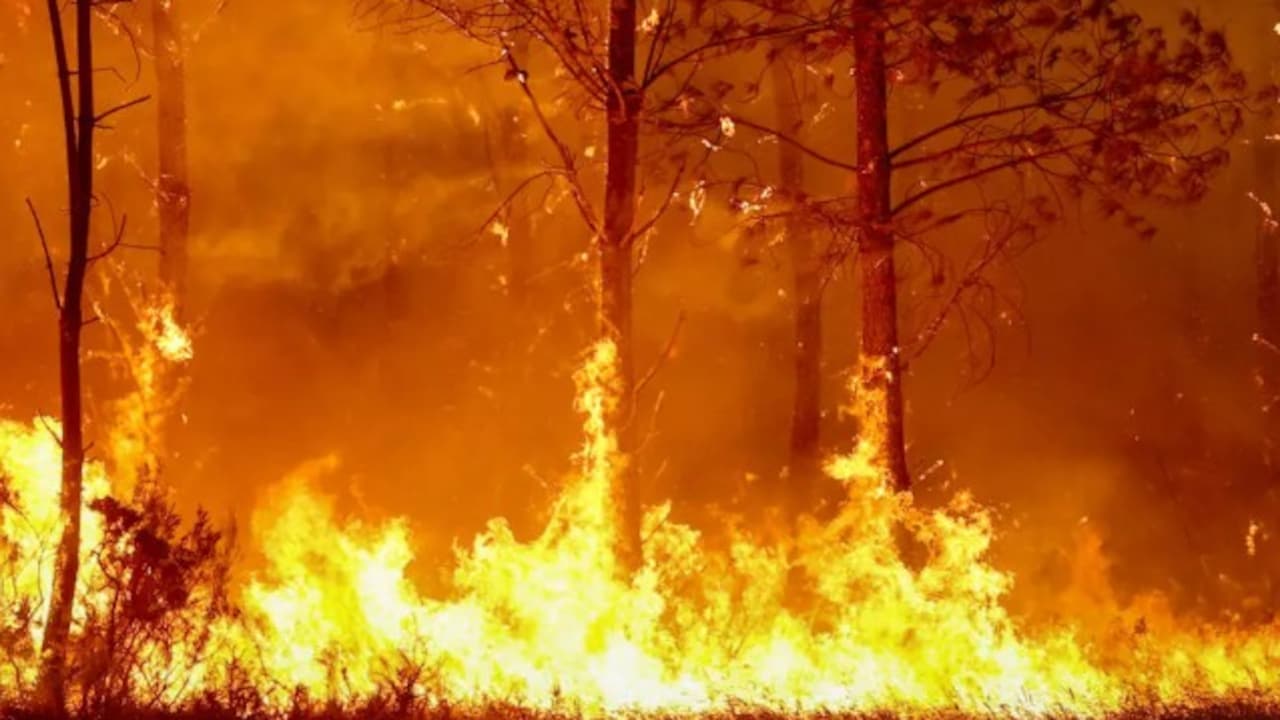
Fire does not merely burn. It breathes. It consumes oxygen with a guttural roar, creating its own weather systems, throwing embers half a mile ahead of its main body to seed new nightmares. And right now, in the heart of France, it was devouring the earth at a scale that defies easy visualization.
Four times the size of Paris.
Let those numbers settle. Take the entire French capital—the dense web of Haussmann apartments, the grand boulevards, the monuments, the Metro lines, the winding Seine cutting through millions of lives—and multiply that footprint by four. Now replace concrete and steel with ancient pine forests, centuries-old farmhouses, and villages whose names trace back to medieval charters. That is what was turning to ash beneath a relentless, punishing heatwave.
I remember talking to a local vigneron a few years ago who pointed to his vines and laughed, telling me the soil here remembers every drought. But the soil has forgotten how to cope with this.
Record temperatures across Europe have transformed the continent's favorite summer destination into a tinderbox. When the thermometer pushes past thresholds that historical climate models said were decades away, the physical properties of the environment shift. Plant life essentially holds its breath. Trees shut down their internal plumbing to conserve moisture, turning their needles and leaves into dry kindelling.
Consider what happens next: a stray spark, a discarded bottle acting as a lens, or simply friction, and the landscape explodes.
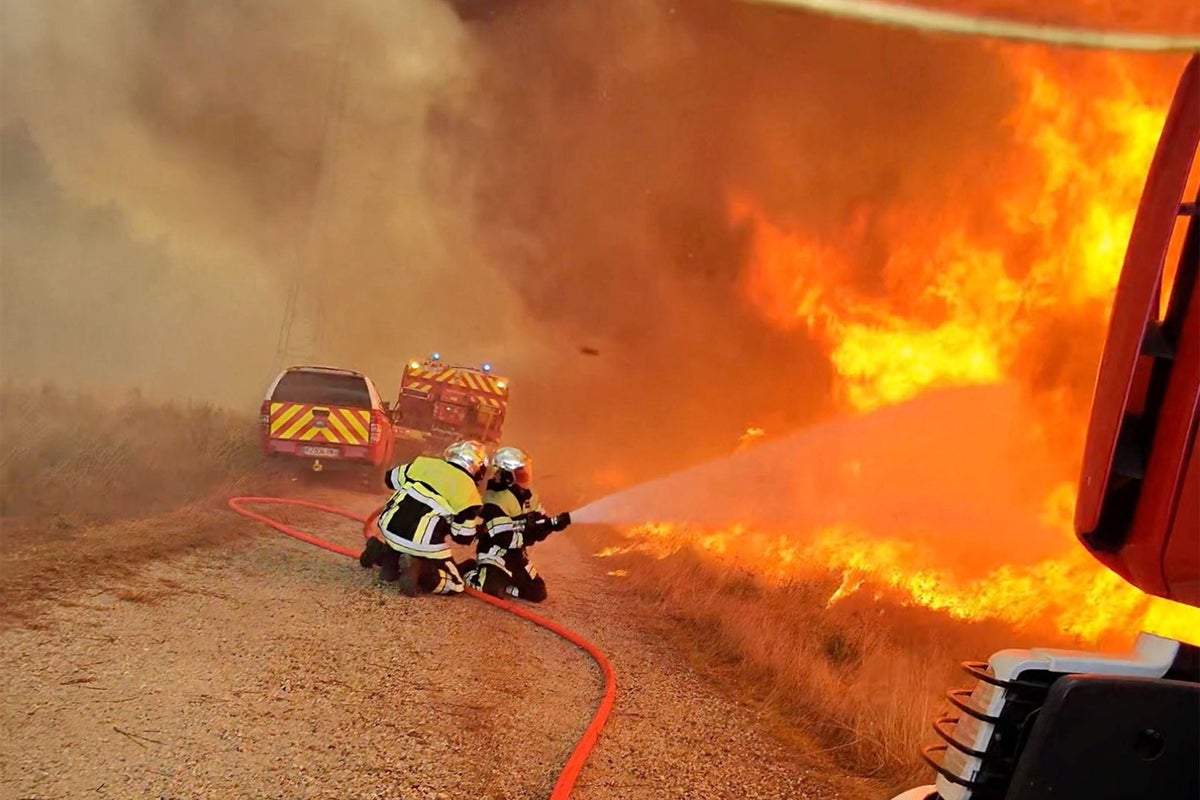
The French firefighters, known locally as the sapeurs-pompiers, face an adversary that changes shape by the hour. These are not weekend volunteers; they are a highly trained paramilitary force merging grit with precise tactical calculation. Yet, standing before a wall of flame stretching miles wide, training can only buy you time.
Imagine standing behind a line of red fire trucks, the water pressure in your hoses dropping as demand outstrips supply, watching the canopy of a forest you walked through as a child suddenly flash-boil into white-hot gas. The radiant heat alone is enough to blister skin through heavy protective gear. It pushes you back. It forces you to yield ground you swore you would hold.
Families living in the rural periphery were given minutes, not hours, to pack. What do you grab when the sky turns the color of a furnace?
You do not grab the television. You grab the shoe box of faded photographs from a grandfather who survived a different kind of war. You grab the spare car keys, the medicine bottles, the cat yowling inside its carrier. You leave the front door unlocked because emergency crews might need to check for pets, and you drive down winding country lanes choked with smoke, headlights cutting a pathetic yellow tunnel through the murk.
This is the human cost of the climate crisis. It is not an abstract graph published in a quarterly scientific journal in Geneva. It is the taste of ash on a child's tongue in the back of a Renault hatchback. It is the silence of a vineyard owner staring at blackened stumps where Grenache grapes should have swollen toward a late-September harvest.
Meteorologists trace the physics of this disaster back to stagnant high-pressure systems—heat domes trapping hot air over Western Europe like a lid on a boiling pot. The jet stream has grown sluggish, buckling into lazy, exaggerated loops that stall weather patterns in place for weeks at a time. What used to be a week-long heatwave now stretches into a month of continuous baking. The earth cracks open. The water tables drop.
And the fires follow.
Authorities deployed water-bomber planes, the iconic Canadairs, skimming the surface of the Mediterranean or local reservoirs to scoop thousands of liters before banking sharply back toward the smoke. From the ground, their roar overhead is the only sound that cuts through the crackling monster below. They swoop low, dropping red arcs of retardant that hiss and steam as they hit the inferno. For a brief second, the flames recede. The crowd cheers from a distant safety barrier.
Then the wind shifts.
The fire wraps around a ridge, leaping a firebreak as if it were a mere chalk line on a pavement.
To understand why this matters far beyond the borders of France, you have to look at the interconnected web of our global ecosystem. Forests like the Landes are vast carbon sinks. For generations, they have quietly inhaled carbon dioxide and exhaled life, moderating the very atmosphere that is now turning against them. When they burn in a single week, decades of stored carbon are hurled back into the atmosphere in a massive, uncontrolled exhale. The disaster feeds the mechanism that created it.
Tourists planning a summer escape to the southwest of France found their itineraries rewritten by emergency alerts. Camping sites evacuated in the dead of night. Highways blocked to prioritize convoy movements for civil protection. The romance of the French countryside—the lavender fields, the pine-scented air, the leisurely afternoons—collided violently with the raw, indifferent power of planetary friction.
There is a profound humility that comes with watching a forest burn. It strips away our technological hubris. We can build high-speed trains, launch rockets into orbit, and map the human genome, but when the wind blows hot and dry across a tinder-dry continent, we are still just mammals scrambling away from the heat.
The flames will eventually be beaten back. Rain will come. The smoke will clear to reveal a landscape of skeletal black pillars standing in grey dust.
But the memory of this summer will linger in the marrow of every person who watched their horizon catch fire. It lives on in the anxious glance toward the thermometer every time June rolls around, and in the quiet, persistent realization that the world we grew up in is gone, replaced by a new, hotter reality where the edge of the woods is never far from the door.
Night falls over the valley, but there is no darkness. The fire provides its own eerie, flickering illumination, painting the bellies of the smoke clouds in shades of copper and blood, burning long after the sun has gone down.