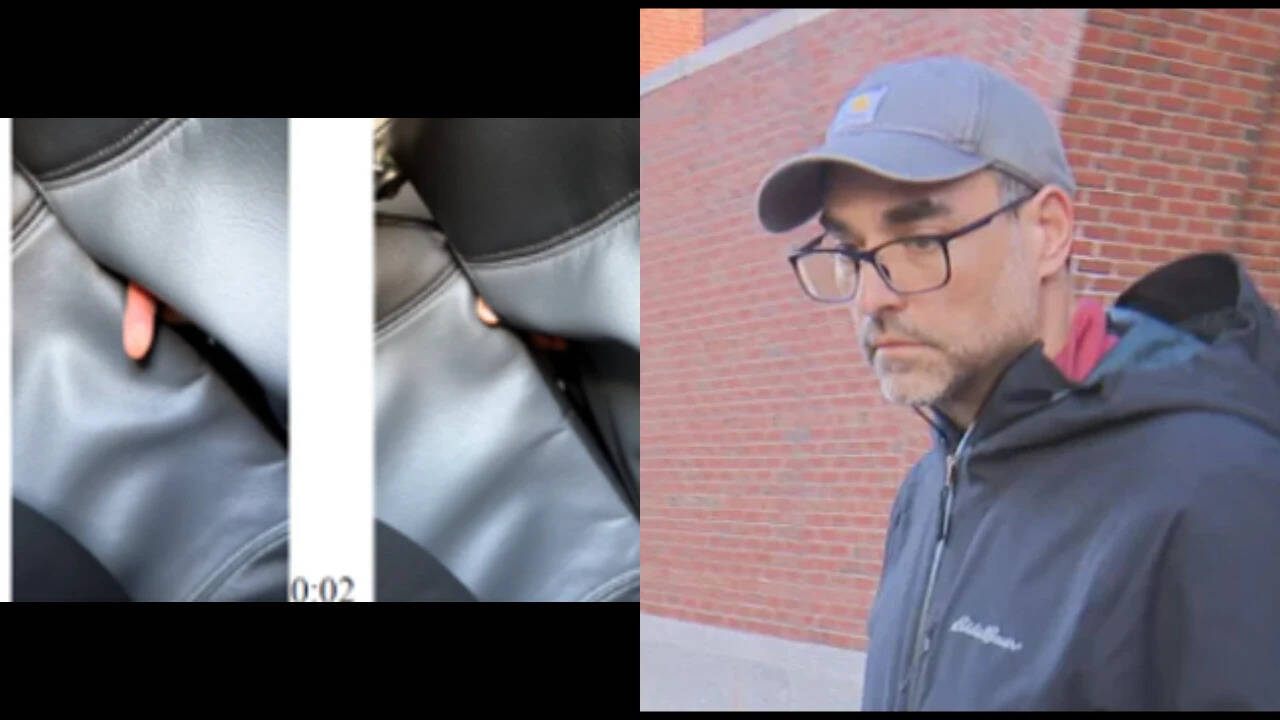
Every time a headline breaks about an in-flight assault—like the Boston man convicted for repeatedly reaching through a seat gap to touch a minor on a JetBlue flight—the public reacts with predictable, righteous fury. The commentators demand harsher prison sentences. They call for lifetime no-fly lists. They treat the incident as an isolated moral aberration, a lone predator acting in a vacuum.
That reaction is completely understandable. It is also dangerously incomplete.
Focusing exclusively on the perpetrator lets the aviation industry off the hook for building flying tin cans engineered to maximize revenue per square foot at the direct expense of passenger boundaries. The lazy consensus treats in-flight sexual assault as purely a policing issue. In reality, it is a structural, architectural, and operational failure baked directly into modern commercial cabin design.
If you want to understand why these crimes keep happening at 35,000 feet, stop looking solely at the criminal docket. Start looking at the blueprints for economy class.
The Architecture of Vulnerability
Walk onto any narrow-body commercial aircraft today and look at the space between the seatback and the cabin wall, or the gap beneath the armrest between two adjacent seats. You will find open voids large enough for a human arm to pass through effortlessly from the row behind.
Airline interior manufacturers did not create these gaps by accident. They are the byproduct of aggressive weight-reduction targets and slimline seat engineering. Every pound shaved off an aircraft frame saves thousands of gallons of jet fuel over the lifespan of the plane. To achieve this, manufacturers stripped away solid bulkheads, hollowed out seat frames, and replaced thick, flush-mounted armrests with thin, cantilevered plastic dividers that leave massive openings at hip and shoulder level.
I have spent years analyzing aviation safety protocols and cabin ergonomics, and the disconnect between engineering metrics and human reality is staggering. In the boardroom, a two-inch reduction in seat pitch and a hollowed-out seat shell look like a brilliant margin improvement. At cruising altitude, with the cabin lights dimmed for a red-eye flight, those exact design choices erase physical privacy. They create blind spots where a predator in row 14 can reach into row 13 without standing up, without speaking, and without entering the direct line of sight of a flight attendant walking the aisle.
When a Boston jury convicted the passenger on that JetBlue flight, the legal system did its job after the fact. The problem is that the physical environment of the cabin actively facilitated the crime before the plane ever landed.
The Myth of the Cabin Crew Safety Net
Whenever high-profile in-flight assaults make the news, airline spokespeople recite the exact same script. They remind the public that flight attendants are trained safety professionals who monitor the cabin and respond immediately to passenger reports.
Here is the brutal truth that airlines refuse to print in their safety brochures: flight attendants cannot see through aluminum seatbacks, and they are stretched far too thin to patrol a darkened cabin effectively.
Federal Aviation Administration (FAA) regulations mandate a minimum ratio of one flight attendant per 50 passenger seats. On a standard 180-seat Airbus A320 or Boeing 737, that means four crew members are responsible for managing nearly two hundred people. During beverage service, turbulence, or overnight flights when the main cabin lights are shut off, visual monitoring drops to near zero.
Consider the mechanics of an overnight domestic flight:
- Ambient lighting is eliminated to encourage passengers to sleep, plunging the lower half of the cabin into pitch darkness.
- Engine noise masks subtle movement, creating a 75-to-80-decibel white noise blanket that drowns out shifts in posture or quiet distress.
- The freeze response paralyzes victims, particularly minors or solo travelers wedged into window seats with nowhere to go and no physical barrier separating them from the row behind.
Expecting a four-person cabin crew to detect a hand slipping through a three-inch gap between a seat cushion and a fuselage wall is magical thinking. The industry relies on self-reporting in an environment specifically engineered to make victims feel trapped, isolated, and unsure of what is happening until it has already escalated.
Why Lifetime Bans Are a Half-Measure
Public outrage usually coalesces around a single demand: put offenders on a permanent, industry-wide no-fly list.
On paper, a universal no-fly list for convicted in-flight offenders sounds airtight. In practice, it is a reactive band-aid that does nothing to stop first-time offenders, and it runs straight into a wall of legal and jurisdictional bureaucracy. Currently, individual airlines maintain their own internal ban lists. A passenger banned from JetBlue for groping a minor can still walk across the terminal and buy a ticket on Delta, American, or United unless federal authorities intervene or Congress passes a unified statutory mandate—legislation that has repeatedly stalled over due process debates and administrative oversight.
Even if a federal ban list were implemented tomorrow, it suffers from a fatal flaw: it requires a victim to be assaulted first.
Imagine a scenario where a bank removed the locks from its vault doors, turned off the security cameras at night, and argued that its security strategy was sound because it prosecuted bank robbers after the money was stolen. You would call that bank negligent. Yet we accept that exact logic from commercial airlines every single day.
What Aviation Insiders Actually Know About Cabin Design
To understand why cabin interiors remain so porous, you have to look at how aircraft seats are certified. The FAA and the European Union Aviation Safety Agency (EASA) test seats rigorously for crashworthiness—specifically 16g dynamic impact standards. They test flammability. They test structural integrity under extreme turbulence.
They do not test for personal boundary security.
In the regulatory framework, a seat is a restraint device designed to keep a body from becoming a projectile during a rapid deceleration event. Whether that seat allows a stranger behind you to reach through and touch your ribs, your hip, or your child's arm is completely irrelevant to airworthiness certification.
Manufacturers like Collins Aerospace, Safran, and Recaro build precisely to the specifications airlines pay for. Airlines pay for density, lightness, and low maintenance costs. Solid privacy shrouds add weight. Flush-mounted side panels make cleaning harder and slow down aircraft turnaround times at the gate. Every minute a plane sits on the tarmac costs an airline money, so interiors are designed for rapid sweeping and minimal crevices—ironically leaving wide-open structural gaps where the seat meets the cabin wall.
The Uncomfortable Downside of Fixing the Problem
If you force airlines to redesign economy cabins to eliminate structural gaps and install solid physical barriers between rows, passengers will pay for it. Literally.
There is no free lunch in aerospace engineering. Adding solid composite shrouds between the seat edge and the fuselage wall, or installing full-depth partitions beneath armrests, adds weight to the aircraft. Added weight increases fuel burn. Increased fuel burn drives up operating costs, which airlines immediately pass on to consumers through higher base fares.
Furthermore, solid, enclosed seat shells restrict airflow, requiring adjustments to cabin environmental control systems, and they make emergency egress slightly more complex to certify. A fully enclosed economy seat is heavier, hotter, and more expensive to manufacture.
This is the trade-off nobody wants to admit out loud: the ultra-cheap domestic airfare model relies directly on stripped-down, open-frame seating. The same engineering compromises that allow you to fly from Boston to Florida for under two hundred dollars are the ones that strip away your physical buffer from the stranger sitting twelve inches behind you.
Dismantling the Common Advice Given to Travelers
When news of an in-flight assault breaks, travel blogs rush out listicles telling passengers how to "protect themselves" on airplanes. The standard advice is useless:
- "Alert a flight attendant immediately." This assumes the victim isn't a terrified minor frozen in shock, or an adult trying to process whether contact from behind was accidental turbulence or intentional assault.
- "Book an aisle seat." Aisle seats expose you to foot traffic and elbows from the aisle, while doing nothing to close the gap between your seatback and the armrest behind you.
- "Travel with a companion." Millions of people—including unaccompanied minors and solo commuters—fly alone every week. Safety cannot be a luxury reserved for people who buy tickets in pairs.
Shifting the burden of prevention onto passengers—especially children—is an abdication of corporate responsibility. A 14-year-old sitting in a window seat should not have to stuff a rolled-up sweatshirt into the gap between their seat and the airplane wall just to guarantee that a grown man in the row behind them cannot reach their body.
How to Actually Force Structural Change
The FBI has repeatedly warned that in-flight sexual assault is one of the fastest-growing categories of crime aboard commercial aircraft, with reported incidents climbing steadily over the past decade. Prosecuting predators like the man in Boston is necessary, and federal prison sentences send a clear message. However, deterrence through criminal law only works if the physical environment stops making the crime effortless.
True prevention requires attacking the problem at the design and regulatory level:
- Mandate gap-closure standards in FAA cabin certifications. Regulators must establish maximum allowable clearances between seat frames, armrests, and cabin sidewalls. If a human hand can pass from one row into the personal space of another row, the seat design fails basic passenger security.
- Require physical privacy baffles on new aircraft deliveries. Retrofitting thousands of active airliners overnight is financially impossible, but mandating flush sidewall fillers and solid lower armrest panels on all newly delivered aircraft and major cabin refurbishments creates a clear, enforceable timeline.
- Eliminate darkened-cabin blind spots on flights carrying unaccompanied minors. Airlines charge hefty fees for unaccompanied minor services—often $150 each way—while routinely seating those children in standard open-gap economy seats out of direct crew sightlines. If an airline accepts a fee to supervise a minor, that child belongs in a bulkhead or crew-adjacent row with zero rear-row access.
- Implement clear, non-verbal reporting protocols. Airlines should integrate direct crew-alert messaging into seatback screens and in-flight Wi-Fi portals. Allowing a passenger to silently flag an incident to the galley without standing up or speaking out loud removes the intimidation barrier that keeps victims silent until landing.
Stop Pretending This Is Just About Bad People
Criminal predators exist in every corner of society, and they will always exploit environments that offer concealment, darkness, and zero physical barriers. Commercial aviation has spent twenty years perfecting a cabin layout that delivers all three in the name of fuel efficiency and seat density.
Prosecutors will continue to lock up offenders who get caught, and headlines will continue to express shock every time a jury hands down a guilty verdict. Nothing will actually change at 35,000 feet until airlines are forced to close the gaps they deliberately engineered into the seats you are paying to sit in.