You have probably seen the TikTok videos. Sunburnt American tourists standing in gorgeous, centuries-old Parisian apartments, fanning themselves dramatically, and mocking the lack of air conditioning. To a visitor from a country where indoor temperatures are routinely kept at a crisp 68 degrees Fahrenheit, sweating through a European heatwave feels barbaric. But the locals have officially run out of patience.
When an intense heatwave sent temperatures surging past 40 degrees Celsius (104 degrees Fahrenheit) across Europe, the online mockery peaked. That is when Paris Deputy Mayor Audrey Pulvar decided she had heard enough. Taking to social media, she fired back directly at American journalists and influencers, calling their commentary "so rich" and telling them to stop the lectures.
This isn't just a petty internet argument about comfort. It is a fundamental clash of cultures, environmental philosophies, and global accountability. Pulvar explicitly tied the brutal European heatwave to America's massive carbon footprint. She pointed out that the United States is the world's second-largest greenhouse gas emitter and noted that the fact that American cities are 90 percent air-conditioned is directly related to the climate crisis.
For decades, the standard American response to a hot room has been to throw more electricity at it. But in France, where only about 25 percent of homes have cooling units, AC has long been viewed as an ecological disaster and a lazy architectural cop-out. As Europe suffocates under a Saharan "Omega Heat Dome," the debate has turned into a proxy war over who is actually responsible for fixing the planet.
The Cultural Divide Behind the Cooling Debate
To understand why the French get so defensive about this, you have to look at how different the built environment is. Walk into almost any American suburban home built in the last fifty years. It is essentially a sealed drywall box designed to be entirely dependent on mechanical climate control. If the power goes out in July, that house turns into an oven within hours because it was never designed to breathe.
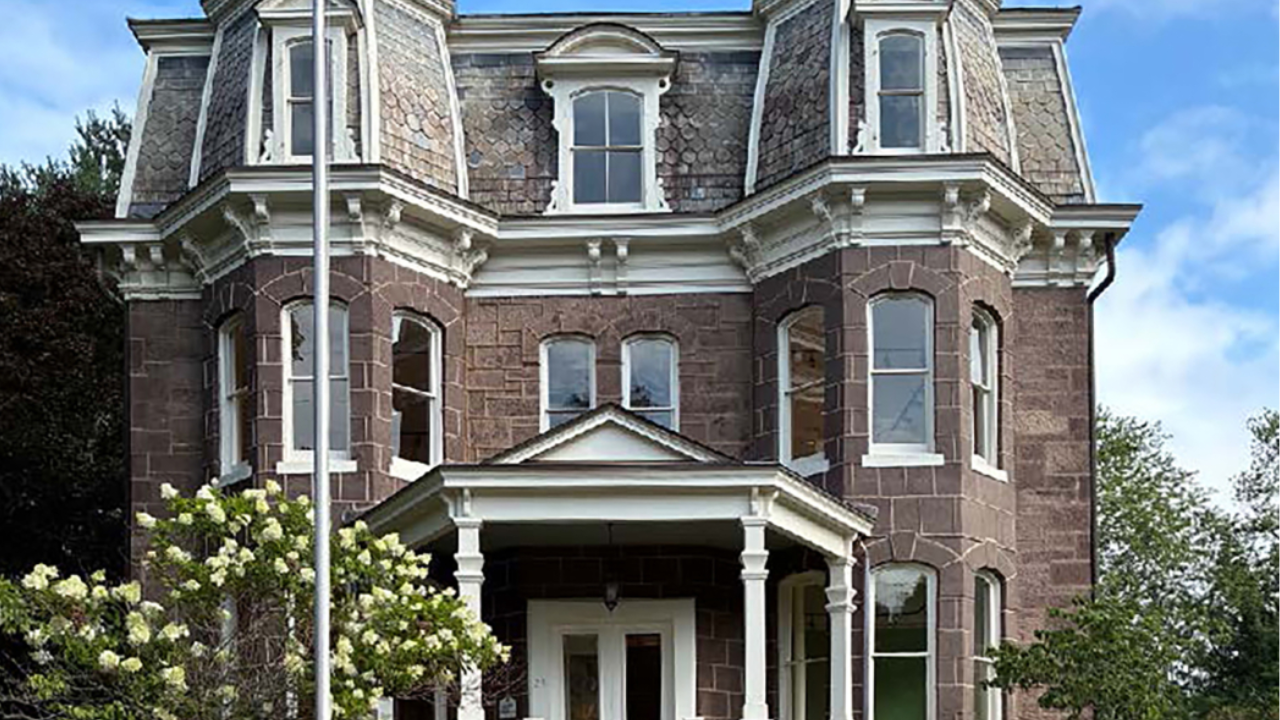
Parisian architecture operates on a completely different philosophy. The city is defined by its historic limestone buildings, many of which date back to the 19th-century Haussmann renovation or even earlier. These structures were built with thick stone walls designed to absorb heat during the day and release it slowly at night. For generations, the strategy wasn't to fight the summer heat with machines, but to live with it. You close the heavy wooden shutters during the peak afternoon sun, open the tall windows at night to catch the cross-breeze, and throw water on the pavement outside to cool the immediate air.
Furthermore, installing a modern split-system air conditioner in a protected historic building isn't just discouraged by French culture; it is often flat-out illegal. You cannot simply drill holes through a 300-year-old facade to hang a noisy, dripping plastic compressor unit outside your window. Even infrastructure like historic hospitals has strict limits on modifications, meaning only the absolute most vulnerable patients get cooled rooms.
But as global temperatures rise, these traditional coping mechanisms are reaching their absolute breaking point.
The High Cost of the Cold Air Addiction
When Pulvar told Americans to look in the mirror, she was pointing at a very real paradox. Air conditioning is a classic example of a feedback loop. The hotter the planet gets, the more people use AC. The more people use AC, the more electricity they consume, which usually means burning more fossil fuels, making the planet even hotter.
Consider these realities about the mechanical cooling we take for granted:
- The Power Drain: Modern cooling units consume massive amounts of electricity. On a hot summer afternoon in the US, cooling accounts for an enormous percentage of the total peak electrical load on regional power grids.
- The Urban Heat Island Effect: Air conditioners don't magically destroy heat; they just move it from inside a building to the street outside. A city where every apartment has an AC unit running simultaneously can see its outdoor street-level temperatures rise by several degrees just from the hot air being exhausted by the machines.
- The Chemical Problem: Older or poorly maintained units still rely on hydrofluorocarbons (HFCs). These coolants are potent greenhouse gases that trap thousands of times more heat in the atmosphere than carbon dioxide when they leak.
This is why French environmental officials like Monique Barbut, the Minister for Ecological Transition, have openly stated they are appalled by calls to install air conditioning everywhere. From the European perspective, blanket AC adoption isn't an adaptation strategy. It is an emergency panic move that actively worsens the underlying disease.
The Traditional Taboo Is Finally Cracking
Despite the righteous defense of French ecological principles, the sheer severity of recent summers is forcing a painful re-evaluation. Ideological purity doesn't mean much when classrooms hit unbearable temperatures and hospitals warn they are reaching a saturation point.
We are starting to see a distinct political shift. Even Marine Tondelier, the leader of the French Green party, recently admitted that air conditioning is no longer a taboo subject for essential public spaces. When the alternative is a spike in heat-related mortality, stubborn resistance looks less like environmental stewardship and more like a public health failure.
Local officials have found themselves forced to compromise. Paris Mayor Emmanuel Grégoire, who has previously labeled AC as a plague, recently had to coordinate the distribution of over 1,200 portable cooling units to public schools just to keep them operational. It is a clumsy, temporary fix, and the French hate it. Customers have been lining up at electronics stores to buy up portable units the second stock arrives, signaling that the general public's patience with sweating it out is officially wearing thin.
How Europe Plans to Stay Cool Without Copying America
France has no intention of adopting the American model of freezing every interior space to the point where you need a sweater in July. Instead, the focus is on systemic, structural cooling that doesn't wreck the grid.
If you want to cool down your own living space or community without relying entirely on a massive electric bill, the European urban planning model offers several actionable strategies:
Invest in High-Mass Insulation and Retrofitting
Rather than buying a cheap portable AC unit that leaks hot air out of a window hose, focus on keeping the heat from entering in the first place. External insulation, reflective window films, and heavy thermal curtains make a massive difference. In Paris, massive budgets are being shifted toward energy-efficient building renovations that focus on passive cooling.
Maximize Urban Greening
Concrete and asphalt bake in the sun and radiate heat all night. Planting trees and creating pocket parks isn't just about aesthetics; it is literal infrastructure. A mature tree canopy can lower local peak summer temperatures significantly through shade and evapotranspiration. Paris has spent the last decade aggressively removing car lanes to plant trees and grass for exactly this reason.
Utilize District Cooling Systems
Instead of millions of individual, inefficient window units, Paris has been quietly expanding an underground network of pipes that circulates chilled water drawn from the Seine River to cool major public buildings, museums like the Louvre, and some residential blocks. It is dramatically more efficient than standard commercial AC and keeps the heat off the streets.
Ultimately, the confrontation between European officials and American tourists highlights a truth we can no longer ignore. The luxury of effortless comfort inside cannot be entirely detached from the chaos of the weather outside. Mocking a culture for refusing to adopt a unsustainable habit isn't a great look, especially when that habit is helping fuel the very heatwave everyone is trying to escape. Turn down the expectation of a 65-degree bedroom, invest in heavy window shutters, and maybe give the locals a break while they try to figure out a way to survive the summer without breaking the planet.