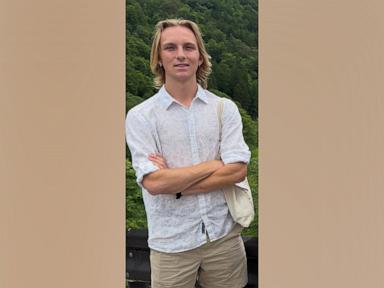
The convergence of dense wilderness and hyper-urban infrastructure presents a deceptive operational paradox for wilderness search and rescue (SAR) teams. When an individual enters a mountainous forest directly adjacent to an urban transport hub, the initial analytical assumptions regarding missing persons behavior often fracture. This operational friction was demonstrated in the Yamashina district of Kyoto, where the discovery of deceased American student James "Weston" Higginbotham by a volunteer SAR group exposed the severe limitations of standard municipal response frameworks in steep, canopy-dense terrain during adverse weather.
To analyze this outcome requires breaking down the crisis into three distinct operational domains: the telemetry degradation of personal devices, the mechanical complexity of the search environment, and the structural allocation of official versus private rescue resources.
The Telemetry Bottleneck and the Fallacy of Digital Tracking
The initial tracking phase of this incident reveals a critical vulnerability in urban-edge wilderness transitions. Surveillance data placed the subject at Yamashina Station at approximately 8:15 p.m. on May 29. Telemetry via consumer location-sharing software failed within minutes of arrival.
This digital blackout stems from two distinct mechanical failures:
- Topographical Shielding: The Yamashina terrain rises sharply from urban concrete into steep, heavily forested slopes. This sudden transition causes immediate attenuation of cellular signals as the line-of-sight to local macro cells is blocked by earth and dense foliage.
- Active vs. Passive Disconnection: Standard consumer applications rely on continuous data handshakes. If a user manually terminates location services or switches a device to airplane mode to conserve battery or isolate themselves, the tracking data changes instantly from a continuous vector to a static point-of-interest.
The operational consequence of this telemetry failure is the immediate expansion of the search radius. Without a trailing GPS ping, search coordinates must revert to probabilistic models based on pedestrian velocity from the last known point. In steep terrain, however, linear distance models are useless; velocity is heavily modulated by incline, trail availability, and visibility.
The Environmental Cost Function of the Yamashina Sector
The physical theater of the search created an environment where standard human search lines faced extreme friction. The Yamashina forests are characterized by rapid elevation shifts, thick undergrowth, and a dense multi-layered canopy that prevents effective aerial scanning.
During the primary search window, this baseline complexity was multiplied by a regional storm system. The introduction of heavy rainfall altered the operational environment through three distinct mechanisms:
- Acoustic and Visual Attenuation: Heavy rain and wind canopy noise drastically lower the efficacy of sound-based search methods, such as calling out or whistle signaling. Simultaneously, low cloud cover and precipitation reduced the operational ceiling for helicopter-mounted forward-looking infrared (FLIR) cameras, neutralizing aerial thermal advantages.
- Substrate Degradation: Heavy rainfall in this region turns forest floors into deep mud, occasionally reaching waist height in ravines. This increases the metabolic cost for ground searchers, slowing down the sweeping speed and reducing the total area covered per shift.
- Scent-Trail Dissipation: High moisture levels and active precipitation wash away or dilute scent molecules. This significantly diminishes the tracking capability of K-9 units, which rely on stable scent boundaries to track routes through dense brush.
Resource Allocation and the 72-Hour Search Horizon
A structural divergence exists between state-sponsored search protocols and private, localized efforts. The Kyoto Prefectural Police deployed a force of over 100 officers, K-9 units, and aviation support for a standard 72-hour window, concluding official operations on Friday. This timeframe is dictated by global SAR statistical survival curves, which show a sharp decline in live recovery probability after 72 hours due to exposure, lack of clean water, or trauma.
When official assets demobilized, the operational burden shifted to a private infrastructure composed of family-led initiatives, local volunteers, and specialized hired personnel. The success of the volunteer group in locating the body on Saturday highlights a critical strategy shift:
- Saturation vs. Agility: Official searches emphasize systemic, high-density line searches across primary high-probability zones.
- Macro vs. Micro Mapping: While municipal forces prioritize major trails and immediate off-trail corridors, volunteer and private teams often target structural anomalies, deep ravines, and secondary sectors that fall outside standard statistical search parameters.
The transition from an urban environment to a dense forest requires an immediate pivot from digital surveillance to high-attrition ground tracking. For international travelers navigating urban-fringe wilderness areas, safety depends entirely on maintaining physical redundancies—such as analogue signaling devices, localized topographic maps, and strict itinerary communication—rather than relying on continuous cellular connectivity.