Modern international aviation operates on razor-thin operational margins where minor latency in passenger processing snowballs into terminal-wide gridlock. When a technical fault incapacitates automated immigration clearance systems simultaneously across Sydney, Melbourne, and Brisbane, the disruption exposes the structural vulnerabilities embedded within centralized border infrastructure. Standard media coverage frequently mischaracterizes these events as isolated software bugs or temporary inconveniences. A deeper examination reveals a systemic failure of architectural redundancy, where high-density passenger hubs rely on brittle digital pipelines without adequate analog fail-safes.
To understand why a morning technical glitch can paralyze Australia's primary international gateways, one must examine the baseline mechanics of modern passenger throughput. If you liked this piece, you should check out: this related article.
The Throughput Calculus of Biometric Clearance
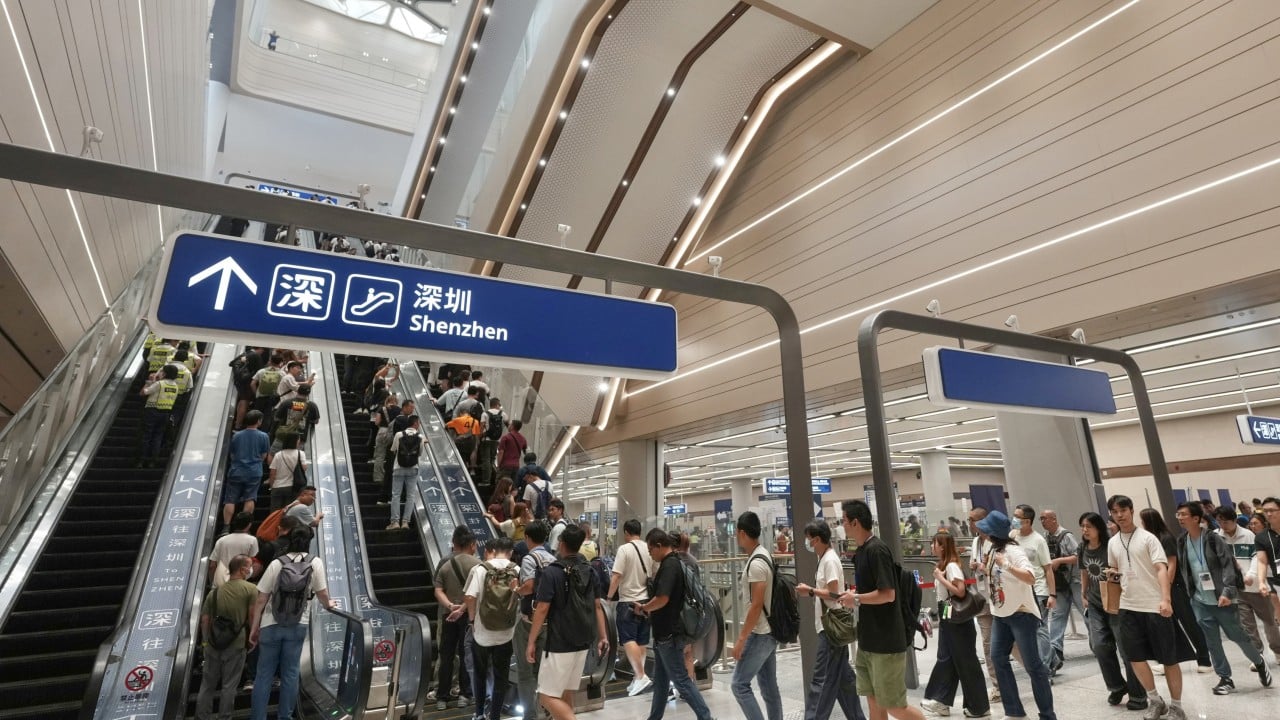
Airport terminal design operates on strict queuing equations. Under normal operational parameters, automated border control e-gates process arriving or departing passengers at a velocity roughly three to four times faster than manual desk processing by Border Force officers. Each e-gate functions as a micro-service node, verifying biometric passports against a centralized facial recognition database in seconds.
When these gates suffer a total outage, the processing velocity plummets instantly. The math governing this transition is unforgiving. If an international terminal experiences an arrival or departure rate of three thousand passengers per hour, and e-gates handle eighty percent of that volume at peak efficiency, the sudden reversion to manual processing forces the entire load onto a fraction of staffed counters. Because manual verification introduces variable processing times—handling damaged passports, exception flags, and linguistic barriers—the service rate drops below the arrival rate. For another look on this story, see the recent coverage from Travel + Leisure.
Queuing theory dictates that when the arrival rate exceeds the service rate, wait times do not increase linearly; they scale exponentially. Within minutes, queues spill from immigration zones back into baggage carousels or check-in concourses. The physical architecture of terminals like Sydney's international terminal was not engineered to accommodate stationary queues numbering in the thousands without choking circulation routes.
Architectural Centralization and Distributed Failure
The simultaneous disruption across Sydney, Melbourne, and Brisbane points directly to centralized system dependencies. Modern border control systems do not operate as isolated local networks confined to individual airport terminals. Instead, they rely on distributed terminal clients tethered to centralized national databases maintained by federal agencies such as the Australian Border Force.
This centralized architecture introduces a classic single point of failure. While decentralizing database queries to local servers could theoretically insulate individual airports from nationwide blackouts, security protocols and real-time watchlists demand synchronized, unified data access. Consequently, a failure in core telecommunication links, identity verification protocols, or authentication servers at the national level instantly manifests as a simultaneous multi-hub outage.
The economic and operational repercussions of this design choice are profound. Rather than containing a software anomaly to a single port—allowing regional traffic to route around the disturbance—a national pipeline failure contaminates the entire east-coast aviation corridor. Domestic flights feeding international banks experience cascading delays as aircraft sit stranded at departure gates waiting for connecting passengers trapped in immigration queues.
Peak-Bank Vulnerability and Scheduling Concentration
Airlines schedule international departures and arrivals in concentrated clusters known as peak banks. These banks maximize aircraft utilization and facilitate seamless transfer connections for travelers. However, they create immense vulnerability to operational shocks.
At major Australian hubs, the morning international departure bank represents peak capacity utilization. Terminals operate near 100% asset saturation, with boarding lounges, aerobridges, and runway slots allocated down to the minute. When an e-gate outage strikes during this exact temporal window, the system lacks the structural slack required to absorb the delay.
A delayed passenger cannot simply be pushed back ten minutes without disrupting subsequent aircraft rotations, crew duty limits, and curfews. The propagation delay follows a predictable trajectory:
- Immigration processing stalls, trapping passengers in terminal concourses.
- Boarding deadlines pass, forcing airlines to offload checked baggage for passengers stuck in queues.
- Aircraft pushback is delayed, creating gate blockages that prevent arriving aircraft from parking.
- Air traffic control flow management is invoked to restrict inbound aircraft arrivals, locking up regional airspace capacity.
The disruption is not merely an inconvenience for travelers; it is an economic shock that reverberates through airline balance sheets via fuel burn, crew overtime, and compensation liabilities.
The Limits of Analog Remediation
When automated systems fail, federal agencies deploy manual intervention strategies, dispatching specialist officers to manage exception handling and manual passport stamping. While necessary, this remediation exposes the labor-force constraints of modern border administration.
Border agencies maintain staffing levels calibrated for baseline exception management—handling travelers who fail biometric matching, visa discrepancies, or special security flags. They do not maintain a shadow workforce of thousands of officers capable of instantly replacing automated e-gate throughput during peak hours. Deploying staff from administrative duties to frontline inspection lanes provides only marginal relief against massive passenger volumes. Furthermore, manual processing introduces human fatigue variables, increasing the probability of verification errors as officers work under intense pressure from surging crowds.
Relying on manual fallbacks without pre-staged surge protocols transforms a technology glitch into a human resource crisis. The transition period between system failure detection and full manual queue stabilization represents a window of maximum entropy, during which information vacuums generate passenger frustration and operational chaos.
Infrastructure Stress Testing for 2027 and Beyond
Mitigating recurring border processing vulnerabilities requires a shift in how aviation authorities conceptualize system resilience. Incremental software patches and routine maintenance updates are insufficient if the underlying architecture remains dependent on uninterrupted connectivity to fragile central databases.
Airport operators and border agencies must implement localized caching protocols and resilient edge-computing architectures that allow e-gates to execute local verification subsets even during wide-area network degradations. Additionally, scheduling authorities must enforce tighter coordination between airline slot allocations and actual terminal processing capacities, factoring border clearance friction directly into airport capacity declarations.
If eastern-seaboard aviation hubs fail to decouple terminal processing capacity from single-point-of-failure digital dependencies, similar disruptions will recur with predictable regularity. Stakeholders operating within the Australian transport network must treat border infrastructure not as an invisible utility, but as a critical operational bottleneck requiring continuous stress-testing, redundant fail-over pathways, and rigorous capacity buffers.