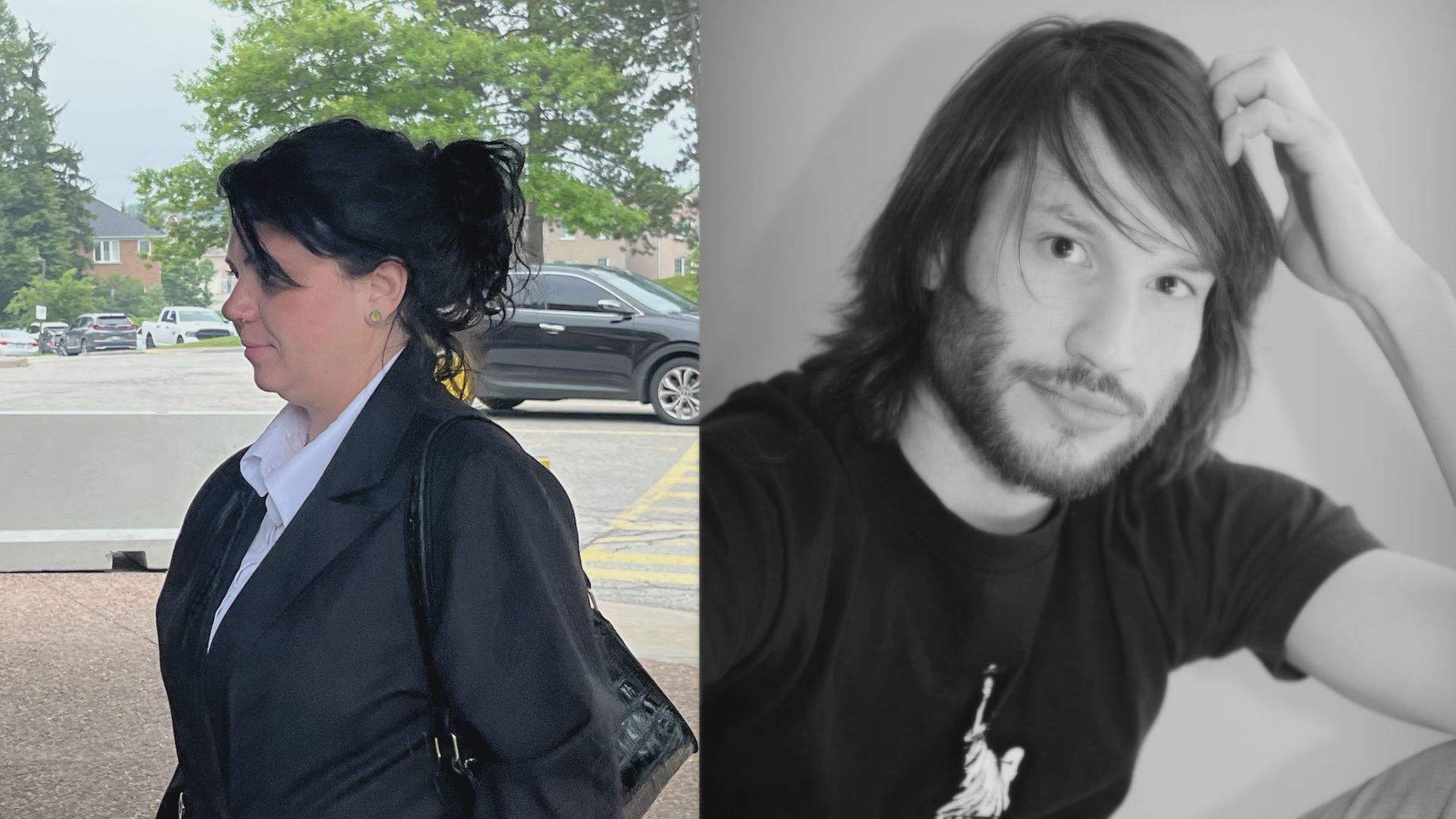
The courtroom on Eagle Street West in Newmarket fell entirely silent when Superior Court Justice Vanessa Christie dismantled the core defense. McKenzie Gill stood accused of second-degree murder for the July 14, 2024, killing of her estranged boyfriend, Blake Bibby, inside his Millard Avenue apartment. Gill’s legal team had staked everything on a plea of self-defence, painting a picture of a terrified woman striking back during a late-night altercation.
Justice Christie saw something entirely different. The judge ruled that the single, fatal stab wound to Bibby’s chest was not an act of preservation, but an act of unvarnished vengeance.
Domestic homicides rarely fit the clean narratives presented in opening statements. This case peeled back the raw, jagged layers of an on-again, off-again relationship defined by volatility, court orders, and mutual toxicity. When the legal dust settled at the Newmarket Courthouse, the verdict offered a chilling masterclass in how forensic evidence and digital timelines can completely dismantle a self-defence claim.
The Anatomy of a Fatal Night
The timeline of July 14, 2024, exposes the fragile boundaries between argument and escalation. Gill and Bibby shared a history peppered with domestic strife, so much so that legal restraints actively prohibited Bibby from contacting Gill. Yet, proximity and habit drew them back together inside Bibby's apartment near Main Street and Millard Avenue.
According to the crown’s presentation at trial, the fatal trigger was psychological rather than physical. Testimony revealed that Bibby had been taunting Gill, explicitly boasting that he was sleeping with another woman.
Justice Christie explicitly rejected the defense argument that Bibby had physically assaulted Gill that night. Instead, the evidence pointed to a sudden, explosive pivot from verbal humiliation to lethal retaliation. Gill grabbed a kitchen knife and drove it directly into Bibby’s heart.
The physical mechanics of the injury left little room for ambiguity under forensic examination. A targeted strike to the chest with a kitchen blade carries an inherent, undeniable recklessness regarding human life. The court determined that the strike was delivered with the intent to cause harm that the attacker knew was likely to cause death, sealing the legal threshold for second-degree murder.
The Chilling 911 Call That Undermined the Defense
Self-defence claims frequently rise or fall on the immediate aftermath of an incident. Courts look closely at the accused person's behavior immediately following the lethal act to gauge state of mind, panic versus calculation, and genuine fear versus remorse.
Gill’s actions after the stabbing proved to be her undoing.
Following the attack, Gill did dial emergency services. On paper, calling 911 often supports a narrative of immediate regret or an attempt to save a life. But audio recordings played in the Newmarket courtroom told a different story.
Justice Christie described Gill's tone during the emergency call as chilling. There was an absence of panic, a complete lack of emotional distress, and a cool, collected cadence that completely undermined the theory of a frantic woman reacting to a mortal threat. Worse still, deception entered the record instantly. When the dispatcher asked for her identity, Gill deliberately offered a false name, calling herself Amelia Shill.
She fled the apartment building shortly after hearing the distant wail of approaching emergency sirens. Abandoning a dying partner while providing a pseudonym to dispatchers does not align with a person defending their own life from an active aggressor. It aligns with a perpetrator conscious of guilt and eager to escape accountability.
The Broader Reality of Toxic Entanglements
Trials of this nature expose the grim reality of relationships caught in cyclical violence. Friends and family members of the victim stepped forward to bear witness to a life cut short, though the verdict brought no true closure. Fern Bibby, the victim's mother, remarked outside the courthouse that the legal outcome altered nothing about the permanent absence left behind, leaving two families utterly devastated.
The criminal justice system struggles profoundly with cases where both parties contribute to a toxic environment, yet only one walks away alive while the other faces a life sentence. Bibby had a history as the primary abuser in the dynamic, a factor heavily emphasized by defense counsel to contextualize the volatile atmosphere.
Canadian law recognizes battered spouse syndrome and legitimate self-preservation. But the threshold remains strict. The law demands proportionality, immediacy, and an absence of alternative escape. When an argument shifts from a mutual struggle to an intentional retaliation over infidelity, the legal shield of self-defence evaporates entirely.
Gill's bail, which had previously allowed her freedom under conditions including an ankle monitor, was promptly revoked following the verdict. She now faces the mandatory life implications associated with a second-degree murder conviction, awaiting the sentencing phase where parole eligibility windows will be determined. The kitchen knife recovered from the scene remains a silent artifact of how quickly verbal cruelty can mutate into permanent, irreversible tragedy.