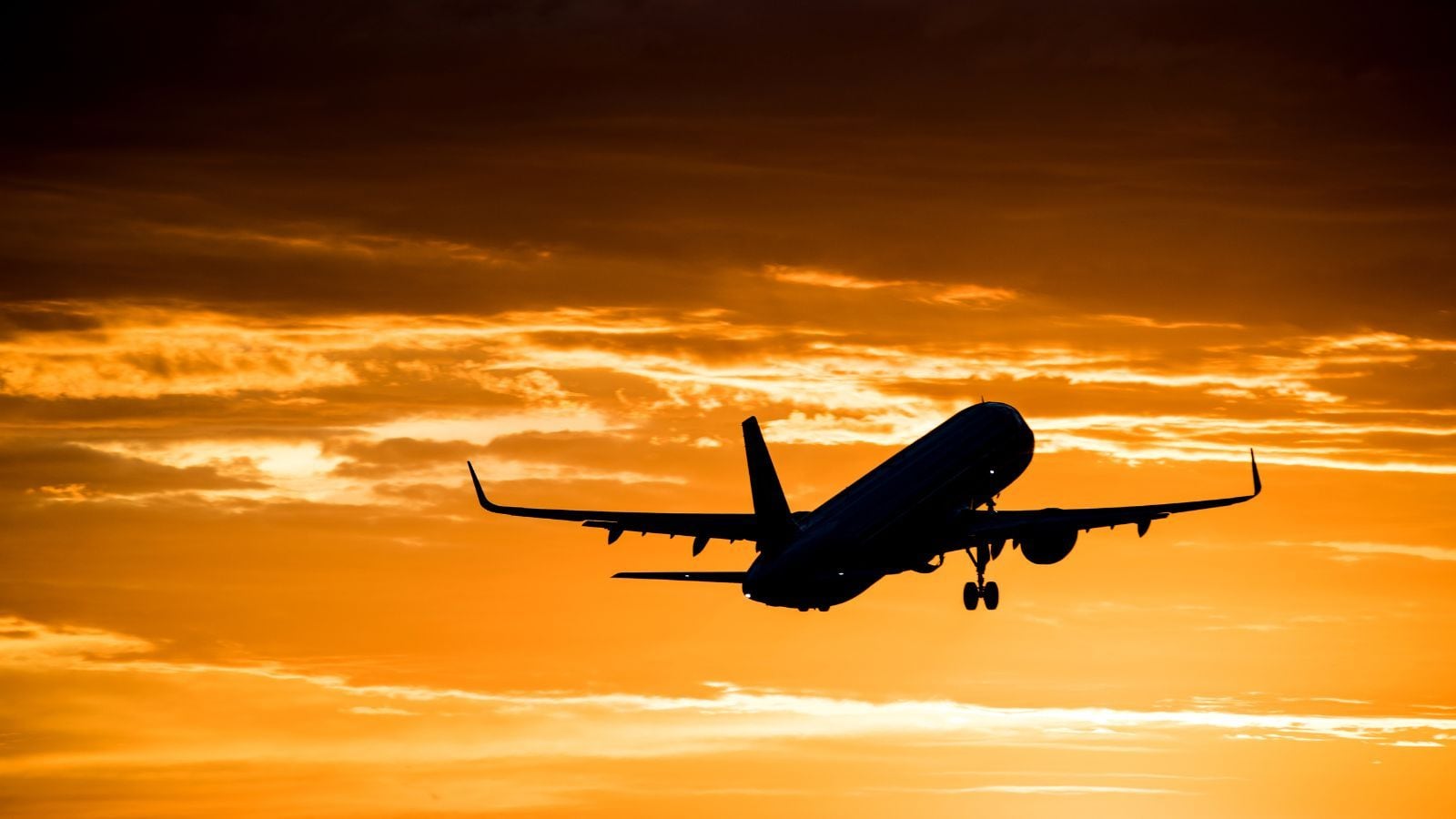
When a commercial airliner abruptly reverses course in mid-air and squawks an emergency transponder code, the immediate reaction on the ground is a spike of collective anxiety. Aviation safety protocols are built on layers of redundancy, yet a potential unlawful interference alert remains the most chilling signal an aircraft can transmit. A recent incident involving a Ryanair flight forced to turn around following a suspected security scare highlights how rapidly a routine European sector can transform into a high-stakes security crisis.
Transponder code 7500 is universally recognized as the discrete squawk for unlawful interference. When an air traffic controller sees those four digits illuminate on a radar screen, standard operating procedures shift into a rigid, highly rehearsed containment protocol. The margin for error shrinks to zero. Military interceptors are prepped, airspace is cleared, and ground emergency services mobilize at the destination airport. But what happens when that signal is triggered by mistake, mechanical fault, or human error? The gap between a perceived threat and operational reality exposes the vulnerabilities baked into modern commercial flight operations. You might also find this related article useful: Planting Trees Around Gorilla Parks is a Dangerous PR Band-Aid That Fails Both People and Wildlife.
The Weight of Seven-Five-Hundred
Every commercial pilot memorizes emergency transponder codes during initial ground school. Code 7700 indicates a general emergency, 7600 signals radio communication failure, and 7500 denotes a hijacking or unlawful interference. These codes are not merely numbers punched into a flight management computer; they are triggers that set off automated cascades across national air defense networks.
When a pilot inputs 7500, the action is often silent. Modern cockpit avionics allow aircrews to transmit this warning without speaking over congested VHF or UHF radio frequencies, minimizing the risk of tipping off an aggressor inside the cabin. However, this silent transmission means air traffic control units must rely entirely on radar vectors, altitude data, and subsequent manual communications to assess the unfolding situation. As reported in detailed coverage by Lonely Planet, the effects are widespread.
In the case of the Ryanair flight that triggered widespread alarm before turning around, the immediate response demonstrated how swiftly civilian aviation authorities coordinate with national defense structures. European skies are among the most densely monitored airspaces on earth. Eurocontrol and individual national military command centers maintain constant vigilance. When an anomaly occurs on a scheduled low-cost carrier route, the administrative machinery does not hesitate.
Inside the Flight Deck Under Pressure
To understand why a flight might turn around following a security scare, one must look at the psychological and procedural reality of the flight deck. Modern commercial flight decks are fortified zones. Since the legislative shifts following the events of 2001, reinforced cockpit doors have transformed the front office into a hardened bunker.
Cabin crew and flight crew operate under strict communication protocols. If a threat materializes in the passenger cabin—whether through disruptive behavior, an unattended suspicious package, or a misunderstanding regarding cabin instructions—the captain faces an immediate triage dilemma. Aviate, navigate, communicate. That is the immutable mantra.
Communication during a suspected security incident is deliberately restricted. If a pilot suspects compromise, opening the reinforced door is strictly prohibited under almost all circumstances. This creates an information vacuum. The captain must assess the gravity of the threat based on fragmented intercom chatter, cabin crew threat reports, or ambiguous visual cues from cockpit peepholes and surveillance cameras.
If ambiguity persists, erring on the side of caution dictates an immediate diversion. Turning the aircraft around and heading back to the point of origin, or diverting to the nearest secure airfield, is the safest operational hedge against a catastrophic outcome. Passengers experience this as a violent, abrupt bank and a rapid descent, followed by a tense landing surrounded by armed tactical units and emergency vehicles.
The Cost of False Alarms and Human Error
Transponder misdials are rare, but they happen. In the high-workload environment of a busy European descent or climb phase, fingers slip on keypads. A pilot intending to input a standard altimeter setting or a routine frequency change can inadvertently dial a critical emergency code.
While verification procedures exist, the design of older cockpit control panels has occasionally contributed to input errors. Furthermore, misunderstandings between cabin crew managing an unruly passenger and the flight crew trying to maintain aircraft trajectory can escalate a localized dispute into an aviation security incident.
When a flight turns around due to a false alarm, the economic and logistical fallout is immediate. Ryanair, like other ultra-low-cost carriers, relies on tight asset utilization. Aircraft are scheduled to fly multiple legs per day with minimal turnaround times at the gate. An unscheduled diversion breaks the network rhythm. Passengers miss connecting flights, crew duty time limitations are breached, and repositioning expenses mount rapidly.
Yet, airline executives rarely second-guess a captain who chooses to divert. The legal, ethical, and financial liabilities of ignoring a potential security threat far outweigh the operational friction of a grounded aircraft.
The Broader Vulnerability of Low-Cost Aviation
Low-cost carriers operate on business models optimized for efficiency, high passenger density, and standardized service delivery. Unlike long-haul legacy carriers that feature dedicated security liaisons and extensive international support networks, short-haul budget airlines rely heavily on standard airport security screening at point-of-origin stations.
This structural reality places immense pressure on frontline staff. Gate agents and security contractors must screen hundreds of passengers per hour under intense time constraints. While physical weapons detection has reached high levels of sophistication, behavioral threat detection remains an imperfect science.
When an incident occurs airborne, the crew has only their training to rely on. They do not carry firearms. They do not have dedicated sky marshals on routine European commuter hops. Their primary defense is the reinforced door and the cooperation of the cabin crew.
This incident serves as a stark reminder that commercial aviation remains a high-trust system operating in an unpredictable world. The speed with which a routine flight transforms into a national security headline demonstrates both the fragility of public safety and the rigid efficiency of the institutions designed to protect it.
As air traffic volumes continue to climb past historical pre-pandemic records, the strain on airspace infrastructure, air traffic controllers, and flight crews will only intensify. The systems holding it all together work quietly in the background, until the moment they do not. When a flight reverses course in the dead of night, it exposes the thin red line separating orderly transit from absolute chaos.