The convergence of a localized heat dome and transboundary wildfire smoke across Minnesota in July 2026 represents more than a temporary weather anomaly. It is a demonstration of a compounding environmental hazard function. When extreme meteorological forcing functions operate in tandem, they do not merely add to societal strain—they multiply it.
State agencies, municipal infrastructures, and healthcare networks are designed around isolated, single-variable emergencies. When the Minnesota Pollution Control Agency (MPCA) issued a multi-day air quality alert spanning from the Canadian border to the southern agricultural corridors, it did so under the shadow of an concurrent Extreme Heat Warning. This intersection of extreme heat and hazardous particulate matter (PM2.5) creates systemic failures across public health, grid reliability, and emergency response operations. Understanding the mechanics of this dual-threat event requires analyzing the atmospheric physics driving the smoke, the physiological stress of simultaneous exposure, and the structural limitations of current containment and mitigation strategies.
The Atmospheric Forcing Function: Why the Smoke Ingress is Systemic
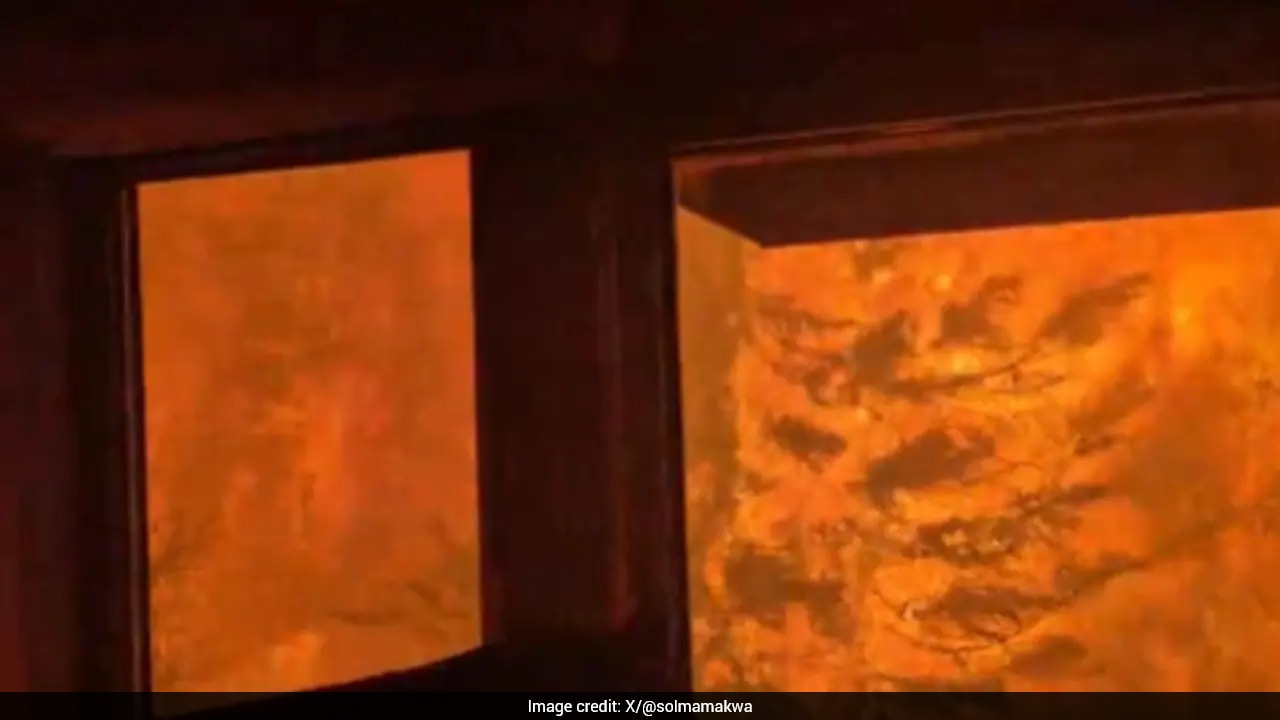
To analyze how northern wildfires—specifically the Camp fire near Ely and the Thumb fire near Lac La Croix—rapidly blanketed the state, we must evaluate the atmospheric dynamics of a passing frontal boundary. Wildfire behavior is typically analyzed through the fuel-weather-topography triad. However, the macro-scale transport of the resulting particulate matter is governed by pressure gradients and thermal profiles.
The mechanics of this specific transport event rely on three distinct meteorological phases:
- The Thermal Accumulation Zone: A high-pressure ridge, commonly referred to as a heat dome, settled over the Upper Midwest. This system compressed the air column, trapping heat near the surface and drying out forest fuels in northeastern Minnesota and Ontario. The resulting low relative humidity and high temperatures created an environment highly conducive to rapid fire spread and extreme plume rise.
- The Sagging Frontal Conveyor: A cold front, or sagging frontal boundary, began pushing south from Canada. Rather than clearing the air, this frontal boundary acted as a mechanical plow. It intercepted the highly concentrated wildfire smoke plumes in the boundary layer and dragged them southward across the state.
- The Rapid Ingress and Ground-Level Inversion: The physical onset of the smoke was exceptionally rapid. As the front moved south, colder, denser air behind the front sank, forcing the suspended PM2.5 down into the breathing zone of the planetary boundary layer. This prevented the smoke from dispersing upward, locking hazardous concentrations of particulates near the ground.
The geographical distribution of the resulting Air Quality Index (AQI) values demonstrates this transport pattern:
- The Maroon Zone (Hazardous, AQI > 300): Concentrated in Lake, Cook, and northern St. Louis counties, including Two Harbors and the Grand Portage Tribal Nation. These areas sit in the immediate downwind vector of the active wilderness fires.
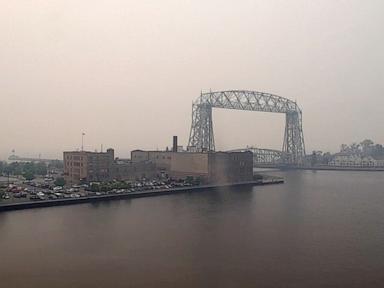
- The Purple Zone (Very Unhealthy, AQI 201–300): Encompassing the Iron Range, Duluth, and the Interstate 35 corridor down to Pine City.
- The Red Zone (Unhealthy, AQI 151–200): Covering the Twin Cities metropolitan area, St. Cloud, Brainerd, and southern agricultural centers.
The Physiological Compounding Multiplier: The Dual-Stress Function
The primary failure in public health communication during co-occurring weather events is treating heat and air pollution as separate, parallel risks. In reality, their physiological impacts are deeply interconnected, creating a compounding hazard function that elevates clinical risk.
The physiological strain $S$ experienced by an individual under these conditions can be conceptualized as:
$$S = f(H, P)$$
where $H$ represents thermal stress and $P$ represents particulate exposure. When both variables spike simultaneously, the biological response is non-linear.
The Cardiovascular Bottleneck
Under extreme heat, the human body’s primary thermoregulatory mechanism is vasodilation—widening the blood vessels to redirect blood flow to the skin, where heat can be dissipated through sweat. This process forces the heart to beat faster and pump harder, significantly increasing cardiac output.
Simultaneously, the inhalation of PM2.5—particles small enough to bypass the lung’s filtration systems and enter the bloodstream—triggers an acute systemic inflammatory response. This inflammation causes immediate arterial stiffness, increases blood viscosity, and promotes plaque instability.
When a person is exposed to both hazards, their cardiovascular system is forced to work at peak capacity (due to heat) while its functional efficiency and oxygen delivery are actively impaired (due to particulate-induced inflammation). The heart is forced to demand more oxygen precisely when the blood's capacity to transport oxygen is compromised.
The Pulmonary Vulnerability
Extreme heat increases an individual's respiratory rate (hyperventilation) as the body attempts to shed heat through exhaled breath. If the ambient air is heavily saturated with wildfire smoke, this increased respiratory rate directly increases the total mass of PM2.5 deposited deep within the alveolar sacs of the lungs.
This mechanism explains why emergency department visits across Minnesota healthcare systems show a sharp increase in acute presentations. The clinical pipeline is dominated by:
- Acute respiratory distress from rapid-onset airway hyper-responsiveness.
- Profound dehydration paired with altered mental status, as individuals avoid using cooling mechanisms like fans that might draw outdoor smoke indoors.
- Cardiovascular events including strokes and myocardial infarctions, triggered by the systemic stress of thermoregulation in a highly inflammatory, hypoxic state.
The Operational Dilemma: Structural Limitations of Modern Mitigation
The response to this compounding crisis reveals critical vulnerabilities in both emergency management and built infrastructure. Neither wilderness containment nor urban infrastructure is optimized for co-occurring extremes.
1. The Land Management Trade-off
The closure of the entire Boundary Waters Canoe Area Wilderness (BWCAW) and subsequent evacuations in Lake and St. Louis counties highlight a fundamental constraint in wilderness fire suppression. In densely forested, roadless areas, fire suppression resources are bottlenecked by access. When extreme weather drives rapid fire growth, active suppression is often impossible, forcing a pivot to defensive containment and mass evacuation. While necessary to save lives, this strategy allows the fuel source to burn unchecked, guaranteeing a continuous, high-volume output of smoke into the regional wind currents.
2. The Built Environment Failure
The standard public health advice during a smoke crisis is to "stay indoors and run air conditioning". This advice assumes a level of structural insulation and mechanical ventilation that does not exist uniformly across the population.
This creates a critical operational bottleneck:
                  [ Extreme Heat Warning ]
                             │
                             ▼
         [ Increased Demand for Indoor Cooling ]
                             │
            ┌────────────────┴────────────────┐
            ▼                                 ▼
[ Mechanically Ventilated Homes ]    [ Older/Leaky Homes ]
  - Filtered indoor air (MERV 13)      - No central AC
  - Low particulate ingress            - Forced to open windows
            │                                 │
            ▼                                 ▼
   [ Protected Population ]          [ Forced Ingress of PM2.5 ]
                                              │
                                              ▼
                                    [ Acute Health Risks ]
Older residential units, lower-income housing, and municipal buildings often rely on passive ventilation (opening windows) or window AC units that lack the pressure-handling capacity to utilize high-efficiency particulate air (HEPA or MERV 13) filters. When indoor temperatures rise past critical thresholds, residents in these structures face an impossible choice: open windows to prevent heatstroke but suffer acute particulate poisoning, or close windows to block smoke but endure dangerous indoor thermal accumulation.
Tactical Interventions for Municipal and Regional Planners
To mitigate the effects of future compounding heat and smoke events, regional planners and emergency coordinators must move away from single-track emergency declarations. A multi-system response framework must be deployed across three core areas:
- Dynamic Clean Air Shelter Networks: Cooling centers must be retrofitted with positive-pressure HVAC systems and high-efficiency particulate filtration. A cooling center that lacks proper air filtration is an active health hazard during a smoke event. Municipalities must designate these locations as "Clean Air and Cool Zones" with verified air exchange rates.
- Targeted Resource Allocation for Vulnerable Populations: Emergency services must prioritize the distribution of portable HEPA filtration units and high-quality respirators (N95 or better) to neighborhoods characterized by older housing stock and high baseline rates of cardiovascular disease.
- Grid Capacity Preservation Protocols: Utilities must coordinate with environmental protection agencies to forecast peak air quality-driven energy demands. Because smoke reduces solar panel efficiency precisely when air conditioning demand spikes, energy conservation protocols must be triggered early to prevent localized brownouts, which would leave thousands without filtration or cooling.
The state of peacetime emergency extended by the Minnesota Executive Council is a clear indication that the operational baseline has shifted. Emergency management must adapt to an era where hazards do not wait their turn. Only by treating air quality and extreme heat as a unified, compounding systemic threat can cities build the resilience required to withstand the physical realities of a warming continent.