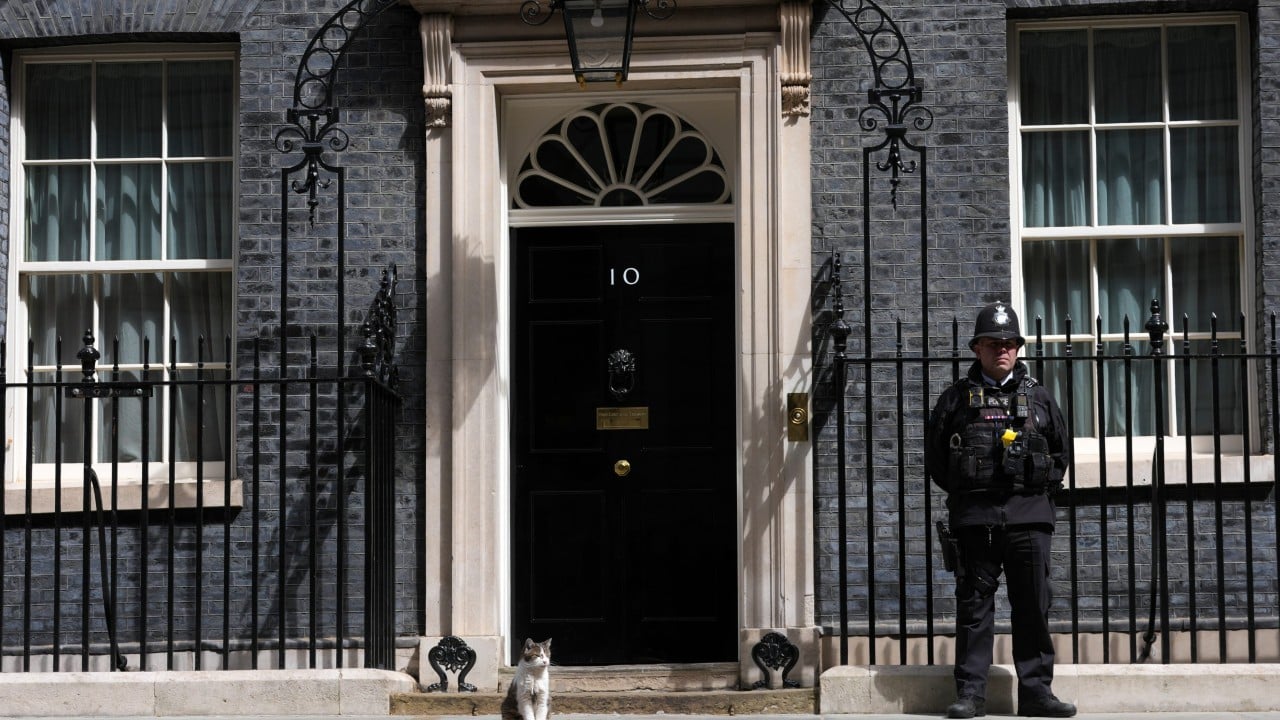
The rain in Westminster does not fall; it drifts sideways, clinging to the gray limestone of Old Queen Street like sweat on a nervous politician’s brow. Inside the wood-paneled offices where reputations are quietly dismantled over lukewarm tea, the air smells of old paper and new ambition. Everyone knew the moment was coming. The whispers had been circulating through Westminster WhatsApp groups for months, mutating from vague rumors into a concrete, inescapable reality.
Keir Starmer is about to face his first true existential trial from within.
Politics at the highest level is rarely about the grand, sweeping speeches delivered under the television lights. It is fought in the margins, in the quiet corridor conversations where promises are traded like currency, and in the sudden, sharp realization that the person standing directly behind you is no longer looking at the back of your head—they are looking at your seat.
The Friction of the First Term
Every modern British prime minister discovers the same bitter truth within their first two years in Downing Street. The campaign trail is an exercise in poetry; governing is prose written in red ink. When Starmer secured his landslide victory, the collective sigh of relief from his party could be heard across the Thames. But landslides are deceptive. They create an illusion of absolute authority while burying the fault lines that run directly beneath the Cabinet table.
Consider the reality of the British voter right now. Hypothetically, let’s call her Sarah. She is a forty-two-year-old nurse living in Darlington. She voted for change because her local hospital is bursting at the seams, her mortgage payments have risen by three hundred pounds a month, and the potholes on her street look like lunar craters. She did not vote for a specific faction of the Labour Party; she voted for things to work again.
Sixteen months into the government, Sarah’s mortgage is still high. The waiting lists have nudged downward by a fraction, but not fast enough to notice. The optimism that fueled election night has evaporated, replaced by the grinding, daily friction of an economic reality that does not care about manifesto promises.
This is where the challenger finds his oxygen.
The rival in question knows exactly how to exploit this friction. He is not launching a chaotic, backbench rebellion born of ideological purity. This is a calculated, professional bid for the soul of the government. By signaling an explicit intent to challenge Starmer, the rival has transformed from a mere colleague into a shadow prime minister, waiting in the wings of his own party.
The Calculus of Defiance
To understand why a rival would move now is to understand the precise mathematics of political vulnerability. A Prime Minister is only as strong as his parliamentary majority's fear of losing their seats. When polls begin to soften—not because the opposition is brilliant, but because the burden of governance is heavy—backbench MPs become twitchy. They look at their slim majorities and wonder if the current leadership is a life raft or an anchor.
The challenger’s strategy relies on a simple, devastating premise: things should be better by now.
It is an easy argument to make from the sidelines. The challenger can attend the late-night dinners, nod sympathetically at the grievances of the trade unions, and whisper to the northern MPs that their interests are being sacrificed on the altar of metropolitan caution. He does not have to balance the budget or look the Chancellor in the eye when public spending demands a scalpel rather than a shovel.
This tension is older than the current parliament. It is the permanent ghost that haunts Downing Street. Tony Blair had Gordon Brown. Margaret Thatcher had Michael Heseltine. Theresa May had everyone. The moment a prime minister looks isolated on a policy issue—whether it is public sector pay, green energy targets, or welfare reform—the rival steps into the light, offering an alternative that looks remarkably clean because it has not yet been tested by reality.
The Long Walk to the Dispatch Box
Watch Starmer during Prime Minister’s Questions. The posture is rigid. The legal training remains visible in the way he grips the edges of the dispatch box, treating the chamber like a courtroom where logic and process must eventually prevail. It is an approach built on the belief that if you do the hard, boring work of fixing the foundations, the house will eventually stand straight.
But politics is a sensory experience. People do not feel foundations; they feel the draft coming through the window.
When the challenger eventually forces the issue, it will not happen with a dramatic resignation speech that stops the nation. It will happen through a steady, deliberate accumulation of small defeats. A rebellion on a planning bill here. An anonymous briefing from a senior civil servant there. A sudden, unexpected drop in a crucial by-election.
The human cost of this process is immense. The Downing Street operation shifts from a policy-making machine into a bunker. Strategy sessions that should be focused on long-term infrastructure are consumed by the immediate, frantic math of how many MPs are currently having lunch with the challenger's team. Trust, the rarest commodity in British public life, erodes until every smile in the tea room feels like a threat.
The Ghost in the Machine
The mistake most commentators make is viewing this purely as a clash of personalities. It is not. It is a manifestation of an unresolved argument within the country itself.
Britain is caught between two competing desires. One side wants a radical, immediate break from the stagnation of the last decade—a massive injection of capital, a total overhaul of the public sector, and an aggressive, unapologetic intervention in the economy. The other side, represented by Starmer’s inner circle, believes that radicalism without fiscal stability is a trap that leads straight back to economic chaos.
The challenger is betting that the public's patience will run out before Starmer's caution pays off.
It is a high-stakes gamble. History is littered with the political corpses of men who struck too early, misjudging the loyalty of their colleagues and ending up exiled to the backbenches, writing memoirs that nobody reads. But history is also written by those who saw the moment where a leader's grip faltered and chose to pull.
As the dusk settles over the Thames, the lights in the Palace of Westminster remain on. In the central lobby, journalists hover near the statues, watching the doors of the voting lobbies. The challenge has been confirmed. The lines have been drawn in the carpet. From this point forward, every policy announced, every speech delivered, and every economic statistic released will be viewed through a single, distorting lens: the race for the top job.
The Prime Minister will walk back to Number Ten tonight through the private garden, away from the cameras. He knows that the most dangerous enemies are never the ones sitting opposite you on the green benches. They are the ones who share your colors, know your weaknesses, and are currently checking the time, waiting for the precise moment to move.