Industrial catastrophes do not end when the flames are extinguished; they transition into logistical nightmares characterized by decaying biomass, regulatory penalties, and public health hazards. When a catastrophic fire struck the Lineage Logistics cold-storage warehouse in Boyle Heights, it left behind approximately 85 million pounds of perishable food stock without active refrigeration. The subsequent failure to rapidly clear this rotting inventory transformed a localized structural emergency into a widespread environmental and regulatory crisis, resulting in daily administrative fines from the Los Angeles County Department of Public Health and multiple Notices of Violation from the South Coast Air Quality Management District (AQMD). Deconstructing this crisis requires an examination of the operational bottlenecks, regulatory friction points, and failure mechanisms that turn corporate supply chain assets into community health liabilities.
The Operational Cost Function of Perishable Debris Removal
Managing post-fire remediation in a high-density urban environment involves a severe logistical constraint equation. When a facility holding roughly 85 million pounds of organic material loses its mechanical climate control systems, the timeline for decay collapses from months to hours.
The primary variable governing this remediation effort is daily mass throughput. Under an emergency executive order issued by Los Angeles Mayor Karen Bass, a 45-day window was established to clear the entire tonnage. Achieving this target requires hauling an average of approximately 1.89 million pounds of putrescible waste out of the urban core every single day. Early execution data reveals a stark gap against this theoretical requirement; reports indicate that weeks into the timeline, only a fraction of the total tonnage—roughly 12.1 million pounds, or about 14 percent—had been successfully transported off-site.
This shortfall exposes a fundamental structural constraint: the scarcity of specialized hazardous waste transport vehicles, landfill capacity restrictions for massive volumes of spoiled food, and the slow, manual sorting required to handle unstable, fire-damaged structural elements safely. When removal velocity falls below the critical threshold dictated by organic decay rates, the accumulation of waste generates secondary vectors of failure.
Vector Propagation and the Failure of Containment
As organic matter breaks down anaerobically and aerobically without temperature regulation, it transforms into an ideal growth medium for disease vectors. Public health inspections at the Boyle Heights site uncovered severe secondary infestations, including swarms of live and dead flies, fly larvae observed on exterior plastic sheeting and nearby public sidewalks, standing wastewater, and proliferating rat populations.
The vector control failure can be categorized through three distinct propagation channels:
- Thermal and Chemical Off-Gassing: Without refrigeration, bacterial action produces volatile organic compounds, hydrogen sulfide, and ammonia derivatives. These gases travel downwind, breaching property boundaries and triggering AQMD Rule 402 violations for public nuisance.
- Biological Migration: Uncontained food residue combined with standing wash water creates continuous breeding grounds. Fly larvae and rodents expand outward from the facility perimeter into adjacent residential zones, directly threatening community health.
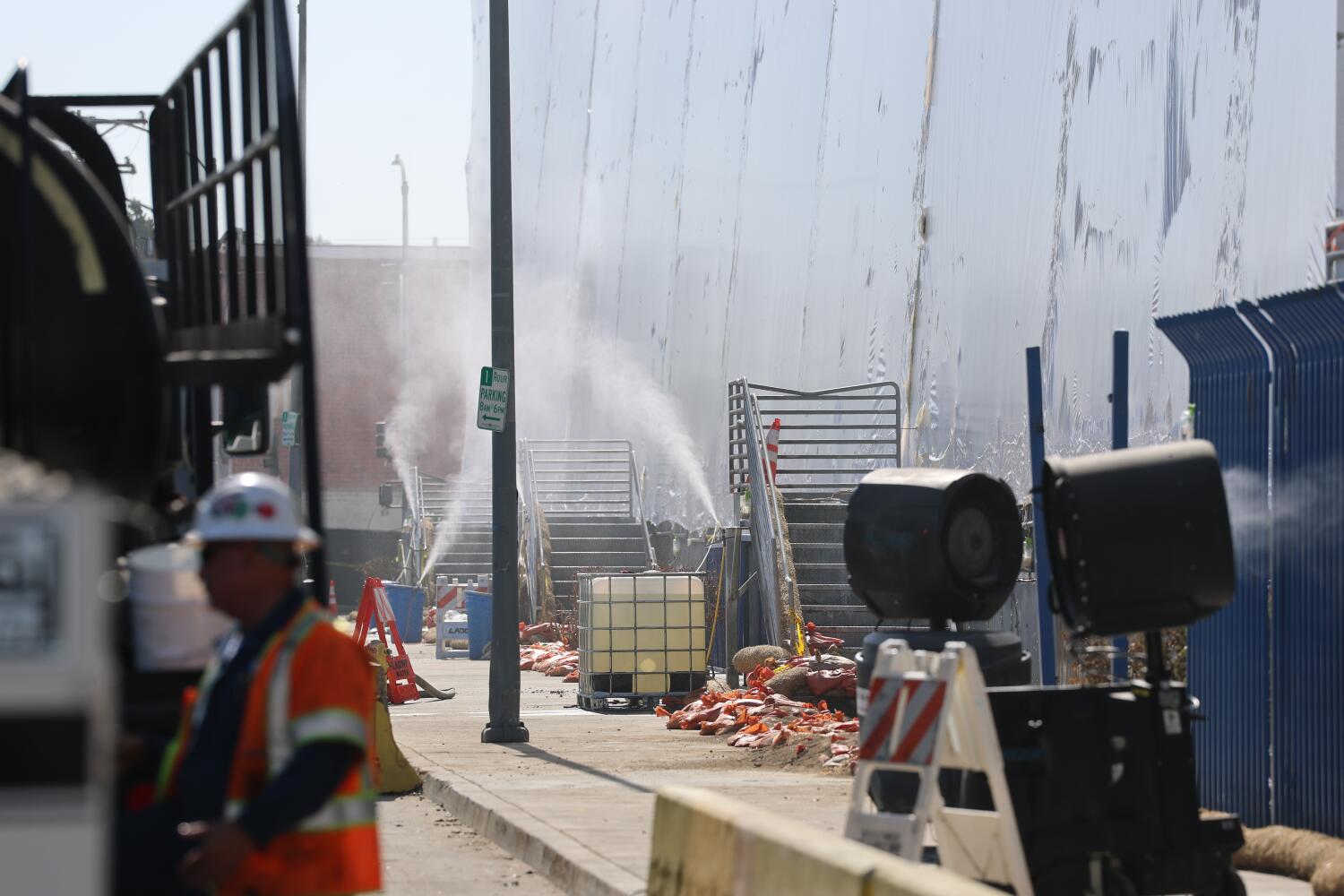
- Operational Interference: Mitigation measures such as applying chemical neutralizers, bleach solutions, and setting up exterior misting systems often provide only marginal relief if the underlying mass of rotting material remains inside the compromised building envelope.
The Los Angeles County Department of Public Health responded to these vector breaches by issuing administrative citations carrying the maximum statutory penalty of $500 per day until full compliance and sanitation are achieved. While financial penalties of this scale are negligible for a major multinational cold-storage operator, the cumulative risk of civil lawsuits, emergency municipal interventions, and permanent brand equity erosion presents a catastrophic downside.
Regulatory Friction and Multi-Agency Oversight
Disaster response in urban jurisdictions suffers from multi-agency fragmentation, where overlapping municipal, county, and regional authorities issue competing demands that complicate streamlined recovery operations.
In the case of the Boyle Heights facility, the operational friction played out across three distinct bureaucratic tiers. The municipal government enforced a compressed calendar via emergency executive orders. Regional air quality monitors targeted odor emissions and required continuous surface scrubbing and dedicated truck-loading neutralizers. County health inspectors focused on vector control, citing the firm for failing to maintain basic sanitation and allowing pest breeding conditions to persist.
When corporate remediation plans clash with regulatory mandates—such as disputes over the efficacy of specific physical barriers like StormWrapper versus complete building encapsulation—the clean-up stalls. This friction creates a regulatory deadlock where every day spent negotiating compliance protocols allows further decomposition and multiplies public backlash.
To mitigate systemic risks of this magnitude, industrial operators must implement pre-engineered disaster recovery protocols that couple rapid-response biomass extraction contracts with automated air-scrubbing containment units designed to operate independent of the primary grid within minutes of a structural compromise.
Cleanup continues at the Boyle Heights Lineage warehouse
This news report provides visual and operational context regarding the scale of the ongoing cleanup efforts and the local community impact at the affected cold-storage facility.
http://googleusercontent.com/youtube_content/1