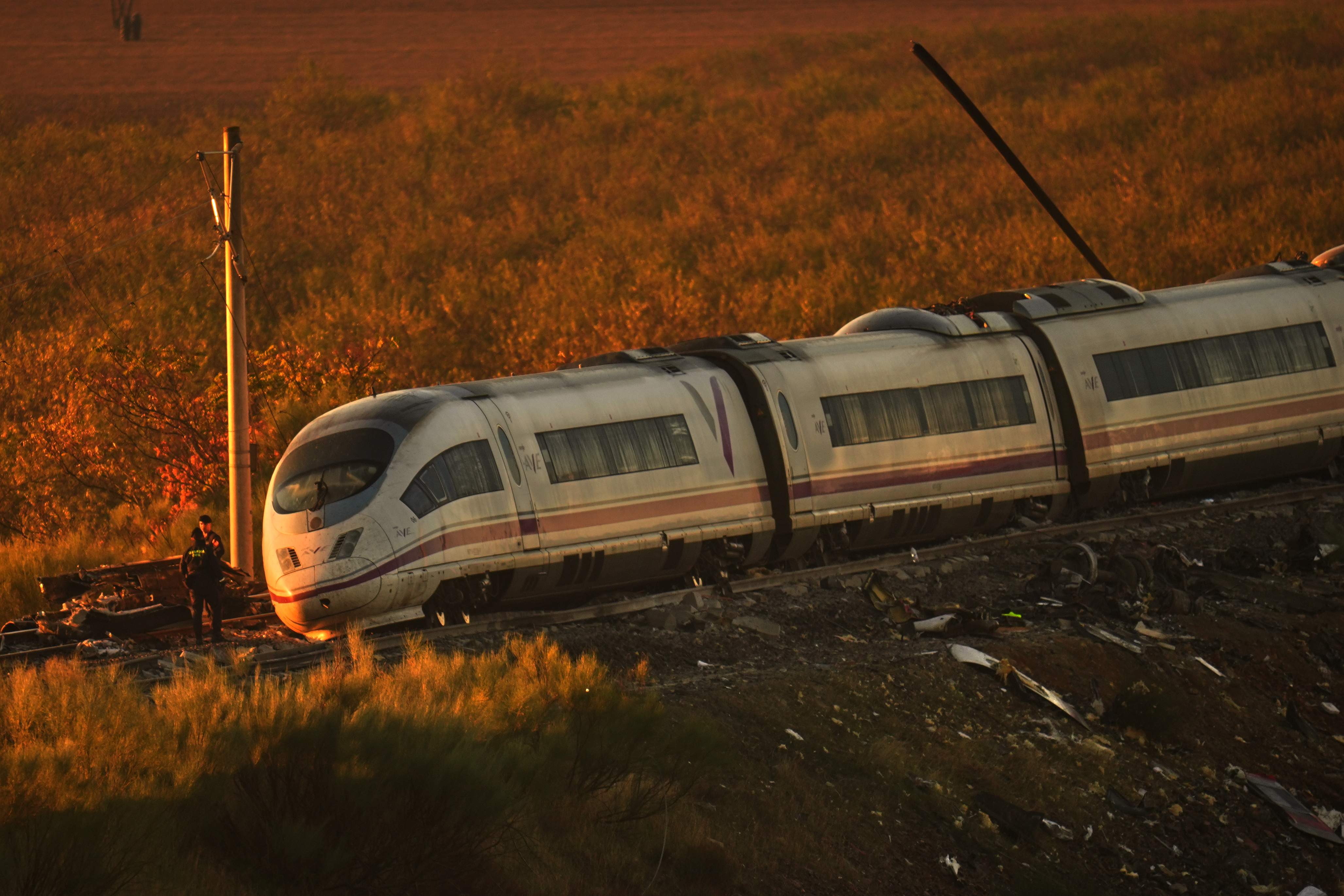
At least 69 people—including one Canadian national and four Americans—lost their lives in a catastrophic train collision in Spain, turning a routine rail journey into one of the deadliest transportation disasters in modern European history. Beyond the immediate shock of the casualty count lies a sobering reality about high-speed rail infrastructure, signaling failures, and the razor-thin margins of error that govern global transit networks.
Initial reports from rescue workers and government officials paint a grim picture of twisted steel, shattered carriages, and a frantic overnight recovery operation. International travelers routinely rely on Spain’s extensive rail network as a benchmark for efficiency and safety. When a tragedy of this magnitude strikes, it forces an immediate, uncomfortable reckoning with how modern transit systems balance blistering speeds with human and mechanical fallibility.
The Human Toll and International Impact
Numbers tell only part of the story. Behind the headline figure of 69 fatalities are dozens of families across multiple continents suddenly thrust into grief, navigating foreign bureaucracies, consular notifications, and agonizing waits for formal identification.
The confirmation that a Canadian citizen and four American nationals were among the deceased underscores the global nature of contemporary rail travel. Spain is one of the most visited countries on earth, and its intercity trains serve as the primary arteries connecting major international hubs to regional destinations. Tourists, business travelers, students, and expatriates board these trains daily without a second thought.
Diplomatic missions from Ottawa and Washington immediately activated emergency consular protocols. In the aftermath of mass-casualty transit events, foreign ministries face a complex logistical challenge:
- Victim Identification: Working alongside Spanish forensic teams to verify identities through dental records, DNA, and travel manifests, a process often delayed by the sheer violence of high-speed impacts.
- Family Repatriation: Coordinating emergency visas, travel arrangements, and psychological support for next of kin flying into Spain from North America.
- Survivor Assistance: Tracking down injured citizens scattered across multiple regional hospitals, many of whom may have lost passports, phones, and identification in the wreckage.
For survivors, the physical trauma is compounded by the psychological shock of a sudden, violent deceleration. Emergency responders arriving at the scene described a chaotic environment where local residents were often the first to pull bloodied passengers from overturned cars before heavy lifting equipment could even reach the tracks.
How Modern Rail Safety Systems Fail
Trains are statistically among the safest modes of motorized transport. Yet when rail accidents do occur, the physics involved are unforgiving. Unlike an automobile, a passenger train cannot swerve to avoid an obstacle, and its massive kinetic energy requires miles of track to dissipate safely.
To prevent collisions and derailments, modern European rail networks rely on layered defense mechanisms. The gold standard across the continent is the European Rail Traffic Management System (ERTMS), alongside national legacy systems like Spain’s ASFA (Anuncio de Señales y Frenado Automático). These technologies are designed to act as an invisible co-pilot, monitoring train speed, track occupancy, and signal states in real time.
When functioning properly, automated train protection systems override human error. If a driver misses a red signal or enters a restricted speed zone too quickly, the onboard computer automatically triggers the emergency brakes.
Disasters happen when the chain of safety breaks down at multiple points simultaneously. Investigators examining major rail collisions typically look at four critical vulnerabilities:
1. Transition Zones Between Signaling Systems
Rail networks rarely upgrade all at once. High-speed corridors equipped with state-of-the-art digital signaling often feed into older, conventional tracks governed by legacy analog systems. The exact geographical point where a train transitions from one system to another is a notorious weak spot. If onboard computers fail to hand over control cleanly, or if a driver is suddenly required to rely purely on visual trackside signals after miles of automated guidance, cognitive overload can occur.
2. Track Circuit and Axle Counter Malfunctions
Signaling systems know a section of track is occupied because the train’s steel wheels complete an electrical circuit, or because trackside sensors count the axles entering and leaving a block. Environmental factors, debris, rust, or electrical interference can occasionally cause a "false clear"—tricking the central control room into believing a stretch of track is empty when a stalled or slow-moving train is actually sitting directly in the path of oncoming traffic.
3. Maintenance Windows and Temporary Speed Restrictions
Tracks require constant upkeep. During maintenance operations, automated safety protocols are sometimes manually bypassed or modified to allow work crews and diagnostic vehicles to move through closed sections. Miscommunication between dispatchers, maintenance supervisors, and train operators during these non-standard operating windows has historically been a leading cause of head-on and rear-end collisions.
4. The Limits of Kinetic Energy
Even when an emergency brake is applied at the exact millisecond a threat is detected, physics dictates the outcome. A passenger train traveling at 120 miles per hour covers roughly 176 feet every second. If an obstruction or an oncoming train appears around a blind curve less than a mile away, no braking system on earth can prevent an impact. The focus of crashworthiness engineering then shifts from prevention to survival—relying on crumple zones, anti-climbers that prevent railcars from telescoping into one another, and reinforced passenger compartments.
The Forensic Investigation Process
Determining the exact sequence of events that led to 69 deaths will take months, if not years. Spanish judicial authorities and the national railway accident investigation commission operate on parallel tracks—one seeking to establish criminal or civil liability, the other focused strictly on technical root causes to prevent future tragedies.
The centerpiece of any rail investigation is the event data recorder, commonly referred to as the black box. Housed in crash-hardened casings within the locomotive, these devices record a continuous stream of telemetry: speed, throttle position, brake pipe pressure, horn activation, and every signal aspect transmitted to the cab.
Investigators will synchronize this data with timestamps from the centralized traffic control center. Every radio transmission between the drivers and dispatchers is logged. Forensic metallurgists will simultaneously examine the fractured rails, wheel sets, and coupling mechanisms to rule out catastrophic mechanical failure, such as a broken axle or a buckled track caused by extreme temperature fluctuations.
In past European rail disasters, public pressure for immediate answers has occasionally clashed with the methodical pace of engineering analysis. Politicians and media outlets naturally gravitate toward simple narratives—blaming a single distracted driver or a solitary faulty switch. Veteran safety analysts know better. Single-point failures rarely cause mass-casualty events. Catastrophe almost always requires a systemic alignment of flawed procedures, aging hardware, and organizational blind spots.
The Illusion of Invulnerability in Global Transit
Spain spent decades and tens of billions of euros building one of the most admired high-speed rail networks in the world, transforming domestic travel and setting an international standard that countries like the United States have struggled to emulate. That success bred an understandable sense of confidence among both operators and the riding public.
Confidence, however, can quietly morph into complacency.
Across the global rail industry, operators face relentless pressure to increase train frequency, shave minutes off journey times, and maximize track capacity. Running more trains closer together squeezes the operational buffer that dispatchers rely on when things go wrong. A minor delay on a secondary line can cascade rapidly through a tightly scheduled network, forcing controllers to make split-second routing decisions under immense stress.
Furthermore, the rapid modernization of rolling stock sometimes outpaces the training of the humans tasked with operating it. Modern train cabs resemble aircraft cockpits, filled with digital displays, audible alarms, and automated overrides. When an anomaly occurs, an operator has mere seconds to diagnose whether a warning is a routine sensor glitch or an imminent fatal hazard.
What International Travelers Need to Know
For the millions of Americans, Canadians, and global citizens who will board European trains this year, the tragedy in Spain is a jarring reminder that no transportation network is entirely immune to catastrophic failure. Still, context matters.
Statistically, riding a train in Western Europe remains orders of magnitude safer than driving a car on a North American highway. Every major rail disaster in European history—from Eschede in Germany to Santiago de Compostela in Spain—has triggered sweeping, mandatory safety overhauls across the entire continent, tightening regulations and accelerating the rollout of automated braking technologies.
Travelers cannot control signaling infrastructure or dispatch protocols, but basic situational awareness remains a practical safeguard:
- Know Your Coach: Take ten seconds upon boarding to note the car number and the location of the nearest emergency exits and window-breaking hammers.
- Secure Heavy Luggage: In a sudden deceleration or derailment, unsecured suitcases stored on overhead racks become lethal projectiles. Use floor-level luggage bays at the ends of the carriage whenever possible.
- Register International Travel: Programs like the U.S. State Department’s Smart Traveler Enrollment Program (STEP) and Canada’s Registration of Canadians Abroad allow consular officials to locate and assist citizens rapidly when mass-casualty emergencies strike.
The Hard Road Ahead for Rail Oversight
As rescue crews clear the wreckage and families prepare to bring their loved ones home to Canada, the United States, and across Spain, the burden shifts to regulators and rail executives. True accountability requires looking beyond the immediate human error at the controls and interrogating the corporate and regulatory structures that allowed a fatal vulnerability to exist on an active passenger line.
Every safety rule written into modern railway manuals was paid for in blood. The 69 lives lost in Spain now join that grim ledger, demanding an investigation that refuses easy scapegoats and forces permanent, structural change before the next train leaves the station.