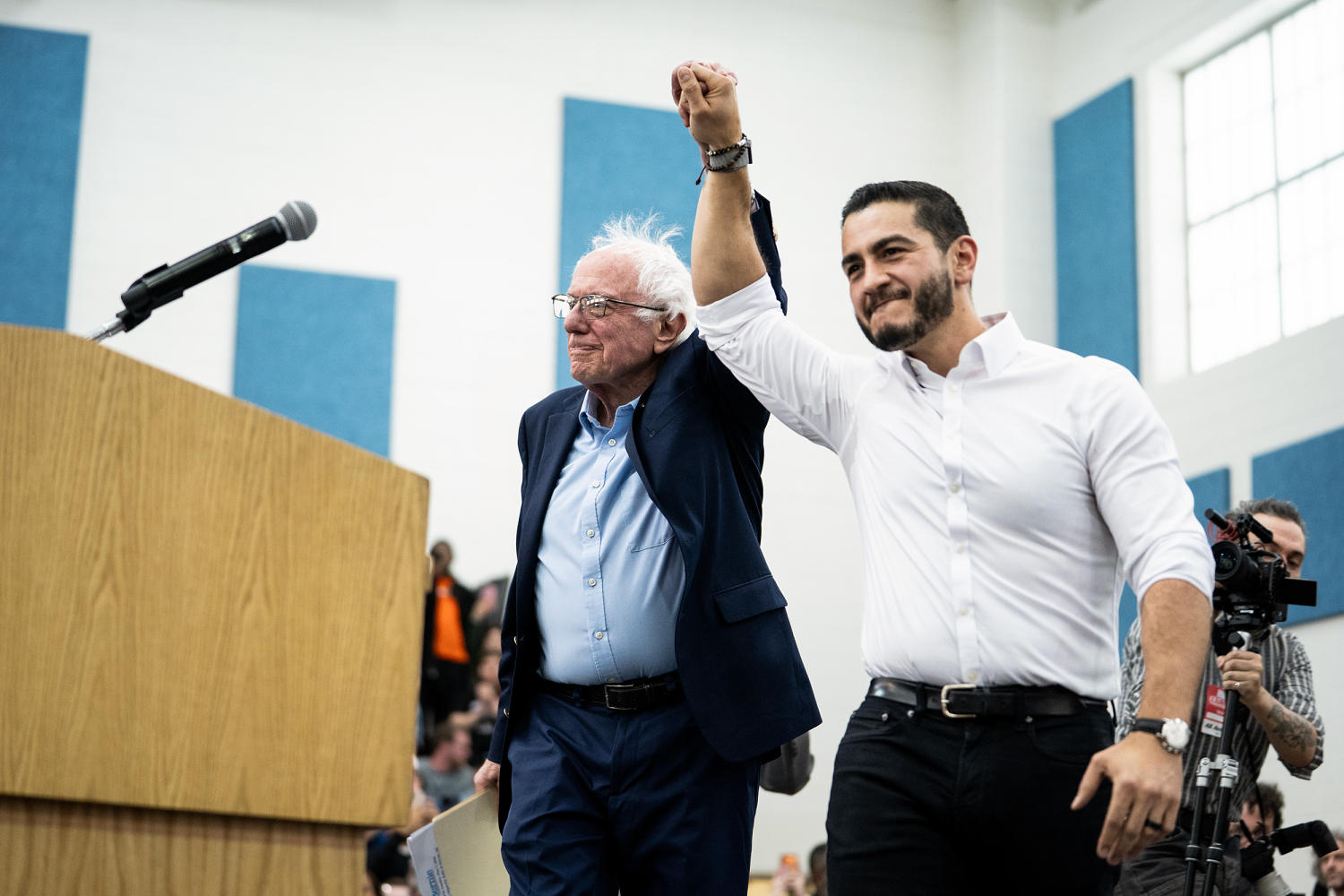
The primary electorate in Michigan functions as an early-warning diagnostic tool for national political coalitions. Beneath the superficial analysis of candidate personality lies a structural math problem dictated by three distinct voter segments: the progressive urban center, the suburban moderate bloc, and the organized labor core. The 2026 Democratic Senate primary exposes a friction coefficient within this coalition that directly mimics the strategic failure points of the 2020 cycle, challenging the assumption that opposition to a generic Republican adversary is sufficient to guarantee base mobilization.
To measure the efficiency of a campaign in Michigan, analysts must evaluate the candidate's operational equilibrium across these three foundational pillars. When a campaign over-indexes on one segment, it creates an immediate deficit in another, demonstrating the zero-sum nature of the state's geographic and ideological distribution.
The Tri-Centric Voter Model
The Democratic primary electorate in Michigan is not a monolith, but a mechanical assembly of three interest groups defined by distinct economic interests, policy priorities, and turnout elasticity.
The Progressive Urban Center
Centered primarily in Wayne and Washtenaw counties, this segment relies on an ideological framework prioritizing structural institutional reform. For candidates competing in this space, policy positions on federal enforcement, environmental mandates, and corporate finance act as ideological entry barriers. The core mechanism driving this segment is high ideological intensity paired with volatile turnout elasticity; it expands significantly during high-stakes presidential cycles but contracts predictably during midterms unless mobilized by sharp, disruptive policy contrasts.
The Suburban Moderate Bloc
Spanning Oakland, Macomb, and parts of Kent County, this cohort represents the decisive pivot point in statewide general elections. Their voting behavior is governed by economic stability, pragmatism, and incremental governance models. Unlike the urban core, their turnout metrics are highly consistent, making them the defensive floor for establishment-backed campaigns. However, their policy preferences create a structural ceiling for candidates who align too closely with insurgent progressive positions.
The Organized Labor Core
Historically concentrated in industrial hubs like Genesee and Wayne counties, this faction operates on a transactional model focused on trade protectionism, collective bargaining protections, and domestic manufacturing subsidies. While their raw numbers have shifted due to demographic realignment, their institutional infrastructure—specifically independent expenditure operations and physical field mobilization—remains the most efficient mechanism for driving down-ballot turnout.
The Policy Contrast and Coalition Bottlenecks
The friction in the current primary between candidates like Rep. Haley Stevens, state Sen. Mallory McMorrow, and Abdul El-Sayed highlights the incompatibility of trying to maximize appeal across all three pillars simultaneously. The policy matrix below illustrates the structural trade-offs required by the candidates, where optimizing for one voter segment systematically alienates another.
- Federal Enforcement Infrastructure: The policy position advocating for the complete abolishment of Immigration and Customs Enforcement (ICE) secures an ideological anchor within the progressive urban center. However, this position creates an immediate bottleneck in the suburban moderate bloc, where voter preference leans heavily toward regulatory reform rather than institutional dissolution.
- Campaign Finance Architecture: Pledges to reject corporate political action committee (PAC) funding serve as a critical signaling mechanism to establish trust with progressives and labor purists. The structural limitation of this strategy is financial asymmetry. Rejecting institutional capital forces a campaign to rely exclusively on small-dollar digital fundraising or personal wealth, leaving them vulnerable to heavily funded external opposition in the general election.
- The Digital Influencer vs. Precinct Turnout Paradox: Modern campaigns frequently mistake digital engagement metrics for physical voter optimization. While high-visibility partnerships with prominent digital creators and streamers generate instantaneous spikes in fundraising and volunteer acquisition, the conversion rate from an online impression to a localized primary ballot remains unverified. The operational bottleneck is geographic dispersion; a viral national audience cannot execute a physical ballot in a specific precinct on election day.
Tactical Execution for Statewide Optimization
The winner of the primary must execute a multi-tiered structural play to secure the state in the general election against a well-funded opposition.
First, campaigns must deploy a bifurcated communication strategy that isolates progressive policy rhetoric to high-density urban zones while leading with economic stabilization frameworks in suburban media markets. Attempting a unified statewide message creates ideological dilution, depressing enthusiasm on the left while provoking a defensive retreat among moderates.
Second, the structural reliance on small-dollar digital fundraising must be paired with aggressive, non-corporate institutional backing from traditional labor organizations to offset the outside spending advantages of the opposition. Digital engagement must be treated as a capital-generation tool, not an organizational substitute for localized, precinct-level field operations. The final strategic play requires an immediate, post-primary consolidation of the suburban moderate floor via targeted economic messaging, accepting a controlled contraction of progressive intensity in exchange for structural electoral stability.