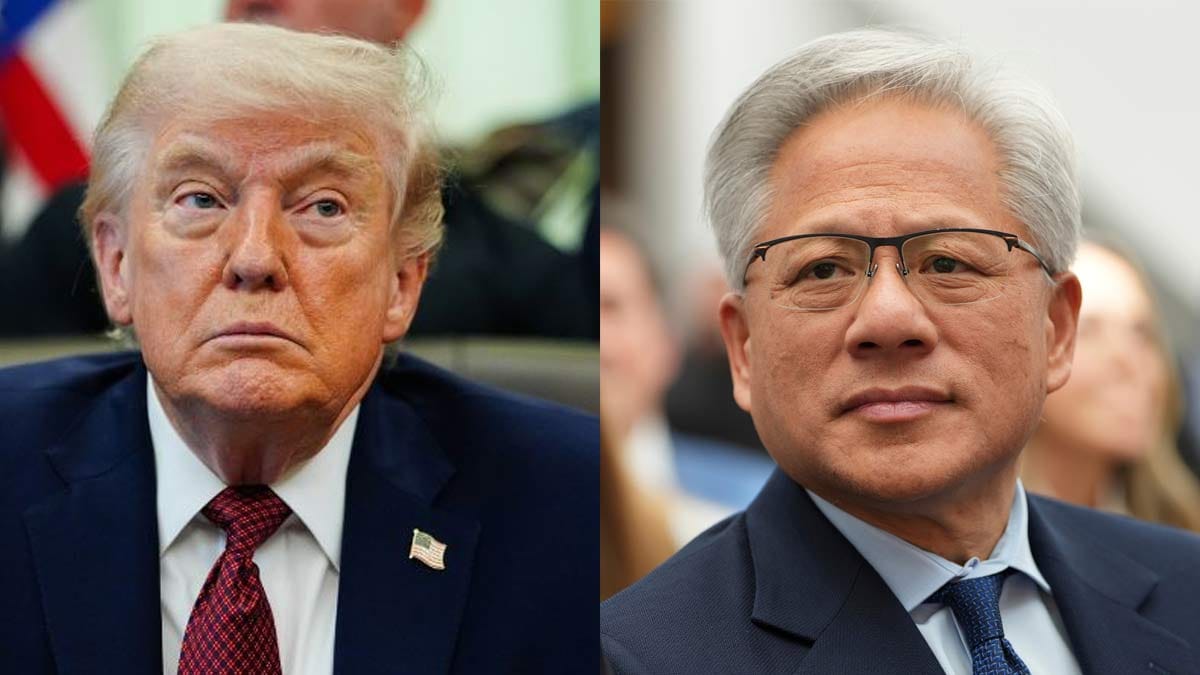
Sensational media coverage linking Nvidia CEO Jensen Huang to an alleged Chinese operative conflates two distinct security vectors: executive proximity vulnerability and semiconductor export-control evasion. When viral personal footage overlaps with missing high-performance hardware, public commentary defaults to conspiracy rather than operational risk analysis. Separating verified facts from unproven hypotheses requires mapping how state intelligence operations intersect with global semiconductor supply chains, executive security protocols, and grey-market logistics.
Separating Verified Events From Unproven Hypotheses
Rigorous threat assessment begins by isolating documented facts from speculative leaps. In high-profile technology news cycles, the simultaneous appearance of compromising social media artifacts and hardware diversion reports creates an illusion of direct causality.
Known Operational Realities
- Executive Public Exposure: Chief executives of Tier-1 technology firms routinely attend public summits, private dinners, and industry mixers where vetting every attendee is logistically impossible. Brief social interactions, photographs, or short video clips captured at open or semi-private events do not establish operational collaboration.
- Export Control Friction: Following U.S. Department of Commerce Bureau of Industry and Security (BIS) restrictions on advanced compute architectures—specifically the A100, H100, and subsequent Blackwell-class accelerators—demand in restricted jurisdictions created massive price arbitrage.
- Grey-Market Diversion: Documented enforcement actions confirm that third-party brokers, shell entities in transshipment hubs, and academic front organizations actively acquire restricted graphics processing units (GPUs) through indirect procurement channels.
Unverified Hypotheses
- Direct Executive Complicity: No credible intelligence finding or regulatory filing links Nvidia's executive leadership to deliberate facilitation of hardware smuggling or espionage networks.
- Causal Link Between Video Footage and Chip Diversion: Assuming that a brief personal interaction captured on video directly enabled the physical diversion of export-controlled silicon ignores the structural mechanics of semiconductor distribution. Tier-1 chipmakers do not ship enterprise server racks out of executive offices; they move through multi-tiered original design manufacturers (ODMs), cloud service providers, and authorized distributors.
Treating circumstantial proximity as proof of systemic collusion obscures the actual mechanisms by which advanced compute hardware leaks across borders.
The Architecture of Executive Proximity Operations
Modern state intelligence services rarely rely on crude blackmail traps to extract proprietary semiconductor designs from a chief executive. Instead, they execute proximity and influence operations designed to map organizational networks, establish perceived legitimacy, and identify mid-level targets with direct technical or logistical access.
The Three-Stage Access Funnel
- Social Proof Acquisition: An operative secures access to high-net-worth networking environments, venture capital forums, or philanthropic galas. Capturing a photograph or brief video with a high-profile executive serves as a credentialing asset. In subsequent interactions with lower-level engineers, supply-chain managers, or regional distributors, that visual artifact lowers skepticism and signals insider status.
- Network Mapping and Lateral Movement: Once embedded within the peripheral social orbit of an industry leader, the collector shifts focus from the principal target to the surrounding ecosystem. Executive assistants, regional sales directors, and third-party logistics partners possess granular operational data without carrying the heavy counterintelligence protection assigned to a C-suite principal.
- Information Aggregation: Rather than seeking a single stolen blueprint, collectors gather fragmented metadata—upcoming product allocation timelines, regional distributor bottlenecks, or key personnel transitions. Combined with open-source intelligence, these fragments allow foreign procurement networks to anticipate supply shifts before official announcements.
The vulnerability lies not in the executive's personal conduct, but in the downstream trust conferred by unvetted social proximity.
Mechanics of Advanced Semiconductor Diversion
Understanding how restricted AI accelerators go missing requires examining the distribution chain rather than the executive suite. High-end GPUs are complex systems integrated into dense server architectures, making physical diversion a logistical challenge rather than a pocket-sized smuggling operation.
Where Supply Chain Leakage Occurs
- Original Design Manufacturer (ODM) Overruns and Allocations: Nvidia designs the silicon and reference architecture, while fabrication relies on foundry partners like TSMC and server assembly relies on ODMs such as Supermicro, Foxconn, and Quanta. Diversion risks spike after finished server racks leave the ODM facility and enter multi-tier distribution networks.
- Shell Entity Layering: Procurement networks establish front companies in jurisdictions with permissive corporate registration laws and active data-center buildouts, particularly across Southeast Asia and the Middle East. These entities present legitimate business cases—such as regional cloud hosting or enterprise AI training—to clear initial Know Your Customer (KYC) checks.
- Fractional Disassembly and Re-Export: Once a batch of 64 or 128 GPU-equipped servers arrives at an authorized secondary data center, operators can strip the individual accelerator modules, repackage them in non-descript commercial freight, and route them across borders via fragmented logistics carriers.
- Compute-as-a-Service (CaaS) Arbitrage: Physical movement of silicon is increasingly unnecessary. Restricted entities rent bare-metal GPU clusters hosted legally in third-party data centers outside restricted borders, training foundation models remotely without ever taking physical custody of the hardware.
The Economic Cost Function of Evasion
Smuggling networks persist because the financial upside outweighs enforcement penalties. When an H100 or H200 cluster commands a 50% to 100% premium on secondary markets in restricted territories, brokers treat seized shipments or blacklisted shell companies as predictable operating expenses. Closing one shell company takes months of regulatory investigation; incorporating three replacements takes less than forty-eight hours.
Limitations of Corporate Compliance and Counterintelligence
Hardware manufacturers operate under structural constraints that prevent absolute visibility into end-user deployment. Critics who demand zero leakage misunderstand the physics and economics of global electronics distribution.
- Telemetry and Hardware Locks: Incorporating cryptographic hardware locks or persistent GPS/network telemetry into enterprise GPUs faces fierce resistance from legitimate hyperscale customers. Sovereign cloud providers and defense contractors refuse to deploy silicon capable of remote deactivation or external location pinging due to operational security and uptime requirements.
- Audit Boundaries: Once a distributor sells server hardware to an enterprise buyer, contractual audit rights rarely extend to unannounced physical inspections of third-party data centers across sovereign borders. Vendors must rely on end-user certificates and serial-number tracking, both of which fail when brokers falsify downstream resale records.
- Signal-to-Noise Ratio in Threat Intelligence: Major technology executives interact with thousands of individuals annually across global trade shows, university lectures, and customer briefings. Screening every attendee to intelligence-agency standards would paralyze commercial diplomacy and business development.
Strategic Countermeasures for Enterprise Hardware Governance
Technology leaders and compliance teams cannot eliminate grey-market arbitrage or state-sponsored collection entirely, but they can raise the operational cost for adversaries through targeted structural controls.
- Enforce Tiered Executive Security Protocols: Separate open public appearances from controlled private gatherings. Require pre-event vetting for any small-group dinner or closed-door forum where unscripted interactions can be recorded and weaponized as social proof.
- Shift Liability to Authorized Distributors: Transition from passive end-user certificates to strict contractual clawbacks and mandatory serial-number audits at the distributor level. Any channel partner whose allocated inventory surfaces in unauthorized jurisdictions must face immediate allocation cuts rather than warning letters.
- Monitor Firmware and Driver Activation Patterns: Without violating customer privacy or installing remote kill switches, track aggregated software-update requests, enterprise license activations, and regional IP clustering for flagship AI software stacks. Anomalous activation spikes in unexpected geographies provide early warning of physical hardware diversion.
- Implement KYC Verification for Cloud Compute Resellers: Extend export-control compliance beyond physical shipments to large-scale bare-metal compute rentals. Require Tier-1 cloud partners to verify the beneficial ownership of entities leasing high-density GPU clusters above defined compute thresholds.
Media narratives fixate on viral video clips because human drama is easier to digest than supply-chain logistics. Security practitioners must ignore the spectacle and focus on the structural bottlenecks where silicon, capital, and unvetted access actually intersect.