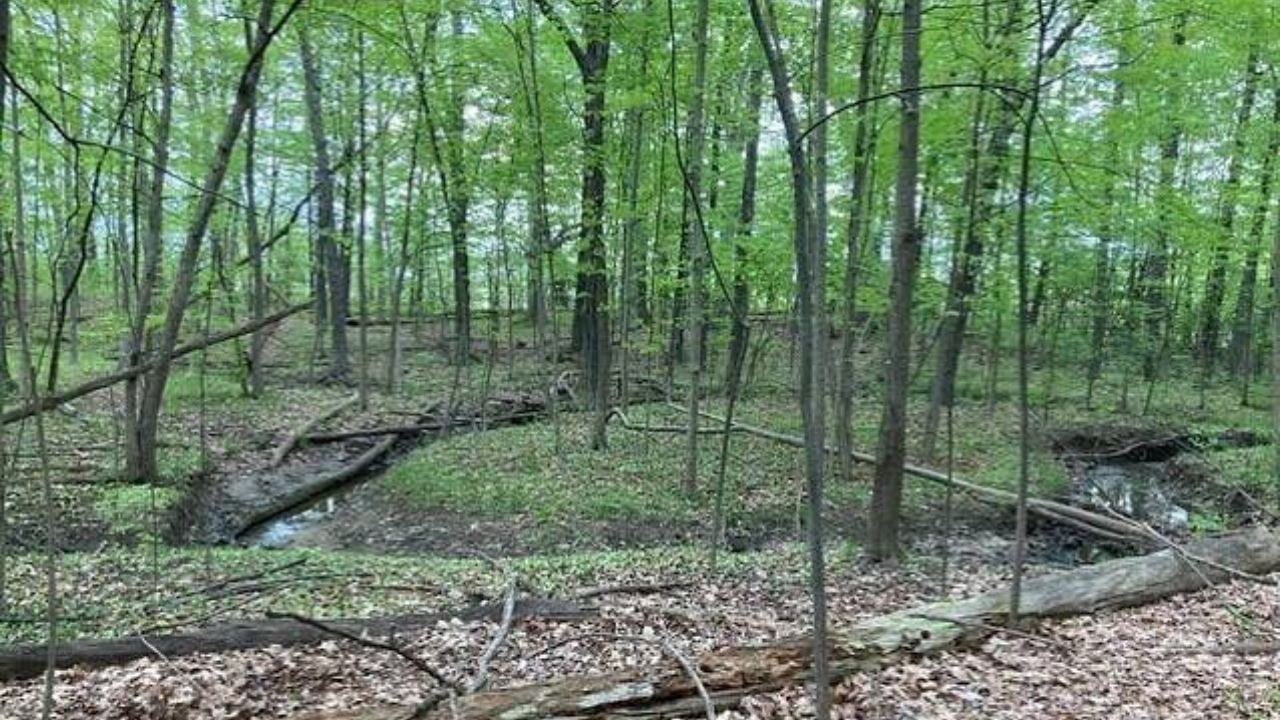
Large-scale residential land assembly relies on contiguous boundary control, predictable municipal zoning approvals, and unencumbered ingress and egress paths. When a single independent parcel splits a massive multi-phase development, the underlying mathematics of project execution change fundamentally. The ongoing dispute in Lodi Township, Michigan, where an independent landowner holds a 19-acre wooded parcel directly between the planned Arbor Preserve North and Arbor Preserve South luxury developments by Toll Brothers, demonstrates the structural fragility of modern suburban land acquisition.
Rather than a simple neighborhood dispute, this conflict illustrates how corporate real estate entities miscalculate exit conditions, easement contingencies, and environmental discharge limits.
The Mechanics of Structural Land Encirclement
Residential developers typically acquire land through phased options or direct purchases to build economies of scale. In the Lodi Township project, the strategy involved unifying parcels to construct 107 luxury homes backed by private wastewater treatment facilities. However, comprehensive control requires either complete acquisition of interior holdings or ironclad legal agreements governing shared infrastructure.
When the independent landowner, Susan Miller, refused to sell her 19-acre tract, the project shifted from a standard greenfield development to a complex containment scenario. Under standard real estate development frameworks, surrounding an unacquired parcel creates two immediate operational frictions:
- Logistical Friction: Heavy machinery, utility trenching, and grading operations must navigate around an active, occupied private holding.
- Hydrological and Environmental Friction: Subdivisions require uniform stormwater management and waste processing systems that cannot easily bypass independent parcels without crossing property boundaries or triggering strict state environmental oversight.
The developer attempted to resolve the spatial bottleneck through a conditional agreement executed in 2021 with a predecessor entity, Red Equities LLC. This agreement tied the termination of an original private road easement to the construction of a replacement access road through the southern subdivision phase.
The Conditional Agreement Failure Mode
Real estate contracts that rely on future performance milestones carry built-in execution risk. The 2021 agreement stipulated that if the replacement access road was not completed by December 31, 2025, the swap agreement would automatically expire.
Corporate land divisions frequently record easement modifications early to clear title work for financing and construction permits. In this case, developers recorded the termination of the original easement and the replacement agreement with the Washtenaw County Register of Deeds in 2023, two years ahead of the completion deadline and without notifying the property owner.
This sequence created a severe contractual vulnerability:
- The contingency date (December 31, 2025) arrived and passed.
- The replacement road was allegedly left unbuilt.
- The underlying condition precedent failed, rendering the 2023 recorded termination legally contestable.
When a developer records an easement extinguishment prematurely, they assume the construction timeline is infallible. If construction lags or capital allocation shifts, the legal foundation evaporates, leaving the project exposed to emergency injunctions.
The Infrastructure Externality Problem
Beyond access rights, high-density luxury developments built on township peripheries must solve utility constraints independently. Municipal sewer lines rarely extend far enough into rural-residential transition zones to support hundreds of new luxury homes. Consequently, developers propose private wastewater treatment systems.
The Arbor Preserve blueprint involved placing wastewater treatment infrastructure and stormwater detention basins in close proximity to property lines. This design choice externalizes environmental and spatial costs onto adjacent non-consenting land. According to court filings, the proposed system is engineered to discharge treated effluent near the boundary, altering the natural hydrology of local tributaries such as the Rouse Drain, which feeds into the Saline River system.
The technical parameters governing these discharges are clear:
- Volume Thresholds: Private package plants handling thousands of gallons of treated sewage daily must maintain strict buffer zones.
- Drainage Impact: Modifying natural sheet flow or introducing point-source discharge near neighboring creeks invites direct intervention from state environmental protection agencies, such as the Michigan Department of Environment, Great Lakes, and Energy (EGLE).
When a developer minimizes these environmental integration costs to preserve net margin per lot, they invite third-party administrative challenges that halt construction entirely.
Corporate Liability Segmentation and Subsidiary Shielding
As legal exposure mounts, corporate structuring plays a defining role in defense strategies. Toll Brothers Inc., the parent entity, argued through legal counsel that it does not legally own the property. Instead, a distinct subsidiary, Toll Northeast V Corp, purchased the land in 2024 to advance the development.
This corporate separation serves a specific risk-mitigation function:
- Asset Partitioning: Shielding the parent balance sheet from local litigation liabilities.
- Targeted Dismissal Motions: Requesting the complete removal of the parent corporation from active dockets while leaving the operational subsidiary to absorb discovery and injunction hearings.
However, subsidiary partitioning does not insulate the project from operational paralysis. Even if the parent company is dismissed from the Washtenaw County Trial Court proceedings, the subsidiary holding the title remains subject to preliminary injunctions that can freeze civil engineering work, delay lot sales, and disrupt capital return schedules for institutional investors.
Strategic Assessment for Complex Land Holdings
The Lodi Township litigation offers a clear blueprint of how structural oversights compound in modern real estate development. When developers attempt to engineer around an uncooperative interior landowner through preemptive filings and aggressive timeline dependencies, they trade short-term administrative convenience for long-term existential risk.
To prevent execution failure in similar assemblies, capital allocators must enforce three operational rules: never record conditional easement swaps before physical infrastructure is fully inspected and signed off, price environmental externalities into the initial lot acquisition model rather than treating them as regulatory hurdles to be cleared post-approval, and account for the holding power of independent landowners who prioritize long-term natural preservation over immediate financial buyout offers.