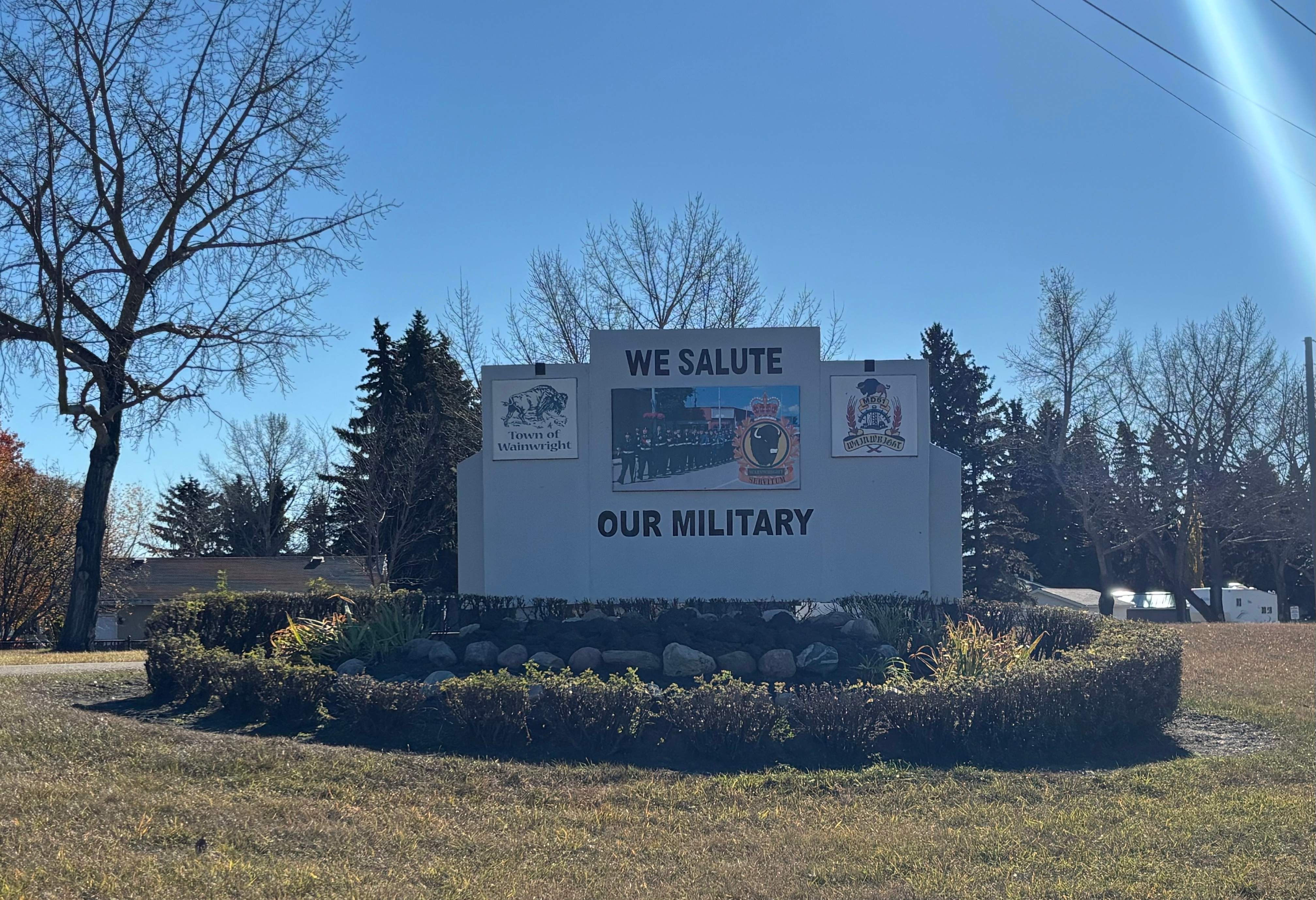
Catastrophic training accidents within high-consequence organizations rarely stem from a single isolated point of failure. Instead, they expose systemic vulnerabilities where environmental volatility intersects with rigid institutional safety margins. The live-fire training incident at Canadian Forces Base Wainwright on October 17, 2026, which resulted in multiple fatalities and dozens of severe casualties among members of the 3rd Battalion, Princess Patricia's Canadian Light Infantry, offers a critical case study in the mechanics of large-scale military operational risk.
Deconstructing the event requires shifting focus away from surface-level tragedy toward the core variables that govern wildland-urban interface hazards on military installations: ignition vectors, environmental acceleration rates, spatial containment limits, and emergency medical logistics.
The Ignition Vector and Environmental Acceleration
The fundamental mechanism of the Wainwright incident began with a localized training event that interacted with dry terrain and sudden atmospheric shifts. Military ranges inherently introduce high-energy ignition sources—ranging from live munitions to heavy vehicle exhaust systems. When these sources operate within semi-arid or drought-stressed environments, the baseline risk profile shifts instantly.
The primary variable governing the escalation from a controlled training fire to a mass-casualty event is velocity of spread. Grass and brush fires do not scale linearly; they expand exponentially under high wind vectors. Reports surrounding the Wainwright incident indicate that a sudden wind shift drove the fire across a substantial distance—jumping nearly a kilometer—overwhelming the immediate tactical awareness of personnel on the ground.
This dynamic highlights a core challenge in risk mitigation: the window between environmental monitoring and terminal hazard execution can shrink to zero. In complex field maneuvers, command structures rely on probabilistic weather models. When localized microclimates deviate from baseline forecasts, tactical formations find themselves operating outside their safety margins before containment protocols can be initiated.
The Cost Function of Medical Surge and Specialized Care
When an operational hazard breaches safety boundaries, the severity of the outcome is dictated by the medical logistics chain. The Wainwright incident placed an immediate, severe strain on regional healthcare infrastructure, shifting the burden from tactical command to acute critical care.
The operational reality of burn and blast trauma management operates on a distinct economic and logistical curve:
- Resource Concentration: Severe thermal injuries require specialized intensive care units, hyperbaric chambers, and continuous micro-surgical intervention. A sudden influx of dozens of critical patients immediately exhausts provincial capacity.
- Prolonged Treatment Horizons: Unlike acute trauma that stabilizes within days, major burn recovery represents a multi-month clinical marathon. This creates secondary systemic pressure, including clinician fatigue and the necessity of federal deployments, such as specialized military nurses supplementing civilian burn units.
- Resource Transfer Friction: Moving patients across provincial boundaries (such as from Alberta to Ontario) introduces logistical overhead that tests the interoperability of national medical networks.
The systemic cost function here is non-linear. A single catastrophic event can consume regional medical bandwidth for months, demonstrating that military operational readiness is inextricably linked to the surge capacity of national healthcare systems.
Institutional Accountability and Investigation Frameworks
Following a mass-casualty training accident, institutional response mechanisms must transition from immediate life-preservation to forensic accountability. The Canadian Armed Forces initiated multiple parallel investigations to deconstruct the chain of command decisions, environmental data streams, and equipment performance metrics leading up to the tragedy.
The primary obstacle in these investigations is the elimination of hindsight bias. Analysts must evaluate what commanders knew at specific temporal markers prior to the fire's acceleration. If baseline protocols dictated that a nearby grass fire was monitored rather than actively suppressed based on prevailing predictive models, the investigation must quantify the threshold where monitoring transitions into negligence.
Strategic Forecast and Systemic Hardening
Preventing recurrences of high-consequence training disasters requires moving beyond reactive policy adjustments toward architectural changes in how military ranges manage environmental variables.
The institutional path forward necessitates three structural adjustments:
- Dynamic Range Shutdown Thresholds: Establishing automated, non-negotiable operational halts tied directly to real-time atmospheric telemetry rather than static seasonal schedules.
- Stand-off Buffer Realignment: Recalibrating the spatial separation between high-energy kinetic training zones and troop assembly areas to account for extreme wind-driven fire propagation rates.
- Interagency Medical Integration Protocols: Institutionalizing permanent resource-sharing agreements between defense departments and provincial health authorities to absorb sudden critical-care surges without degrading baseline hospital functionality.
The ultimate metric of an institutional safety review is its willingness to accept operational friction today to eliminate catastrophic failure tomorrow.