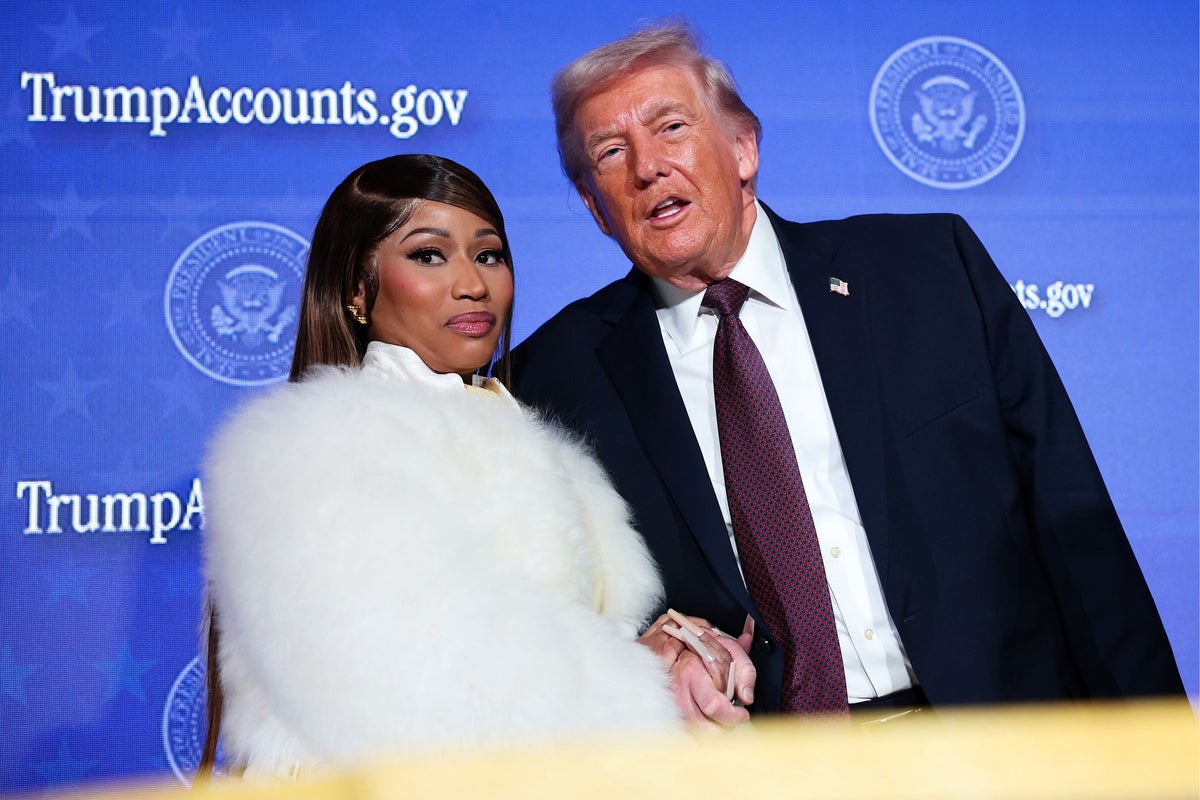
Public figures operating within the modern media ecosystem must navigate a high-frequency feedback loop where off-hand remarks are instantly decoupled from their original context, amplified, and re-evaluated through multiple ideological lenses. When political actors intersect with high-profile pop culture icons, the transaction is rarely accidental. It represents a deliberate, albeit sometimes clumsy, attempt to capture cultural capital. A recent instance involving political commentary on a prominent recording artist exposes the underlying mechanics of how attention is harvested, repurposed, and monetized in digital spaces.
Understanding this phenomenon requires moving past surface-level reactions and examining the structural incentives driving public statements. Rhetoric involving public endorsements or casual evaluations of cultural figures serves a distinct functional purpose within a broader communications strategy.
The Currency of Cross-Industry Alignment
Political communication relies heavily on borrowing legitimacy from adjacent, highly visible domains. Musicians, athletes, and internet personalities occupy spaces of immense cultural saturation that traditional political platforms struggle to penetrate organically. When a political figure comments on a celebrity's physical appearance, aesthetic choices, or career trajectory, two distinct communicative goals are achieved simultaneously.
First, the statement creates an immediate bridge to a demographic that might otherwise remain entirely politically disengaged. The mechanics of algorithmic distribution reward novelty and friction. A comment linking a major political figure with a dominant pop culture entity generates high-velocity engagement across social media networks, bypassing traditional journalistic gatekeepers.
Second, this tactic functions as a deliberate distraction or framing mechanism. By shifting the public discourse from complex policy metrics to personality-driven spectacles, communicators can control the narrative surface area. The interaction is transactional: the political figure gains cultural relevance and algorithmic momentum, while the celebrity receives a surge of mainstream news cycles, regardless of the qualitative nature of the attention.
Quantifying the Attention Economy
To evaluate the impact of these interactions, analysts must look at the cost-benefit ratio of low-substance, high-visibility commentary. The input cost is near zero—a casual remark uttered during a rally, interview, or digital broadcast requires no legislative capital, policy research, or institutional backing. Yet the potential yield in terms of media impressions and search volume is disproportionately high.
[Low-Cost Rhetorical Input] ---> [Algorithmic Amplification] ---> [Cross-Demographic Penetration] ---> [Asymmetric Attention Yield]
This dynamic creates a perverse incentive structure within public communications. Precision and nuance are penalized by algorithms that favor emotional resonance and associative chaos. When a political actor makes a bizarre or unexpected connection regarding a celebrity like Nicki Minaj, the absurdity itself becomes the transmission vector. The more detached the remark is from conventional political discourse, the wider the net it casts across unrelated digital subcultures.
The Limits of Borrowed Legitimacy
Relying on cross-industry associations carries severe strategic risks. While short-term engagement metrics spike, the long-term equity of the communicator can degrade. Audiences capable of critical discernment often interpret these episodes as superficial pandering or erratic behavior, which erodes institutional trust.
Furthermore, aligning political branding with volatile pop culture elements introduces unpredictable variables. Celebrities operate under entirely different reputational constraints than elected officials or candidates. When controversies surrounding the artist inevitably surface, the political figures who hitched their rhetorical wagon to that cultural wave inherit the secondary fallout without possessing any control over the primary narrative.
The strategic imperative for observers is to deconstruct these episodes rather than react to them. Strip away the shock value of the commentary, and what remains is a mechanical execution of attention capture. The system rewards what it can measure, and right now, it measures friction, surprise, and cross-pollination above all else. Ignore the novelty of the names involved, treat the event as a standard case study in modern information warfare, and the underlying architecture becomes entirely transparent.