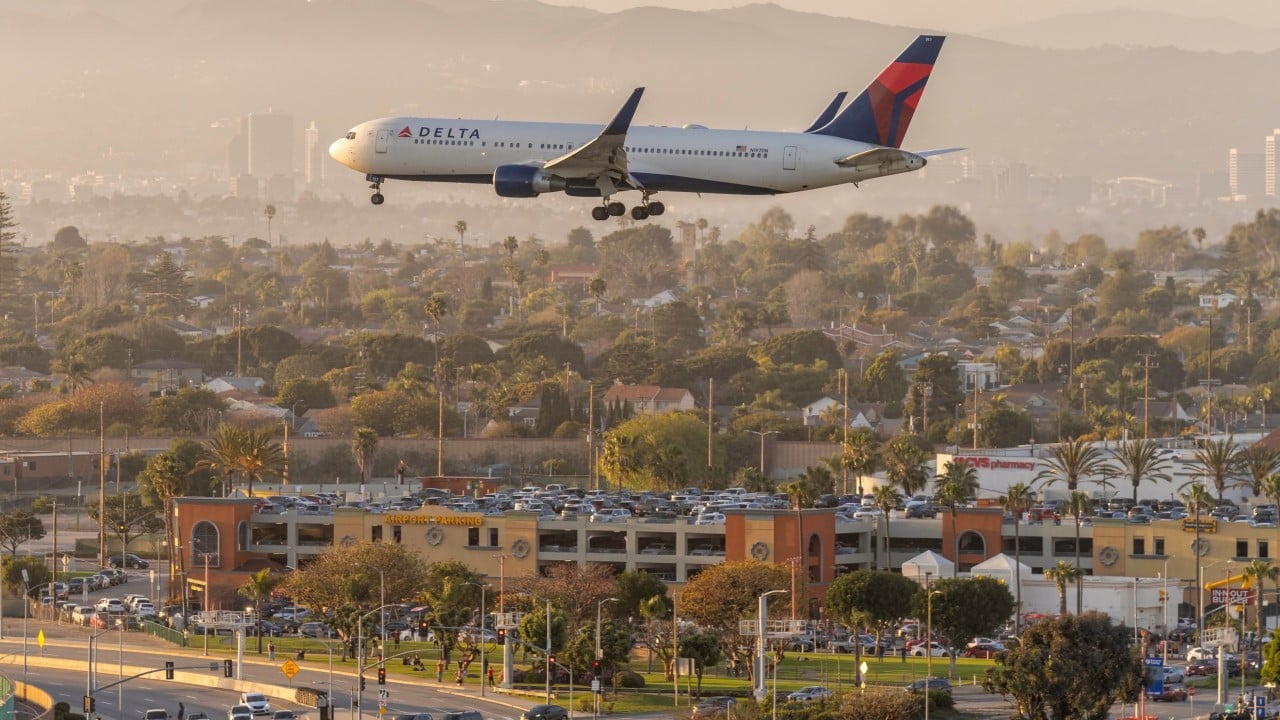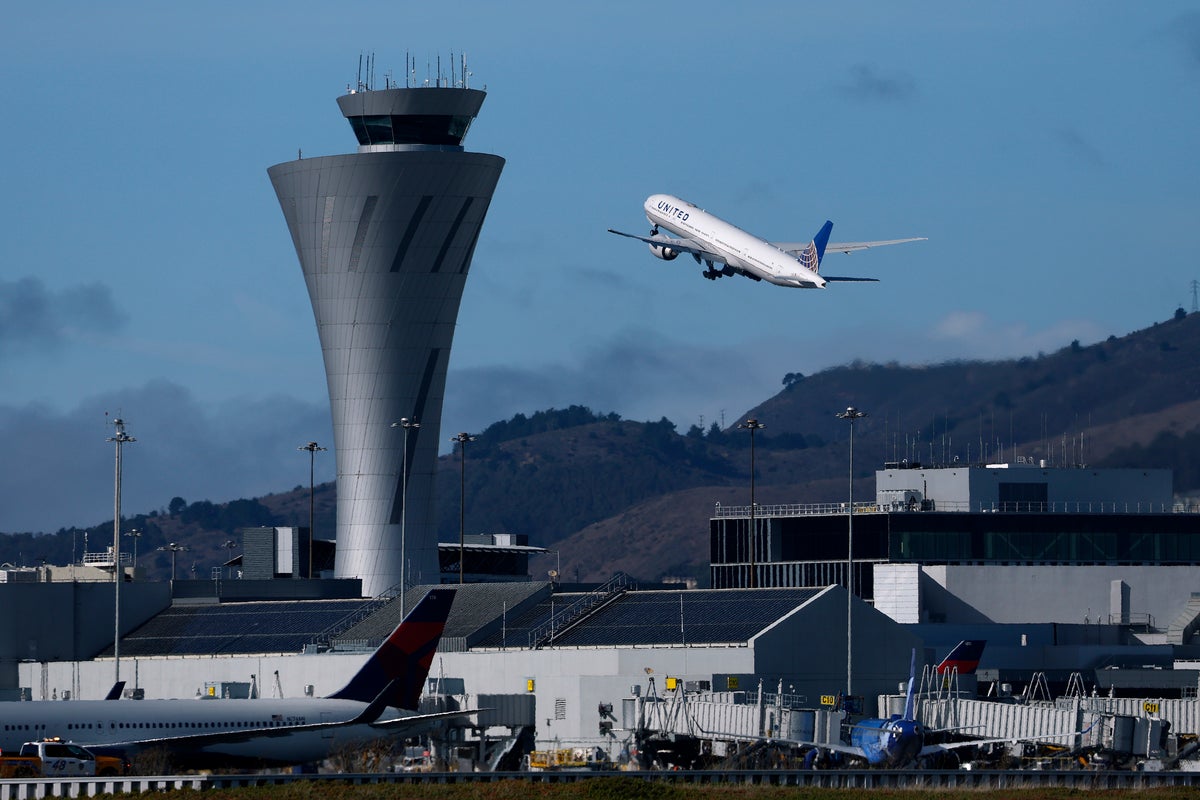
A Federal Aviation Administration (FAA) ground stop at a major international hub is not an isolated event; it is a forced throttling of an interconnected network operating at peak utilization. When the FAA enacted a temporary ground stop at San Francisco International Airport (SFO) on Sunday night, holding inbound aircraft from selected western U.S. air traffic control centers at their origin gates, public speculation turned toward systemic failure. The reality dictates looking at the structural, geographic, and regulatory mechanisms that make SFO uniquely vulnerable to sudden throughput constraints.
Understanding the operational profile of SFO requires moving past emotional headlines about travel disruption and analyzing the mathematical reality of airport capacity. An airport operates on a fluid supply-and-demand curve where supply is defined by the Acceptance Rate (AAR)—the number of aircraft an airport can safely land per hour—and demand is driven by tightly optimized airline hub schedules. Under optimal conditions, SFO handles an ARR of roughly 60 aircraft per hour. When that capacity drops due to environmental or procedural bottlenecks, the system fails to clear the queue, necessitating immediate air traffic management interventions.
The Three Constraints Governing SFO Throughput
The structural vulnerabilities of San Francisco International Airport can be categorized into three distinct operational pillars. When an unexpected ground stop occurs, it is invariably the result of one, or a combination, of these factors.
1. Spatial Runway Geometry
SFO features two pairs of intersecting runways (01R/19L and 01L/19R intersecting with 28R/10L and 28L/10R). The fundamental constraint lies in the lateral separation of parallel runways 28A and 28B, which are spaced only 750 feet apart. Under Visual Meteorological Conditions (VMC), pilots can maintain visual separation, allowing side-by-side parallel approaches that maximize the airport’s arrival capacity. However, when Instrument Meteorological Conditions (IMC) take over—such as the rapid onset of the marine layer or low-altitude coastal fog—the FAA mandates instrument-rated separation. Because the runways are closer than the 4,300 feet required for independent parallel instrument approaches, SFO is forced to switch to staggered, single-stream approaches. This geometric reality slashes the airport’s maximum arrival capacity from 60 flights per hour down to approximately 38.
2. Regulatory and Safety Mandates
The margin for error in high-density airspace is non-existent. Earlier this year, the FAA instituted updated safety restrictions specifically for SFO to manage traffic flow and mitigate close-call risks during complex landings. These procedural compliance protocols impose strict spacing requirements between arriving airframe classes. When traffic volumes exceed these revised throughput parameters, air traffic control cannot simply "speed up" operations. Instead, they must artificially suppress demand at the source.
3. Asymmetric Hub Dependency
SFO serves as the primary transpacific gateway and a fortress hub for United Airlines, handling over 54 million passengers annually. Hub-and-spoke networks rely on coordinated "banks" or windows of time where dozens of aircraft land sequentially, exchange passengers, and depart. Because international widebody arrivals from Asia face rigid oceanic arrival windows, air traffic control cannot easily delay these massive, fuel-restricted flights. Consequently, when capacity drops, the burden of delay is shifted entirely onto regional and domestic short-haul flights originating from adjacent western U.S. air traffic control centers.
The Economics of Preemptive Intervention
When a capacity deficit emerges, air traffic control utilizes a hierarchy of Traffic Management Initiatives (TMIs). The choice between an airborne holding pattern, a Ground Delay Program (GDP), or a Ground Stop (GS) is governed by an economic and safety cost function.
[Airborne Holding] -> Highest Fuel Burn + High Controller Workload (Severe Risk)
       │
       ▼
[Ground Delay Program] -> Controlled Metering via Calculated Landing Times
       │
       ▼
[Ground Stop] -> Maximum Isolation of Network Shock (Zero Airborne Risk)
Airborne holding is the least efficient mechanism. Holding aircraft in the sky burns fuel at an exponential rate, increases pilot and controller workload, and introduces safety risks as aircraft approach reserve fuel thresholds.
A Ground Delay Program assigned via Calculated Landing Times (CLTs) is preferred for predictable, long-duration capacity drops. However, when an operational constraint occurs abruptly—such as a sudden mechanical failure on a primary runway, a rapid degradation of visibility, or an acute staffing bottleneck—the FAA deploys a Ground Stop.
A ground stop is a blunt tactical instrument. By ordering specific regional centers to hold all SFO-bound flights on the ground at their departure gates, the FAA instantly caps the inbound queue. The logic is simple: it is safer, cheaper, and more logistically manageable to have an aircraft sit at a gate in Phoenix, Los Angeles, or Seattle with its engines off than to have it burning fuel in a holding pattern over Northern California.
The Downstream Network Ripple Effect
The Sunday night ground stop at SFO was brief, lasting from roughly 9:53 pm to 11:15 pm PDT. While operations resumed ahead of schedule, assessing the total impact of even an 82-minute stoppage requires tracing the non-linear path of airline resource allocation.
A common misconception is that a brief ground stop only impacts the flights scheduled to land during that specific window. In highly optimized commercial aviation, aircraft utilization rates hover near 12 to 14 hours per day. An aircraft held in Seattle for an hour misses its landing slot in San Francisco. This causes a cascade of operational friction:
- Crew Duty Limits: Flight crews operate under strict Federal Aviation Regulations (FAR) Part 117 duty-day limitations. A 90-minute delay on an evening arrival can push a flight crew "legalities" over the edge, causing the subsequent morning departure to be canceled due to mandatory crew rest requirements.
- Gate Congestion: While inbound aircraft are held at origin airports, departures from SFO continue to push back. However, if the ground stop is lifted abruptly and a backlog of planes arrives simultaneously, it overwhelms gate availability. Aircraft land only to sit on the taxiways for an hour waiting for an open gate, skewing tarmac delay metrics.
- Upstream Irregular Operations (IROPS): Because SFO is a major connection point for long-haul international flights, domestic delays cause passengers to miss their transpacific connections. The airline must then absorb the cost of re-routing, hotel vouchers, and baggage handling, turning a minor operational delay into a significant financial hit.
Strategic Operational Imperatives for High-Volume Travelers
Corporate travel managers and high-frequency flyers cannot control FAA traffic management initiatives, but they can insulate their operations from predictable structural bottlenecks. Relying on basic flight status alerts is reactive. Managing travel through a high-density hub requires a proactive framework.
First, decouple short-haul regional flights from evening hub banks. If a meeting concludes in Los Angeles or San Diego late in the afternoon, booking the final flight of the night into SFO carries an elevated risk profile. Because regional flights are the first to be held during an SFO capacity constraint, these flights face the highest probability of cancellation or severe delay. Prioritize morning departures when the air traffic control system has reset overnight and the marine layer is burning off.
Second, understand the passenger rights framework regarding TMIs. Because ground stops are legally classified as air traffic control actions—often triggered by weather or systemic safety compliance—they fall under the umbrella of conditions outside the airline's direct control. Airlines are obligated to rebook passengers on the next available flight or offer a full refund if a flight is canceled, but they are not legally mandated to provide financial compensation or hotel lodging for air traffic control delays. Carrying an independent travel insurance policy or utilizing corporate booking channels with dedicated disruption management tools is a necessity, not an option.
Finally, monitor the FAA's public Air Traffic Control System Command Center advisories directly rather than relying on consumer-facing airline apps. The operational plan advisory explicitly notes when SFO is being carried for initiatives due to procedural compliance or weather. When an advisory is active, look for alternative routing through nearby secondary hubs like Oakland (OAK) or San Jose (SJC). These airports utilize different runway configurations and do not suffer from the same lateral separation constraints as SFO, allowing them to maintain operational continuity when San Francisco is forced into a single-stream arrival sequence.