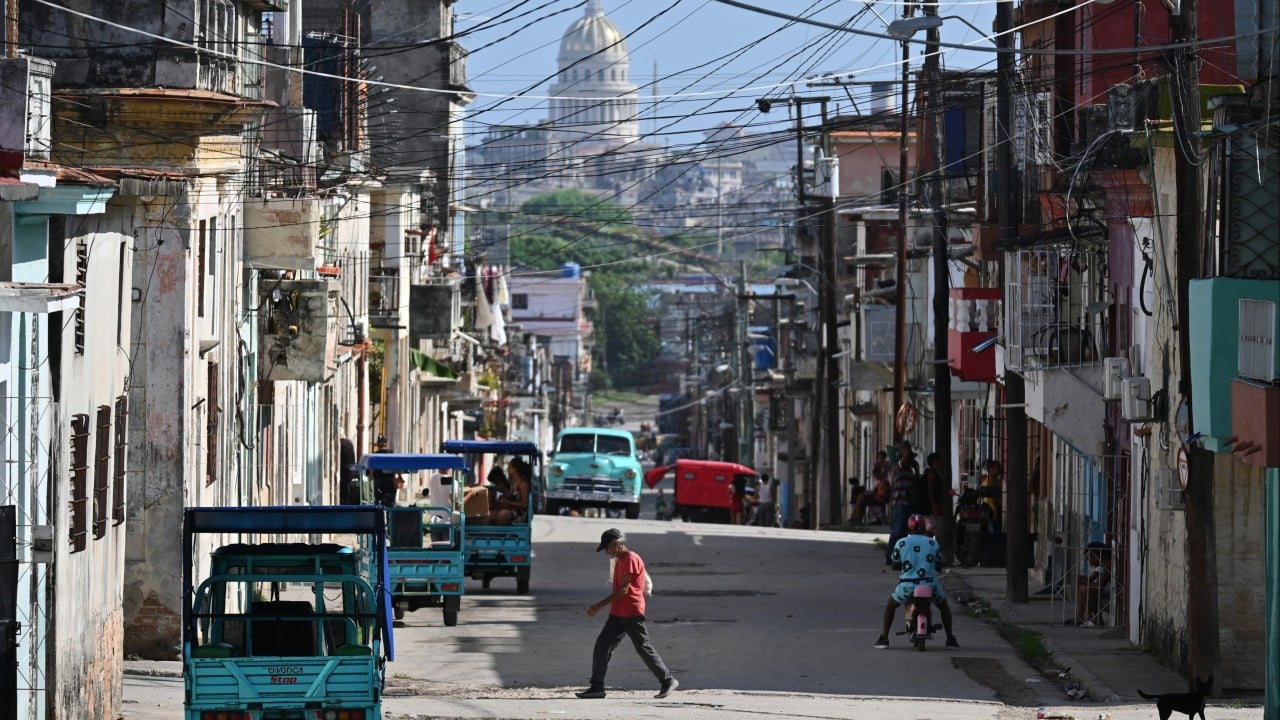
The convergence of Chinese agricultural diplomacy and Cuban economic isolation presents a structural case study in asymmetric interdependence. While conventional reporting frames the latest ministerial talks between Beijing and Havana as an act of diplomatic solidarity, an economic and logistics analysis reveals a transactional mechanism designed to mitigate acute system failures. Cuba is currently experiencing severe institutional stress caused by domestic structural bottlenecks, a critical fuel deficits framework following the January 30, 2026 U.S. oil embargo, and heightened external trade pressure.
The bilateral agriculture talks in Beijing between Chinese Vice-Minister of Agriculture Zhang Zhili and Cuba’s Deputy Agriculture Minister Telce González cannot be understood merely as a political gesture. They represent a targeted strategy to stabilize a failing domestic supply chain. By deconstructing the structural realities of this partnership, we can isolate the actual mechanisms of food security, capital allocation, and geopolitical risk diversification.
The Triad of Domestic Supply Chain Vulnerability
Cuba’s agricultural crisis is not an insulated production failure; it is a systemic breakdown across three distinct vectors that define the island's domestic supply chain.
+------------------------------------------------------------------+
|               CUBA'S SYSTEMIC SUPPLY CHAIN CRISIS               |
+------------------------------------------------------------------+
                                 |
         +-----------------------+-----------------------+
         |                       |                       |
         v                       v                       v
+------------------+   +-------------------+   +-------------------+
| 1. ENERGY INPUT  |   | 2. AGROCHEMICAL   |   | 3. MACROECONOMIC  |
|    BOTTLENECK    |   |    DEFICIT        |   |    DISTORTION     |
| Fuel embargo     |   | Import limits &   |   | Fixed price caps  |
| breaks mechanized|   | logistical decay  |   | disincentivize    |
| harvest & cold   |   | suppress crop     |   | local independent |
| storage systems. |   | yields.           |   | producers.        |
+------------------+   +-------------------+   +-------------------+
The Energy Input Bottleneck
Agricultural productivity is intrinsically linked to energy consumption. The January 2026 U.S. oil embargo severely restricted Cuba’s fuel imports, triggering a cascade failure across the agricultural sector. Mechanized harvesting requires reliable diesel allocations. Processing centers and cold-storage networks depend on an electrical grid prone to rolling blackouts. Without fuel, local distribution networks collapse, meaning crops rot in fields before reaching urban markets.
The Agrochemical Deficit
Modern crop yields depend on synthetic inputs, specifically nitrogen, phosphorus, and potassium (NPK) fertilizers, alongside targeted pesticides. Cuba’s structural shortage of foreign exchange reserves has restricted chemical imports for years. The lack of these inputs degrades soil quality and increases vulnerability to pests, compounding annual yield deficits.
Macroeconomic Distortion
State-mandated pricing mechanisms and centralized distribution networks create misaligned incentives for independent producers. When fixed state purchase prices fall below the real cost of production—inflated by black-market fuel and input costs—farmers scale back cultivation or divert yields to informal markets. This drives down the volume of food entering official state distribution channels.
The Strategic Bilateral Architecture
To offset these structural vulnerabilities, Havana relies on external subventions. Beijing’s intervention leverages targeted, high-density resource transfers rather than open-ended financial commitments. The structure of this assistance program operates through three distinct tactical mechanisms.
| Intervention Type | Operational Metric | Strategic Objective |
|---|---|---|
| Direct Commodity Transfer | 60,000-tonne emergency rice package (15,000 tonnes delivered May 2026) | Immediate caloric stabilization for vulnerable populations |
| Capital Injection | $80 million emergency financial aid package | Procurement of critical electrical and grid infrastructure |
| Technology Capital Transfer | Photovoltaic modules (target: 92 solar stations by 2028) | Structural decoupling of the agricultural grid from diesel dependency |
The delivery of the initial 15,000-tonne rice shipment to the Port of Havana on May 23, 2026, illustrates this optimization framework. Rice is a primary caloric staple in the Cuban diet. By importing finished food items under emergency aid terms, Havana bypasses its domestic production bottlenecks. This caloric baseline stabilizes urban centers without requiring immediate structural fixes to the domestic agricultural framework.
The Geopolitical Cost Function for Beijing
Beijing’s decision to back Havana involves a clear calculation of geopolitical costs and benefits. China’s assistance is structured to maximize long-term strategic positioning while limiting immediate financial risk.
       BENEFITS                                 COSTS
+-----------------------+               +-----------------------+
| Strategic Foothold    |               | Sovereign Debt        |
| Near U.S. Border      |               | Write-Downs           |
+-----------------------+               +-----------------------+
| Access to Specialized |       vs      | Secondary Sanction    |
| Sectors (Biotech)     |               | Friction Risks        |
+-----------------------+               +-----------------------+
| Diplomatic Alignment  |               | Direct Capital        |
| on Sovereign Claims   |               | Outlays ($80M + Aid)  |
+-----------------------+               +-----------------------+
Strategic Maritime Positioning
Cuba offers a critical geographic footprint in the Caribbean, situated close to major U.S. maritime trade routes and commercial hubs. Maintaining a strong diplomatic and economic presence on the island allows Beijing to project influence within the traditional sphere of Western maritime dominance.
Capital Diversification and Resource Extraction
While Cuba lacks large-scale grain or cash-crop export capacities, it holds significant reserves of industrial raw materials, particularly nickel and cobalt. These are vital inputs for China's domestic advanced battery and electric vehicle manufacturing supply chains. Agricultural assistance acts as a stabilizing mechanism, keeping joint venture infrastructure—such as the Las Camariocas nickel processing facility—operational despite wider economic instability.
Diplomatic Reciprocity and Alignment
Havana provides consistent diplomatic support for Beijing in international forums. This includes voting alignment on sovereign territorial claims and public backing at the United Nations. By stepping in during heightened U.S. legal and economic pressure, Beijing reinforces its position as a reliable partner for nations operating outside the Western financial system.
Structural Failure Modes of Agrarian Dependency
The primary limitation of the current Sino-Cuban framework is that it addresses liquidity and supply issues rather than systemic insolvency. Food aid functions as a temporary stopgap rather than a permanent solution to structural agricultural problems.
A major bottleneck is that 60,000 tonnes of rice can only sustain a fraction of the population's annual caloric needs. Once consumed, the underlying supply deficits return unless domestic production capacity changes. This reality leaves Cuba highly vulnerable to external logistical shocks, shipping rate volatility, and global supply chain disruptions.
Furthermore, introducing foreign agricultural technology and capital equipment requires a matching local technical infrastructure. Sophisticated solar arrays and automated agricultural machinery demand specialized maintenance pipelines, consistent replacement parts, and technical training. Without these supporting elements, transferred capital assets rapidly degrade, turning long-term infrastructure projects into stranded assets that yield little structural return.
Strategic Forecast
The agricultural negotiations in Beijing indicate that bilateral cooperation will transition from emergency commodity shipments toward structured, technology-driven interventions. Cuba cannot rely on open-ended food donations to solve its deep-seated supply issues. As a result, the next phase of cooperation will likely focus on shifting the energy basis of Cuban agriculture away from central oil dependence.
We can expect accelerated deployment of decentralized, solar-powered irrigation and processing hubs, funded by Chinese credit lines and executed by state-backed engineering firms. This approach allows Beijing to convert economic aid into commercial contracts for its own domestic renewable energy manufacturers. At the same time, it helps insulate Cuba's food production loop from future fuel embargoes.
However, the survival of Cuba's agricultural sector will ultimately depend on domestic regulatory reforms. External capital can stabilize the food supply in the short term, but long-term security requires structural changes. Cuba must address localized price distortions, grant greater autonomy to independent producers, and build resilient supply chains capable of operating under continuous economic pressure.
Cuban Crisis: China Sends Over 15,000 Tonnes Of Rice To Havana
This broadcast provides direct field coverage of the initial 15,000-tonne rice delivery arriving at the Port of Havana, documenting the physical implementation and state level reception of the bilateral assistance package.