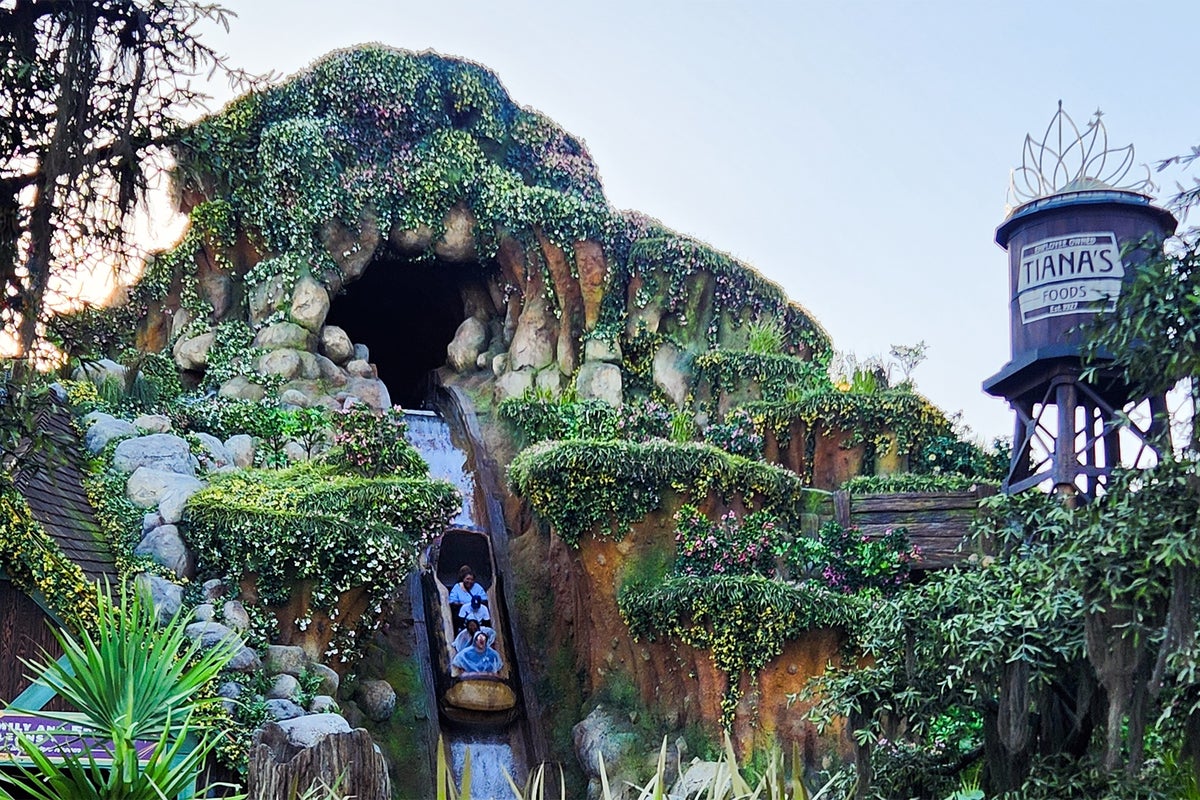
Amusement park ride safety relies on a unyielding assumption: passengers will remain secured within the vehicle for the duration of the cycle. When a patron deliberately breaches restraint systems, they disrupt a complex web of mechanical, computational, and human monitoring systems designed to prevent catastrophic injury. An incident at Disneyland’s Splash Mountain—where a 13-year-old passenger exited a moving log flume and descended a 50-foot drop on foot—exposes the critical vulnerabilities at the intersection of guest behavior and automated ride control.
Analyzing this failure point requires stripping away sensationalized news reporting and evaluating the event through an operational engineering lens. The breakdown can be mapped across three distinct failure vectors: physical restraint architecture, sensor telemetry lag, and human override latency.
The Restraint Dilemma: Passive Comfort vs. Active Lockouts
The primary line of defense in ride dynamics is the passenger restraint. In high-g-force attractions like roller coasters, theme parks employ active lockouts—hydraulic or electronic lap bars and over-the-shoulder restraints that cannot be opened without operator intervention or a loss of system power.
Water flume rides historically operate on a different risk-mitigation profile. Because these attractions present a baseline risk of water evacuation or capsizing, restraint design must balance two competing hazards:
- Ejection Risk: The probability of a guest being thrown from the vehicle due to centripetal or gravitational forces.
- Entrapment Risk: The probability of a guest being trapped underwater if the vehicle flips or submerges.
Because water flumes typically feature low-velocity tracking and gentle elevation changes prior to the final drop, operators like Disney traditionally utilized passive restraints—simple lap bars or pull-down bars that lack heavy mechanical locking teeth. This design choice prioritizes rapid manual evacuation in a flooding scenario over absolute guest immobilization.
The structural flaw in this strategy is the vulnerability to human non-compliance. A motivated passenger can exploit the mechanical play in a passive restraint. Once the passenger stands up, they exit the vehicle’s safe envelope and enter the ride envelope, a zone engineered strictly for clear vehicular passage, not pedestrian traffic.
Sensor Telemetry and the Zone Control Bottleneck
Modern theme park rides are governed by a Distributed Control System (DCS) utilizing Programmable Logic Controllers (PLCs). The track is divided into discrete segments called blocks. The fundamental rule of block architecture is absolute isolation: no two vehicles can occupy the same block simultaneously.
[Block 1: Station] ---> [Block 2: Lift Hill] ---> [Block 3: Flume Run] ---> [Block 4: Drop Zone]
                                 ^
                         (Guest Intrusion)
Vehicles advance from one block to the next only when the forward block is confirmed clear by proximity sensors, photo-electric eyes, or mechanical limit switches. When a guest exits a vehicle mid-ride, they introduce an un-tracked asset into the system.
The PLC system tracks the log, not the human. If a passenger steps out of the vehicle in Block 3 and walks toward Block 4, the system remains unaware of the pedestrian until they cross a specialized intrusion detection sensor. These localized sensors—often infrared curtains or pressure mats—are typically positioned only around high-velocity drops or restricted mechanical areas rather than along the entire length of the flume.
This creates a critical visibility gap. If a guest exits the vehicle in an un-monitored zone, the system experiences a telemetry blind spot. The vehicle continues along its path guided by gravity or water pumps, while the pedestrian moves independently, creating an imminent risk of collision between the walking guest and trailing ride vehicles.
Human Override Latency and Operational Staging
When an infraction occurs outside an automated sensor zone, the system relies entirely on human monitoring via Closed-Circuit Television (CCTV) arrays. The operational sequence from detection to mitigation follows a strict chain of latency:
- Recognition Time: The ride operator must identify anomalous behavior across a multi-screen monitor matrix.
- Decision Time: The operator must assess whether the anomaly requires an Emergency Stop (E-stop) or a visual dispatch hold.
- Transmission Time: The physical actuation of the E-stop button.
- Mechanical Cascading: The time required for brakes to engage, water pumps to cut power, or lift hills to grind to a halt.
In the Disneyland log flume incident, cast members acted within seconds to trigger an emergency shutdown. However, stopping a water-based attraction introduces fluid dynamics problems that do not exist on steel tracks.
Cutting power to water pumps does not instantly stop a log flume vehicle. The water already in the channel continues to flow due to momentum, carrying the logs forward until they bottom out on mechanical friction brakes or concrete channels. This inherent mechanical delay means that even an instantaneous human reaction cannot prevent a vehicle from traveling a significant distance post-activation. For a guest who has already initiated a descent down a 50-foot drop, the ride mechanics cannot decelerate fast enough to mitigate the immediate danger.
The Economics of Attraction Downtime and Liability
Theme park operations evaluate safety incidents through a dual matrix of guest welfare and operational impact. An emergency shutdown triggers a costly sequence of events:
- Evacuation Overhead: Staff must manually extract guests from every vehicle currently stalled on the track, often using narrow maintenance catwalks.
- System Reset Cycles: Before an attraction can reopen, the PLC must be cycled, water levels normalized, and empty test vehicles dispatched to verify sensor alignment. This process can take hours.
- Capacity Degradation: High-capacity rides like Splash Mountain process upwards of 2,000 guests per hour. A multi-hour shutdown creates massive crowding bottlenecks elsewhere in the park, degrading the overall guest experience and driving down secondary spending at food and retail locations.
The legal liability framework further complicates these events. While standard personal injury defense hinges on the assumption of risk—the idea that a guest accepts the inherent forces of a ride when they board—a deliberate infraction shifts the burden. The park must demonstrate that its safety signage, audio warnings, and operator responses met the industry standard of care to prevent a negligence claim, even when the guest actively bypassed physical barriers.
Hardening Infrastructure Against Non-Compliant Behavior
To eliminate the vulnerabilities exposed by mid-ride passenger exits, park operators must transition from reactive monitoring to predictive intervention. Relying on guests to follow verbal instructions is an obsolete risk-management strategy for high-throughput environments.
The immediate operational play requires upgrading passive restraint systems to variable-lock electronic lap bars on all high-profile water attractions. These bars must utilize digital sensors that communicate the closure status of each individual seat directly to the operator's console. If a restraint envelope is breached by more than a pre-set tolerance during the ride cycle, the PLC must automatically trigger a localized slowdown in preceding blocks, removing human latency from the initial phase of the safety loop.
Concurrently, parks must deploy computer-vision AI overlays across existing CCTV networks. Rather than relying on a human operator to catch a guest standing up across dozens of screens, edge-computing visual analytics can instantly flag anomalous human geometry—such as a vertical torso rising above the horizontal plane of a ride vehicle—and immediately trip a warning or an automated ride stop. Upgrading the sensor grid from simple block tracking to continuous algorithmic tracking is the only definitive mechanism to isolate human variance from automated transit systems.