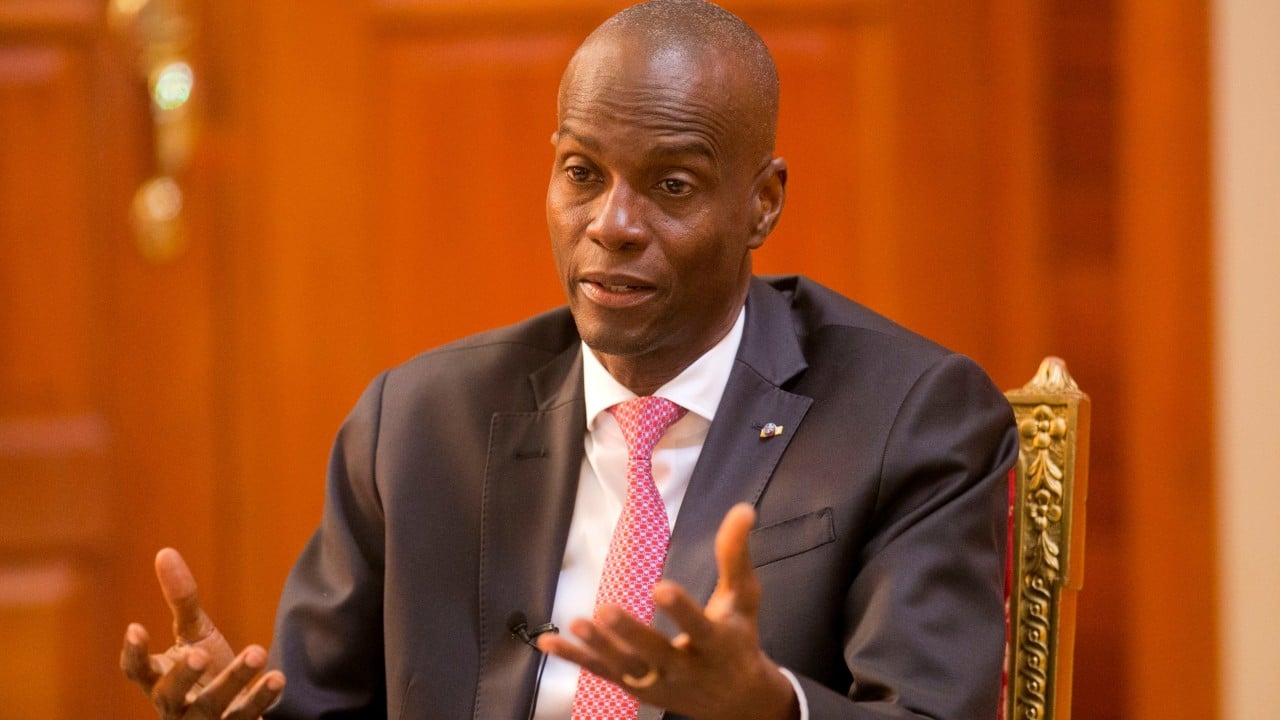
The conviction of Florida-based pastor Christian Emmanuel Sanon in a United States federal court marks a critical inflection point in the legal and geopolitical fallout surrounding the July 7, 2021 assassination of Haitian President Jovenel Moïse. Rather than treating the event as an isolated act of political violence, federal prosecutors established a transnational conspiracy governed by distinct operational failures, financial intermediaries, and extraterritorial jurisdictional mechanisms. Standard media coverage often reduces this prosecution to a sensationalist narrative involving a religious figure seeking political power. A rigorous structural breakdown reveals a far more calculated—yet operationally flawed—network of private security contractors, South Florida financiers, and political opportunists exploiting state fragility.
The Structural Architecture of the Conspiracy
To understand how a dual Haitian-American citizen operating out of Florida became a central node in a presidential assassination, one must analyze the conspiracy across three distinct functional layers: political aspiration, financial intermediation, and tactical execution.
The first layer involved political legitimation. Sanon, a 63-year-old pastor and self-styled physician with intermittent business ventures in Florida and Haiti, positioned himself as a transitional leader capable of replacing Moïse. According to federal indictments and trial testimony, Sanon did not operate with an established political party or domestic security apparatus inside Haiti. Instead, he relied on the premise that a vacuum at the executive level in Port-au-Prince could be filled through external intervention backed by a fabricated mandate of stabilization.
The second layer consisted of financial and logistical intermediation, centered in Doral, Florida. Sanon lacked the liquid capital to fund an armed operation independently. He bridged this resource gap by partnering with executives at Counter Terrorist Unit Security (CTU), a Florida-based private security firm led by Venezuelan emigre Antonio Intriago, and Worldwide Capital Lending Group, led by Walter Veintemilla. These intermediaries structured the operation not merely as a political coup, but as a commercial investment. Investors were solicited with promises of lucrative infrastructure, security, and natural resource contracts in Haiti once Sanon assumed the presidency. This monetization of regime change transformed a political ambition into an underwritten financial venture.
The third layer encompassed tactical execution. CTU Security recruited approximately two dozen retired Colombian military personnel, utilizing their specialized training while insulating the Florida-based organizers from direct operational exposure. These operatives were initially contracted under the guise of providing VIP protection and infrastructure security for Sanon. However, the mission parameters shifted from extraction and arrest—ostensibly executing an outdated 2019 Haitian judicial warrant against Moïse—to lethal force once the operatives breached the president's private residence in Pèlerin 5, Port-au-Prince.
Jurisdictional Mechanics and Extraterritorial Prosecution
A primary point of confusion in public analysis is why a US federal court exercises jurisdiction over the murder of a foreign head of state on foreign soil. The Department of Justice (DOJ) did not prosecute Sanon for murder under Haitian law; instead, prosecutors utilized specific statutory mechanisms under Title 18 of the United States Code that criminalize domestic planning for overseas violence.
Specifically, federal prosecutors relied on 18 U.S.C. § 956 (Conspiracy to kill, kidnap, maim, or injure persons or damage property in a foreign country) and violations of the Export Control Reform Act (ECRA). Under Section 956, the offense is complete the moment two or more persons within the jurisdiction of the United States conspire to commit murder or kidnapping abroad, provided at least one conspirator commits an overt act within US territory to effect the object of the conspiracy.
The evidentiary record established multiple overt acts within the Southern District of Florida:
- Procurement of Materiel: Conspirators acquired ballistic vests, tactical gear, and communications equipment in Florida and shipped them to Haiti without required federal export licenses.
- Financial Transfers: Wire transfers originating from US bank accounts funded the recruitment, travel, and lodging of the Colombian mercenaries in Port-au-Prince.
- Operational Planning: Strategic meetings between Sanon, Intriago, Veintemilla, and other co-conspirators occurred in South Florida offices and hotels, where leadership structures and post-coup commercial contracts were drafted.
By anchoring the prosecution in domestic conspiracy statutes rather than the physical act of assassination in Port-au-Prince, the DOJ bypassed the institutional paralysis of the Haitian judicial system. Haiti’s domestic investigation suffered from severe systemic vulnerabilities, including the assassination or intimidation of magistrates, frequent recusal of investigating judges, and the collapse of state security institutions. Federal jurisdiction in Miami provided a secure venue, subpoena power over US financial institutions, and custody of key cooperating witnesses who fled Haiti or were extradited from third countries like Jamaica and Colombia.
Operational Failures and the Shift from Extraction to Assassination
Analyzing the tactical progression of the July 2021 operation exposes fundamental flaws in command, control, and strategic viability. The conspirators operated under a flawed assumption: that removing Moïse would trigger immediate acquiescence from the Haitian National Police (PNH) and international recognition from the United States.
In the weeks preceding the attack, Sanon traveled to Haiti via private jet, accompanied by Colombian security personnel. Initially, the operational plan centered on arresting Moïse and installing Sanon as interim president. However, the conspirators failed to secure authentic backing from the US government—despite Sanon claiming to associates that he was working with the State Department and the Drug Enforcement Administration (DEA). When it became clear that an arrest operation lacked institutional support and that Moïse would not be easily detained without resistance, the operational directive escalated.
Days before the attack, conspirators in Florida and Haiti altered the mission objective from capture to assassination. This tactical pivot introduced fatal vulnerabilities into the plot:
- Absence of an Extraction Plan: The Colombian operatives were deployed into a heavily fortified residential compound without a viable exfiltration strategy. Following the shooting of Moïse and the severe wounding of First Lady Martine Moïse, the operatives became trapped near the compound by PNH units, resulting in immediate firefights, fatalities, and mass arrests.
- Operational Security Breakdowns: The conspirators utilized unencrypted commercial messaging applications, left verifiable paper trails of equipment purchases in Florida, and signed formal promissory notes detailing post-coup financial payouts. Sanon himself contacted associates in the US during and immediately after the attack seeking assistance to resupply ammunition for the trapped operatives.
- Misreading Domestic Security Dynamics: The plotters assumed the presidential security detail would stand down or defect. While investigative reports later scrutinized the total absence of casualties among Moïse's guards—raising persistent questions regarding internal complicity—the broader Haitian state apparatus did not rally behind Sanon. Instead, interim Prime Minister Claude Joseph retained control, declared a state of siege, and coordinated with international partners to isolate the perpetrators.
Distinguishing Verified Facts from Unresolved Hypotheses
Rigorous legal and intelligence analysis requires separating facts proven beyond a reasonable doubt in federal court from ongoing investigative hypotheses that remain unverified.
Verified Legal and Evidentiary Facts:
- Christian Emmanuel Sanon conspired with Florida-based security executives and financiers to overthrow President Jovenel Moïse and install himself as Haiti's leader.
- Sanon and his co-conspirators unlawfully exported tactical equipment from the United States to Haiti to support the armed operation.
- Sanon recruited and directed personnel knowing that the operation involved the use of armed force and ultimately the killing of the Haitian president.
- Multiple co-defendants, including former Colombian soldier Germán Alejandro Rivera García, former Haitian senator John Joël Joseph, businessman Rodolphe Jaar, and CTU Security head Antonio Intriago, entered guilty pleas in the Southern District of Florida, providing corroborating testimony regarding the chain of command and funding mechanisms.
Unresolved Analytical Questions and Hypotheses:
- The Ultimate Intellectual Authors: While Sanon served as the designated political figurehead and Florida-based firms managed logistics, investigators and regional analysts continue to examine whether higher-ranking actors within Haiti's political or economic elite co-opted Sanon's plot to eliminate Moïse for reasons unrelated to Sanon's presidential ambitions. Moïse had increasingly alienated entrenched oligarchs by targeting state energy contracts, port monopolies, and alleged narcotics trafficking networks.
- Presidential Guard Complicity: The exact mechanism by which two dozen armed foreign operatives breached multiple security perimeters at the presidential residence without a single member of Moïse's specialized security unit firing a defensive shot remains a subject of ongoing inquiry in both Port-au-Prince and Washington.
- Sovereign Intelligence Awareness: Because several participants had prior contact with US law enforcement agencies as informants—including Joseph Vincent and Rodolphe Jaar—questions persist regarding when US agencies became aware of the plot's escalation and whether intelligence failures prevented preemptive disruption.
Systemic Vulnerability of Fragile States to Private Mercenary Networks
The Sanon conviction demonstrates a structural vulnerability inherent to fragile states situated near major financial and logistical hubs. When domestic state institutions erode, the barrier to entry for transnational criminal and mercenary networks drops precipitously.
In this case, the convergence of three factors enabled a non-state actor with minimal political capital to execute a decapitation strike against a sovereign government:
- Commodification of Military Labor: The availability of thousands of experienced, undercompensated retired military personnel from Latin America—specifically Colombia, where decades of counterinsurgency warfare produced a large pool of specialized operators—created a liquid market for private military contractors willing to accept high-risk assignments for modest monthly retainers.
- Regulatory Gaps in Private Security: Firms registered in jurisdictions like Florida can operate as legitimate corporate entities while functioning as fronts for paramilitary recruitment, exploiting loopholes in cross-border financial monitoring and dual-use equipment exports until an overt kinetic event triggers federal law enforcement intervention.
- Political Vacuum as an Investment Thesis: In states experiencing severe constitutional crises—at the time of his death, Moïse was ruling by decree following delays in legislative elections—external financiers can rationalize regime change as a speculative venture capital play, trading upfront operational funding for sovereign concessions.
Strategic Implications for Federal Enforcement and Regional Security
The legal resolution of Sanon's case establishes an aggressive precedent for the extraterritorial application of US conspiracy and export-control laws against private actors orchestrating foreign political violence from American soil. Federal prosecutors demonstrated that domestic logistical support, financial underwriting, and equipment procurement carry severe criminal liability equivalent to direct participation in overseas assassinations.
For intelligence and financial regulatory bodies, the operational blueprint uncovered in the Southern District of Florida dictates an immediate shift in compliance monitoring. Financial intelligence units and export enforcement agencies must treat atypical cross-border transfers involving private security LLCs, bulk purchases of non-lethal tactical gear, and speculative sovereign-contract promissory notes directed toward unstable jurisdictions as high-priority indicators of illicit paramilitary mobilization. Without preemptive disruption at the financial and logistical layers in compliant jurisdictions, fragile states remain acutely exposed to low-cost, externally funded decapitation strikes.


