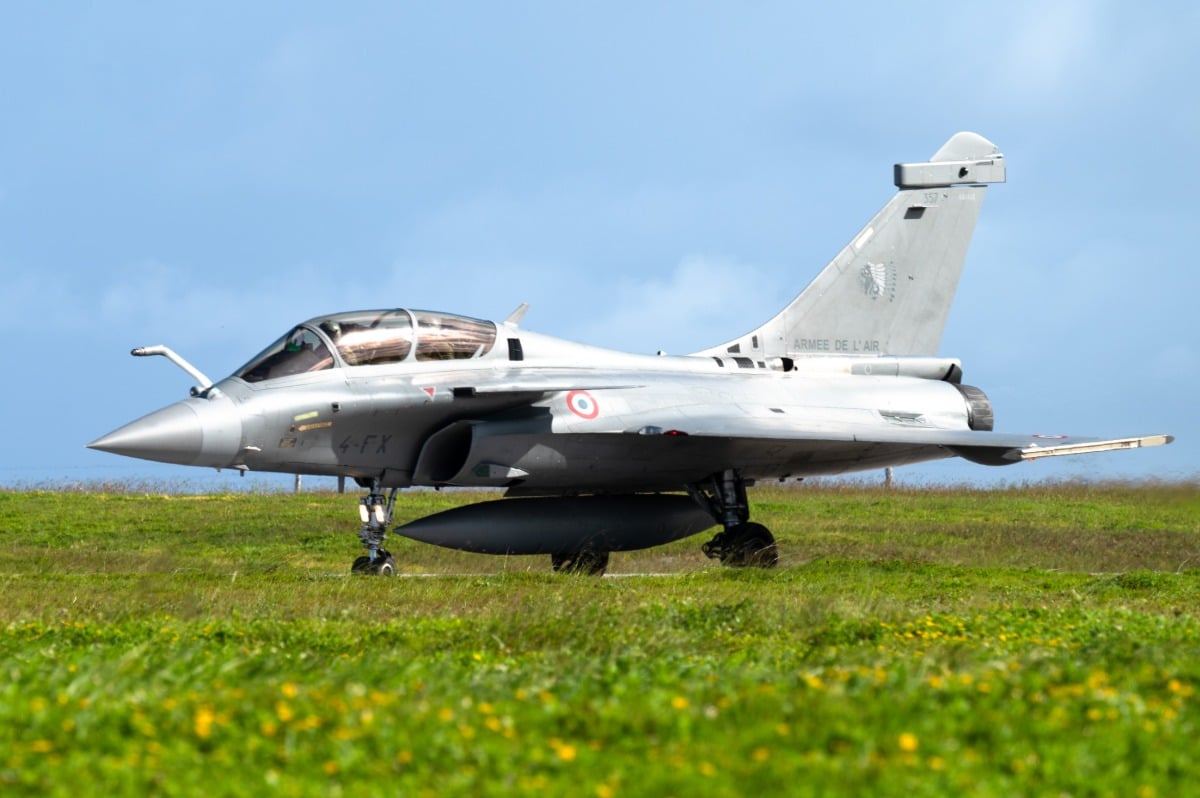
The bilateral defense agreement signed in Paris between French President Emmanuel Macron and Ukrainian President Volodymyr Zelenskyy on July 13, 2026, exposes a stark divergence between long-term strategic posturing and immediate kinetic utility. The headline-grabbing transfer of 16 Dassault Rafale fighter jets and the domestic licensing of French missile systems are structurally decoupled from the realities of the ongoing attrition campaign.
While Western media portrays this roadmap as an immediate upgrade to Ukrainian defenses, a cold, data-driven analysis of defense industrial supply chains, aerospace logistics, and capital allocation reveals that this pact is designed for the post-war European security architecture rather than the immediate defense of Ukrainian skies.
The Structural Mismatch of the 2028-2029 Delivery Window
The core tactical vulnerability of the Rafale agreement lies in its timeline. The official roadmap schedules the first operational Rafale flights in Ukrainian airspace for 2028–2029. This multi-year lead time creates a severe disconnect with Ukraine's immediate defensive requirements, particularly when fighting a high-intensity war characterized by rapid airframe attrition and persistent missile strikes.
+-------------------------------------------------------------+
|              THE TIMELINE DECOUPLING PROBLEM                |
+-------------------------------------------------------------+
|  [2026]                                             [2028]  |
|  Current Ballistic Attrition                         First  |
|  and Infrastructure Crises                        Delivery  |
|  =======================>                             ===>  |
|  (Requires immediate kinetic interceptors)  (Long-term power) |
+-------------------------------------------------------------+
The multi-year delay is not arbitrary. It is governed by three unavoidable defense industrial constraints:
- Dassault Assembly Line Backlog: Dassault Aviation’s Rafale assembly line is heavily backlogged with existing export contracts for nations including India, Indonesia, Egypt, and Greece. Inserting Ukraine into the production schedule requires either a dramatic scale-up of assembly capacity in Bordeaux-Mérignac or the politically sensitive diversion of existing orders.
- Infrastructure and Ground Support Engineering: Unlike Soviet-era Su-27 or MiG-29 airframes, the Rafale requires a highly specific, climate-controlled support ecosystem. Transitioning to this Western platform demands the construction of hardened shelters, specialized diagnostic benches, and highly secure digital networks to interface with the SPECTRA self-protection suite.
- The Pilot and Technician Training Pipeline: Achieving basic flight proficiency on a modern multi-role aircraft is fundamentally different from mastering its combat systems. It takes a minimum of 18 to 24 months to transition experienced pilots to the Rafale's glass cockpit and weapon systems, while training ground crews to maintain the complex Snecma M88 turbofan engines demands an even longer technical pipeline.
The Economics of Dassault Aviation and Capital Allocation
A significant friction point in the intergovernmental roadmap is the lack of a finalized, binding commercial contract. Historically, Dassault Aviation does not recognize a transaction as active until a substantial advance down payment is cleared.
Ukraine's national treasury is under severe fiscal duress. Kyiv has already allocated substantial portion of its international military aviation aid to acquire Swedish JAS 39 Gripen fighters. The financial mechanism to bridge this funding gap remains unresolved.
France has proposed a system of state-backed loans from French commercial banks. This approach carries structural risks:
French State Guarantees -> Commercial Bank Loans -> Ukrainian Sovereign Debt -> Dassault Production Slots
This dynamic introduces several critical vulnerabilities:
- Debt Sustainability: Loading further sovereign debt onto a highly stressed Ukrainian balance sheet limits future fiscal flexibility for postwar reconstruction.
- Opportunity Cost: Every dollar of credit extended for the 2028 Rafale delivery is a dollar unavailable for immediate purchase of low-cost, high-frequency munitions like 155mm artillery shells or first-person view (FPV) strike drones.
- The Scale Illusion: The 16 planned Rafale jets represent only a fraction of the 100-aircraft long-term aspiration outlined in November 2025. Operating a micro-fleet of 16 aircraft dramatically inflates the per-unit cost of maintenance, parts provisioning, and training, erasing the economies of scale that larger operators enjoy.
Sovereign Supply Chains and ITAR Escape Vectors
The most strategically significant element of the Paris agreement is the licensing of the EuroSAM Aster 30 anti-ballistic missile, the SCALP-EG cruise missile, and the Safran AASM Hammer precision-guided bomb.
The decision to license the Aster 30 is highly consequential. To understand its importance, it must be contrasted with the United States' offer to allow Ukrainian domestic production of the MIM-104 Patriot interceptor.
+-------------------------------------------------------------------------+
|                  WESTERN INTERCEPTOR SUPPLY CHAINS                      |
+-------------------------------------------------------------------------+
| SYSTEM       | MANUFACTURER         | ITAR JURISDICTION  | EXPORT RISK  |
+--------------+----------------------+--------------------+--------------+
| Patriot      | Lockheed / RTX       | High (US Congress) | High         |
| Aster 30     | EuroSAM (MBDA/Thales)| None (European)    | Low          |
+-------------------------------------------------------------------------+
The US Patriot licensing agreement, promised during the NATO summit in Ankara, bypasses normal commercial readiness. Major defense primes like Lockheed Martin and RTX were not briefed on the proposal, leaving the initiative without a defined timeline, certified manufacturer, or supply chain allocation. Furthermore, Patriot production is governed by strict US International Traffic in Arms Regulations (ITAR), making it vulnerable to shifting political winds in Washington.
The EuroSAM consortium—comprising MBDA France, MBDA Italy, and Thales—operates entirely within a European regulatory framework. By securing Aster 30 licensing, Ukraine achieves an "ITAR-Free" anti-ballistic missile supply chain. This insulates Kyiv from future US legislative gridlock and establishes a direct line of industrial cooperation with Western Europe's dominant missile house.
The Physics of Domestic Munitions Production Under Fire
While licensing agreements look impressive on paper, translating blueprints into functional kinetic weapons inside an active combat zone presents massive engineering and logistical hurdles. Producing the AASM Hammer, SCALP-EG, and Aster 30 requires highly complex, delicate industrial processes.
The Solid Rocket Motor Bottleneck
Modern interceptors like the Aster 30 rely on advanced solid-fuel rocket motors. The chemical composition, casting, and curing of these high-energy propellants require specialized facilities that must maintain precise environmental controls. High humidity or temperature fluctuations during the curing phase can introduce microscopic voids in the propellant grain, resulting in catastrophic motor failure upon ignition. Ukraine currently lacks the specialized chemical infrastructure to cast these large-diameter solid motors domestically at scale.
Precision Guidance and Sensor Fusion
The AASM Hammer and SCALP-EG require high-grade inertial navigation systems (INS), GPS receivers with anti-jamming modules, and infrared or active radar seekers. These components are not easily manufactured in localized, decentralized machine shops. Kyiv will remain entirely dependent on French imports for the guidance kits, limiting "domestic production" to basic structural assembly, casing fabrication, and warhead integration.
The Physical Threat of Decapitation Strikes
Establishing large, centralized defense plants in Ukraine presents an immediate target for Russian long-range precision strikes. Any factory configured for the final assembly of Aster 30 or SCALP-EG missiles will be prioritized for destruction by Russian Kalibr cruise missiles or Kinzhal aeroballistic missiles.
To survive, Ukraine must employ a highly decentralized manufacturing model:
[Decentralized Component Fab A] --\
[Decentralized Component Fab B] ----> [Underground Assembly Point] -> [Frontline Deployment]
[Decentralized Component Fab C] --/
This decentralized approach introduces significant logistics friction, increases transit times, and complicates quality control.
The FREYJA Coalition and Pan-European Anti-Ballistic Integration
To mitigate the production constraints of Western interceptors, the Paris summit formalized the creation of the FREYJA coalition. Comprising ten nations—including Ukraine, France, Great Britain, Germany, and Norway—the coalition seeks to develop a new anti-ballistic system centered around an interceptor designed by the Ukrainian defense firm Fire Point.
+-------------------------------------------------------------+
|               THE FREYJA SYSTEM ARCHITECTURE                |
+-------------------------------------------------------------+
| European Radars & C2  ==>  Ukrainian "Fire Point" Missile   |
| (Thales/SAMP-T Tech)       (Domestic solid-state design)    |
+-------------------------------------------------------------+
The strategic logic behind FREYJA is to bypass the severe production bottlenecks of EuroSAM’s Aster missile. Aster production currently sits at a low rate of approximately 80 to 100 missiles per year, with plans to scale to 300 per year by 2028. This supply is highly inadequate for a war zone where a single week of Russian ballistic strikes can exhaust dozens of interceptors.
The FREYJA framework relies on a hybrid design strategy. It pairs high-end Western sensors and command-and-control architectures—such as the Thales Arabel or Ground Fire radars—with a lower-cost, highly mass-producible Ukrainian-designed interceptor. Zelenskyy’s ambitious target to have FREYJA operational within 12 months relies on the assumption that Fire Point can quickly adapt existing Soviet-era surface-to-air missile components or rapidly scale its own developmental designs.
If successful, FREYJA could provide Ukraine with a high-capacity, economically sustainable defensive shield. If it fails, Ukraine will remain dependent on highly rationed, expensive Western-supplied interceptors.
The High Cost of Fighter Fleet Heterogeneity
By committing to the Rafale, Ukraine is locking itself into a highly fragmented, inefficient air power model. In the post-war era, the Ukrainian Air Force will likely find itself operating a mixed fleet of F-16s, JAS 39 Gripens, and Rafales.
While this diverse fleet offers political resilience against any single supplier cutting off support, it is highly inefficient from an operational and logistical standpoint.
- Fractured Supply Chains: The F-16, Gripen, and Rafale share almost no common parts. Ukraine will be forced to maintain three distinct pipelines for engine spares, hydraulic fluids, structural components, and ground support equipment.
- Diverse Weapon Inventories: Although both the Gripen and Rafale can deploy European missiles like the Meteor, their integration paths and specific software baselines differ. Ground crews must be trained to load, test, and program three separate suites of precision-guided munitions.
- Incompatible Maintenance Philosophy: French maintenance doctrines, dictated by Dassault and Safran, are structurally distinct from American (Lockheed Martin) and Swedish (Saab) systems. This lack of commonality prevents ground technicians from being easily redeployed across airbases, dividing Ukraine's scarce pool of technical talent into isolated, highly specialized teams.
Strategic Projection
The French-Ukrainian roadmap represents a pivot toward long-term deterrence rather than an immediate fix for the current air defense crisis. The 16 Rafale jets will not impact the war's current phase, as they will not arrive in Ukrainian airspace until the end of the decade.
The immediate value of this agreement lies entirely in the licensing of the Aster 30 and the creation of the FREYJA coalition. If Ukraine can establish decentralized, underground assembly nodes for these interceptors within the next 12 months, it may successfully close the critical gap in its anti-ballistic air defense.
However, if French financial loans fail to materialize or if domestic production facilities are targeted and destroyed before reaching scale, this agreement risks becoming an expensive distraction. It could divert vital funds from immediate frontline needs to finance high-end systems that may arrive too late to alter the course of the conflict.