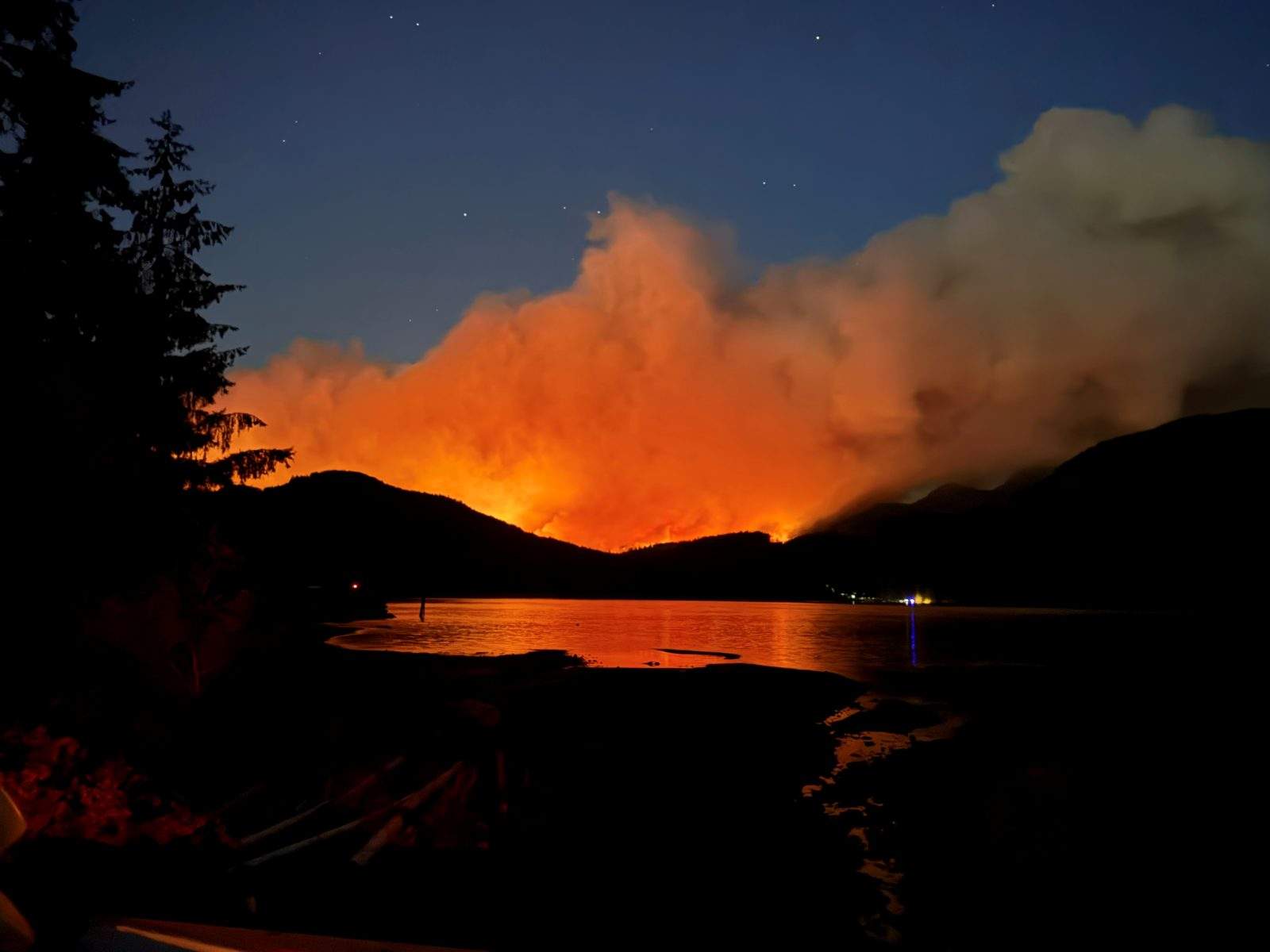
Federal wildfire updates routinely focus on immediate containment percentages and shifting weather fronts, yet these metrics obscure the underlying systemic vulnerabilities governing wildland-urban interface (WUI) disasters. When a wildfire threatens a municipality in British Columbia, the crisis is not merely an environmental event; it is a complex resource allocation failure accelerated by rigid jurisdictional boundaries and compounding physical variables. Effectively mitigating these threats requires shifting from reactive, headline-driven suppression models to quantified, structural risk management.
To evaluate the true threat level facing threatened communities, analysts must bypass superficial briefings and deconstruct the operational architecture of wildfire response into quantifiable variables.
The Triad of Wildland Urban Interface Risk
Evaluating the threat to a specific town requires isolating the three physical drivers of fire behavior and cross-referencing them with municipal structural vulnerability. Wildfire propagation is determined by the fuel complex, topography, and meteorological forcing. The intersection of these elements with human infrastructure creates the actual loss potential.
       [Meteorological Forcing] (Wind, RH, Temp)
                 |
                 v
[Fuel Complex] ---> [Fire Behavior] <--- [Topography] (Slope, Aspect)
                 |
                 v
     [Municipal Exposure Matrix] (Defensible Space, Ember Ignitability)
                 |
                 v
       [Quantified Asset Risk]
Fuel Complex Dynamics
The type, loading, and moisture content of surrounding vegetation dictate the energy release component of an advancing front. Coniferous forests with high continuous fuel ladders present a radically different risk profile than deciduous stands or managed fuel breaks. The critical metric here is the fuel moisture threshold—specifically the 100-hour and 1000-hour dead fuel moistures. When these percentages drop into single digits, the probability of sustained crown fire escalation increases exponentially.
Topographic Forcing
Slope and aspect accelerate fire propagation independent of wind. A fire advancing up a 30% slope preheats uphill fuels through radiant and convective heat transfer, effectively doubling the rate of spread compared to flat terrain. Municipalities situated at the apex of drainage channels or within confined valleys face a structural disadvantage; topography acts as a chimney, channeling wind and concentrating thermal energy.
Meteorological Volatility
Ambient temperature, relative humidity (RH), and wind velocity dictate short-term fire behavior. A critical cross-over point occurs when the relative humidity value drops below the ambient temperature value (e.g., 25% RH and 28°C). This environmental threshold triggers extreme fire behavior, including spotting—where windborne embers bypass established containment lines to ignite secondary fires up to several kilometers ahead of the main front.
When these three physical drivers breach historical baselines, the focus shifts from wildland suppression to the municipal exposure matrix. This matrix measures the vulnerability of perimeter structures based on construction materials, roof ratings, and the density of the immediate defensible space. The primary mechanism of structural loss in these scenarios is rarely direct flame contact; instead, ember showers exploit weak points in building envelopes, igniting attics and decks long before the main flaming front arrives.
Operational Bottlenecks in Multi Jurisdictional Dispatch
When federal officials deliver briefings alongside provincial authorities, they often present a unified front that masks severe structural friction in resource deployment. Effective wildfire suppression relies on rapid, scalable asset striking power. However, the administrative architecture separating municipal, provincial, and federal agencies creates predictable operational bottlenecks.
The first friction point emerges in the transition from municipal structural protection to provincial wildland suppression. Municipal fire departments operate under structural fire protocols optimized for localized containment using high-volume, low-mobility apparatus. Provincial wildland crews operate under wildfire management frameworks optimized for progressive line construction, aerial suppression, and extended backcountry operations.
Integrating these distinct command structures under the Incident Command System (ICS) frequently introduces communication latency. Radio interoperability remains an unresolved issue; different agencies utilize distinct radio frequencies and trunked networks, delaying real-time tactical adjustments during sudden wind shifts.
The second limitation involves the mobilization timeline for federal assets, such as military personnel or heavy logistics aircraft. Federal intervention operates as a mechanism of last resort, triggered only when a province formally requests assistance under mutual aid agreements. The bureaucratic sequence required to authorize, brief, and deploy these assets introduces a multi-day lag phase.
[Local Threat Escalation]
       │
       ▼
[Provincial Resource Saturation]
       │
       ▼
[Formal Federal Assistance Request]
       │
       ▼
[Mobilization & Logistics Phase (24-72 Hour Lag)]
       │
       ▼
[Tactical Integration on the Line]
During this lag phase, an accelerating fire can outpace the initial containment strategy, rendering the arriving federal reinforcements reactive rather than proactive.
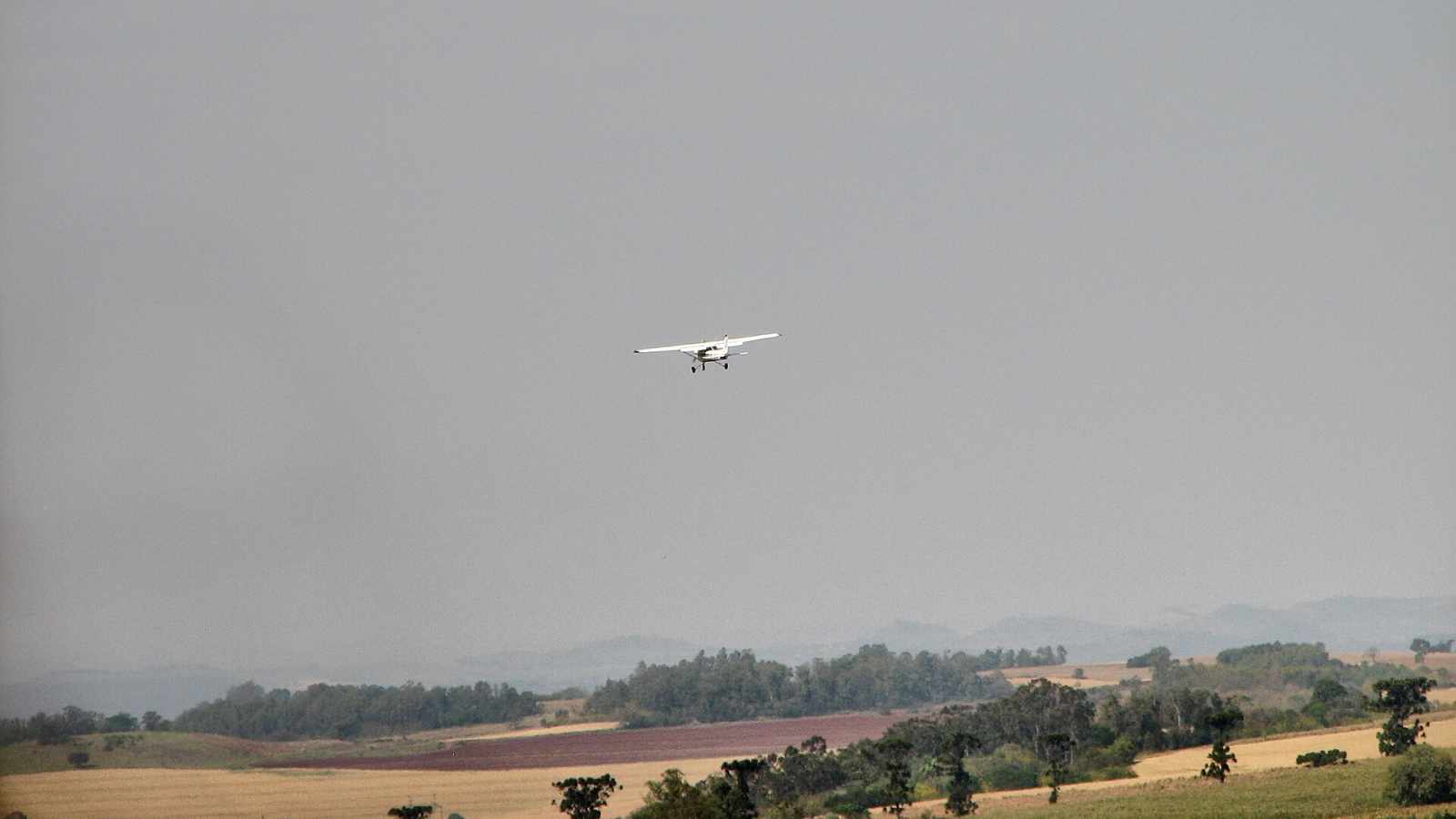
The third operational bottleneck is airtanker queue saturation. Aerial suppression assets—such as land-based airtankers and scooper aircraft—are highly effective at cooling a fire's flanks to allow ground crews to construct direct containment lines. They cannot, however, extinguish a high-intensity crown fire. When multiple blazes threaten separate communities simultaneously, provincial dispatch centers must ration these assets based on a triaged priority matrix. A town facing an active threat may lose its aerial support allocation if a higher-value asset or more volatile front develops elsewhere, exposing the fragility of centralized resource pools.
The Cost Function of Suppression Escalation
Wildfire suppression economics reveal diminishing returns on capital deployment as fire scale increases. Initial attack efficiency is the single most critical factor in controlling suppression expenditures. If a fire is contained within the first 24 hours, the financial and structural cost is negligible. Once a fire breaches initial attack capabilities and transitions to an extended attack scenario, the cost function shifts from linear to exponential.
Total Suppression Cost = Fixed Mobilization Costs + f(Fire Perimeter Length, Fuel Type) * Time^2
As the perimeter expands, the resource requirements grow relative to the square of the area, while the effectiveness of each individual crew decreases due to travel logistics and fatigue.
Suppression Efficiency
  ▲
  │  ┌───────────┐
  │  │  Initial  │
  │  │  Attack   │
  │  └─────┬─────┘
  │        │
  │        ▼
  │  ┌───────────┐
  │  │ Extended  │
  │  │  Attack   │
  │  └─────┬─────┘
  │        │
  │        ▼
  │  ┌───────────┐
  │  │ Project   │
  │  │   Fire    │
  │  └───────────┘
  └────────────────────────► Suppression Scale / Time
This economic reality exposes the structural flaw in relying on mid-season federal updates. Funding surges announced during a crisis are frequently diverted into high-visibility, low-efficiency suppression tactics—such as dropping retardant on uncontained heads of fires for public reassurance—rather than being directed toward high-yield, pre-season mitigation.
The misallocation of capital is further compounded by the indirect economic costs of evacuation orders. Activating a tactical evacuation protocol for an entire town instantly halts regional supply chains, disrupts industrial operations, and inflicts compounding economic losses that often exceed the direct cost of firefighting operations. When evaluating the economic impact of a threat to a community, analysts must calculate the total cost of economic displacement, rather than merely tracking agency operational expenditures.
Frameworks for Proactive Risk Asymmetry Mitigation
To transition away from catastrophic reactive cycles, wildfire management must adopt a data-driven framework modeled after industrial risk engineering. The objective must change from pursuing total suppression to managing risk asymmetry through strategic intervention.
Decoupling Suppression from Mitigation Funding
The fiscal architecture must separate emergency suppression funds from preventative land management capital. Funding for forest thinning, prescribed burning, and strategic fuel breaks must be legally insulated from seasonal firefighting cost overruns.
Quantitative Wildfire Risk Assessment Implementation
Municipal planning must integrate high-resolution spatial modeling that simulates thousands of wildfire ignition scenarios under extreme weather conditions. This data must dictate zoning laws, forcing a mandatory minimum distance between high-density conifer stands and new residential developments.
The Standardized Municipal Defensibility Index
Governments should establish a uniform metric to evaluate community readiness before the season begins. This index must track specific, auditable variables across municipal boundaries:
- Perimeter Fuel Isolation: The continuous width and maintenance status of surrounding fuel breaks.
- Structural Hardening Percentage: The proportion of residential buildings outfitted with ember-resistant roofing and screened venting.
- Critical Infrastructure Redundancy: The independent power and water backup capabilities of water treatment plants and evacuation centers.
Relying on seasonal updates from federal officials provides a false sense of security. True resilience is achieved by addressing structural vulnerabilities long before ignition occurs. If the physical infrastructure of a town is highly ignitable and its surrounding forest is overloaded with fuel, no amount of late-stage federal coordination can reliably guarantee its protection. The strategic imperative demands shifting capital away from emergency suppression theater and toward the unglamorous, highly calculated hardening of the wildland-urban interface.