Silence.
In morning television, silence is the enemy, a dead-air vacuum that producers spend entire careers engineering out of existence, yet when Savannah Guthrie stepped in front of the lens to ask for help finding her mother, the stillness surrounding her words felt heavier than any broadcast signal could carry. Discover more on a connected issue: this related article.
We are accustomed to seeing her in the bright, primary-colored warmth of Studio 1A, delivering the news of the world with a practiced cadence that signals everything is under control, even when the headlines say otherwise. She is the steady hand on the tiller of the American morning. She is the person who tells us what is wrong with the world, wrapping chaos in three-minute segments before tossing to a weather map or a cooking demonstration.
But the armor of the anchor desk vanishes the second the crisis crosses the threshold of your own front door. Additional journalism by Al Jazeera delves into comparable perspectives on this issue.
"Please help us."
Three words. Simple. Unadorned. Strip away the lighting rigs, the teleprompters, the decades of legal training and journalistic poise, and you are left with a daughter standing in the wreckage of an unimaginable nightmare, begging strangers for the one thing money, fame, and network influence cannot buy: time, and a lead.
To understand the shockwave of Savannah Guthrie’s public plea regarding her mother’s kidnapping, you have to look past the celebrity sheen and confront a primal terror that sits quietly at the back of every adult child’s mind. There comes a specific, shifting moment in life when the parent who once held your hand across busy intersections becomes fragile, when their world shrinks to familiar routines, doctor’s appointments, and the quiet safety of home. You spend years worrying about falls, about forgotten medications, about the slow, inevitable erosion of age. You do not prepare for violence. You do not prepare for the sudden, surgical removal of a matriarch from the life she built.
Consider a hypothetical family—let’s call them the Millers—living in a quiet suburb three states away. They have no cameras on their lawn, no publicists drafting statements, no millions of viewers tuned in at 7:00 AM. When an elderly parent goes missing in the Miller family, the terror is entirely private, echoing off the walls of an empty kitchen where a coffee mug still sits half-full on the counter. The police arrive, yellow tape goes up, and the family enters a state of suspended animation where every ring of the phone is both a lifeline and a death sentence.
Now, take that exact suffocating panic and magnify it under the blinding, relentless glare of national notoriety.
That is the invisible trap of public grief. When a figure as recognizable as Savannah Guthrie issues a plea for help in her mother’s abduction, the broadcast becomes a double-edged sword. On one hand, fame is a flare gun fired into the dark; it mobilizes millions of eyes, forces tip lines to ring off the hook, and turns casual passersby into active witnesses who might remember a parked sedan, a license plate, or a stranger lingering near a driveway. On the other hand, visibility invites the grotesque. It attracts ransom scammers, armchair detectives spinning cruel conspiracy theories in comment sections, and the constant, exhausting pressure to perform your agony for the public so they stay invested enough to keep looking.
I have sat in rooms where families wait for news of a missing loved one, and I can tell you that the air in those spaces tastes like copper and stale coffee. Time stops moving forward; instead, it pools around your ankles like cold water. You stare at the clock on the wall, watching the second hand sweep around, realizing that every tick represents another sixty seconds in which the person you love is somewhere cold, confused, or terrified, entirely at the mercy of someone who does not care whether they live or die. In those hours, your vocabulary collapses. You lose the ability to speak in complete paragraphs. You are reduced to repetition, to pleading, to bargaining with a universe that suddenly feels utterly indifferent.
When Savannah Guthrie looked into that camera and asked the public for help, she was not performing a news segment. She was executing the only tactical maneuver available to a family pinned down by the unknown.
The Architecture of a Public Search
In the mechanics of kidnapping investigations—particularly those involving older adults or high-profile families—the first forty-eight hours are governed by a brutal, unforgiving math. Law enforcement officers often compare the early stages of an abduction to a stone dropped into a pond: the ripples are sharpest, clearest, and easiest to trace right at the point of impact. Wait too long, and the water flattens out, leaving investigators to guess where the stone went down.
This is why authorities frequently urge families to step before the microphones, even when every instinct tells them to retreat behind locked doors. A public plea serves three distinct, operational purposes that have nothing to do with celebrity and everything to do with survival:
- Disrupting the captor’s sense of control: Kidnappers thrive in shadows and silence. By flooding the airwaves with the victim’s face and name, the family effectively shrinks the physical world the abductors can move through unnoticed.
- Triggering peripheral memory: Most breakthroughs in abduction cases do not come from dramatic eyewitness accounts of the crime itself. They come from a delivery driver remembering a car blocking a hydrant three blocks away, or a neighbor noticing someone walking down the street who didn't quite fit the rhythm of the block.
- Humanizing the target: Psychologically, it is much harder for a captor to harm someone whose face is plastered across every screen in the country, surrounded by loved ones begging for their safe return. The public appeal forces the perpetrator to confront the victim not as a commodity or a lever, but as a mother, a grandmother, a human being whose absence has torn a visible hole in the world.
Yet knowing the strategy does not make the execution any less harrowing. Imagine having to comb your hair, step into the light, and modulate your voice so you sound urgent enough to inspire action, yet calm enough that people actually listen to the details you are sharing. If you cry too hard, the public focuses on your breakdown rather than the description of the suspect’s vehicle. If you remain too composed, the cynics online accuse you of being cold. It is an impossible tightrope stretched over an abyss.
The Weight of the Empty Chair
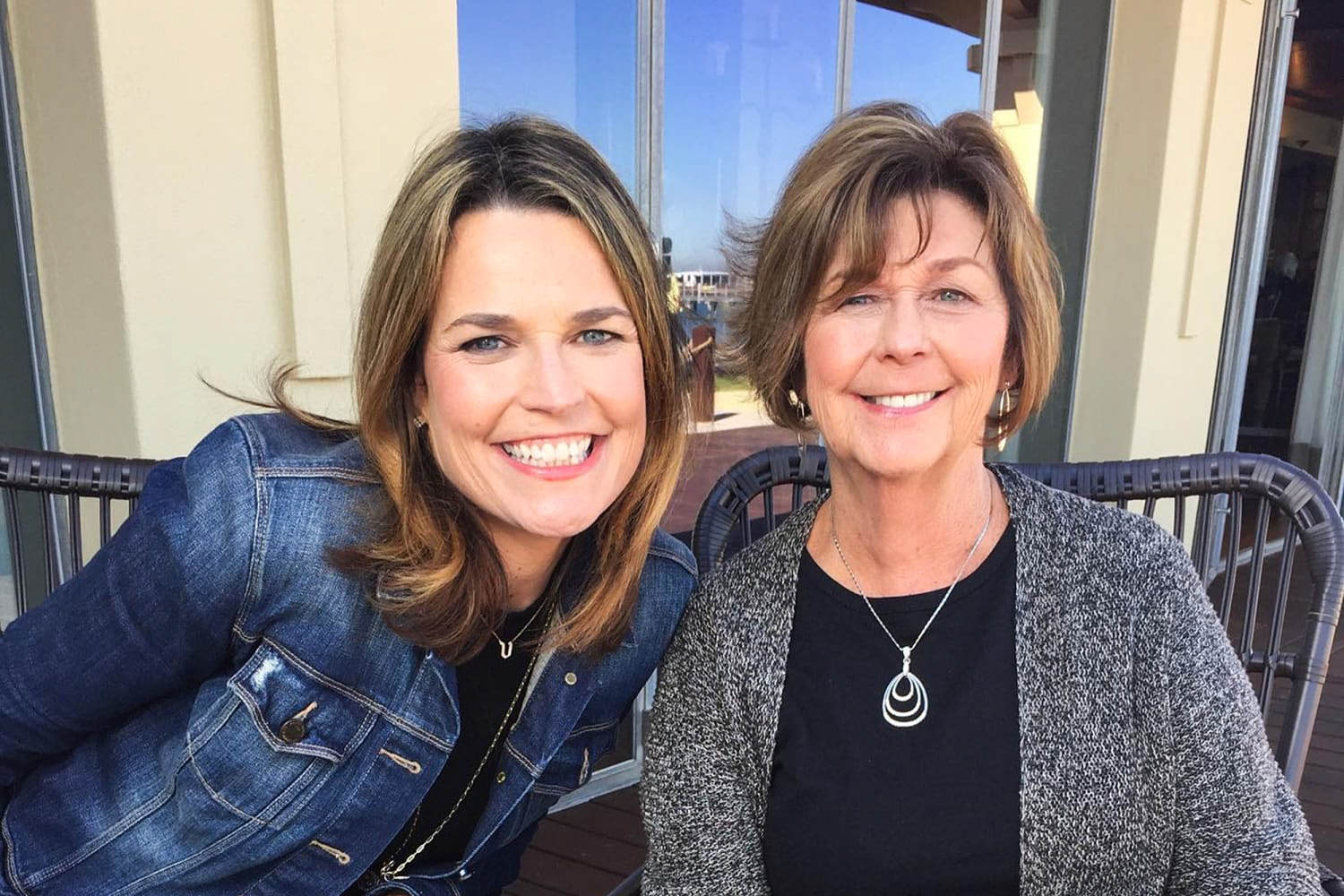
To truly grasp the emotional core of this story, you have to look at the relationship Savannah Guthrie has publicly shared with her mother over the years. Long before this crisis, viewers knew her mother not as a headline, but as the quiet bedrock behind Guthrie’s career—a woman who raised her children through hardship after the sudden death of Savannah’s father when Savannah was just sixteen.
When you lose a parent young, the surviving parent ceases to be just a mother or a father; they become the sole archive of your childhood, the only person left who remembers what your family looked like when it was whole. Losing that person to natural aging is hard enough. Having them ripped away by violence feels like a second, crueler theft—an erasure of history itself.
Look closely at the phrasing in Guthrie’s plea. There is no anger in it. No bravado. No threats of retribution. Anger is a luxury you can only afford once the person you love is safely back inside the house. While they are still out there, your only currency is humility. You swallow your pride, you set aside your status, and you ask the world to care about your mother the way you do.
And the public responds, because beneath all our cynicism, our political fractures, and our screen-addicted numbness, the bond between a child and an aging parent remains one of the few universal languages we still speak fluently. Every person watching that broadcast has a mother, or had one, or loves someone who is growing older and more vulnerable by the day. When Savannah Guthrie says, "Please help us," she is speaking for every son and daughter who has ever lain awake at three in the morning wondering if they locked the back door, if they checked the security cameras, if they did enough to keep the wolves at bay.
What Happens When the Cameras Turn Off
The hardest part of any public tragedy is not the press conference; it is the five minutes afterward.
The red light on the camera blinks off. The reporters pack up their tripods and drift toward their vans to file their updates. The trending topic begins its slow, inevitable slide down the social media sidebar, replaced by a sports score, a political scandal, or a viral dance.
And the family walks back inside.
They walk past the unopened mail on the hallway table. They walk past the shoes lined up neatly by the front door, waiting for feet that aren't there to step into them. They sit down in a room that is suddenly far too large and far too quiet, staring at a phone on the coffee table, willing it to ring with the only voice that matters.
That is where Savannah Guthrie is right now. Not on a soundstage. Not behind a desk. Just a daughter in a quiet room, waiting for the world to bring her mother home.