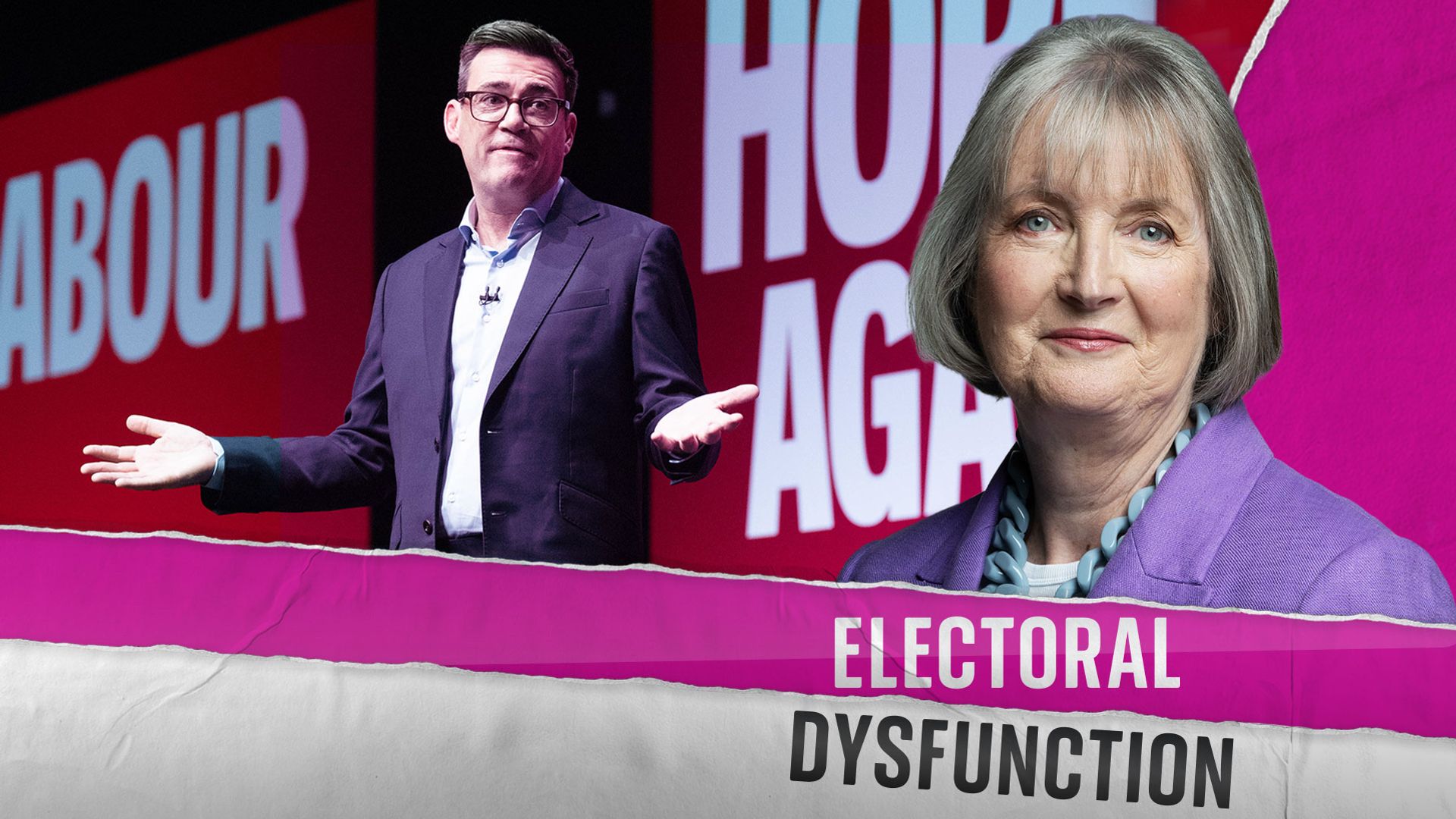
Every few months, Westminster political circles experience a collective hallucination. A peer gives an off-the-record briefing, a newspaper runs a glossy profile about northern authenticity, and the Westminster chattering class starts whispering about Andy Burnham riding an electoral white horse down into London to save the Labour Party from its own procedural mediocrity. The lazy consensus goes something like this: Keir Starmer is dry, technocratic, and electoral poison among the working classes, whereas Burnham possesses that elusive post-landslide euphoria, northern grit, and populist magnetism capable of keeping the coalition together.
It is a comforting myth for people who refuse to understand how modern British political power actually operates.
Burnham is not going to rescue Labour, and even if he wanted to, the machinery of the party would chew him up and spit him out before he reached Grantham. Westminster does not want a charismatic insurgent with his own regional power base and independent mandate. Westminster wants compliant management. Starmer is not an aberration; he is the system's preferred operating model.
The Myth of the Regional Savior
Let us address the foundational fallacy: the idea that Burnham’s success in Greater Manchester translates into national electoral invincibility.
I have watched strategists spend millions trying to bottle the formula of regional local government success and apply it to national parliamentary politics, as if voters select a prime minister the same way they buy regional rail tickets. Manchester is not Britain. Burnham operates as a regional mayor with a high-profile platform precisely because he is outside the toxic fishbowl of the House of Commons. He gets to play the rebel king of the North while remaining safely insulated from the brutal fiscal trade-offs of national governance.
When you are the Mayor of Greater Manchester, you can posture against national transport policy, pick fights with Whitehall, and cultivate an image of anti-establishment defiance without ever having to balance a national treasury or pass contentious fiscal legislation through a recalcitrant parliamentary party.
The moment you bring that operational style back into Westminster, the dynamics shift entirely. The Parliamentary Labour Party does not tolerate independent operators who command loyalty outside the whips' office. They prefer lawyers turned backbenchers who view politics through the lens of procedure rather than passion. Starmer fits that brief down to the millimeter. Burnham would be an administrative nightmare for the Whips' Office.
Why the Party Machine Fears Popularity
There is a fundamental misunderstanding of what the modern British political apparatus fears most. Amateurs assume parties are desperate for charismatic leaders who can win massive majorities. History suggests the exact opposite.
Party apparatchiks, central office bureaucrats, and factional gatekeepers prefer a leader they can control over a leader who commands an independent personal mandate. A leader with genuine, populist cut-through—someone who can bypass the internal machinery and speak directly to an electorate—is terrifying to party managers. They cannot be managed with internal committee promotions or threat of desselection.
Starmer’s relative lack of raw charismatic electricity is not a bug in the software; it is a feature designed to reassure institutional donors, civil servants, and cautious centrists that nothing radical or unpredictable is going to happen to their tax brackets or regulatory frameworks.
When a peer suggests Burnham brings a post-landslide euphoria, they are confusing nostalgia for Tony Blair’s 1997 technocratic honeymoon with current political reality. The electorate today is not looking for euphoria. They are exhausted, cynical, and deeply distrustful of any politician promising national renewal through vibes and regional accents.
The Structural Trap of the Greater Manchester Exit
Consider the logistics of a Burnham comeback. To become leader of the Labour Party, he would first need a parliamentary seat. That requires an incumbent MP to step aside, triggering a tightly managed by-election under a hostile central party machine that controls candidate vetting with an iron fist.
Do you seriously believe the current party headquarters would roll out the red carpet for a coronation? They would parachute in a central office loyalist to block him at every county boundary.
And even if he miraculously cleared that hurdle, he would walk into a parliamentary party that remains deeply suspicious of anyone who spent years building a power base outside London. Westminster is a feudal court disguised as a legislature. Lords and MPs do not take kindly to vassals who talk back to the crown.
This is where the standard punditry misses the mark completely. They treat leadership contests as popularity polls among the general membership, ignoring the fact that candidates must first survive the brutal gauntlet of the parliamentary selectorate—a body whose primary evolutionary instinct is self-preservation and the maintenance of internal hierarchy.
The Real Cost of Technocracy
None of this is to say Starmer’s model is politically sustainable over the long term. Managed decline wrapped in a legal brief has a very short shelf life when public services are buckling under structural strains that spreadsheet economics cannot fix.
The danger for Labour is not that they lack a charismatic northern alternative in reserve. The danger is that by systematically purging populist energy and institutionalizing cautious managerialism, they are creating a vacuum on the flanks that will eventually be filled by forces far more disruptive than a former health secretary with a Manchester mayoral badge.
When the electorate realizes that changing the face at the Dispatch Box from a technocratic prosecutor to a technocratic mayor changes precisely nothing about the distribution of wealth, housing costs, or collapsing health infrastructure, the anger will not dissipate into nostalgia. It will turn feral.
Burnham knows this. That is why he stays in Manchester. It is the best-run opposition platform in the country, and he does not have to share the blame when the national engine stalls. Stop waiting for a savior from the provinces. The system is working exactly the way its architects intended.