The desk in the corner of the room always accumulates the things we cannot yet name. Five years ago, it was a tangle of cables for a device that promised to make our lives friction-free. Ten years before that, it was a stack of paper forms for a digital transformation that still required three signatures in blue ink. Today, the desk holds something heavier. It holds the architecture of tomorrow.
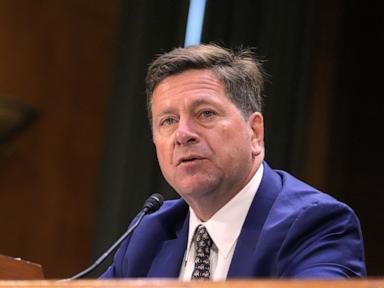
When Donald Trump tapped Jay Clayton to lead a new federal artificial intelligence task force, the news arrived with the quiet hum of a server farm at midnight. Most people scrolled past. It sounded like bureaucracy—another acronym to file away under government oversight, another committee meeting scheduled for a Tuesday in Washington. Meanwhile, you can read similar stories here: Why AI Wearables Are Hitting a Wall Right Now.
Closer inspection reveals a different geometry entirely.
Jay Clayton is not a computer scientist. He is a securities lawyer, a former chairman of the Securities and Exchange Commission, a man whose entire professional life has been spent wrestling with risk, capital, and the quiet panic of markets when the rules blur. Putting him at the helm of an AI initiative is a specific kind of signal. It says that the primary battleground of artificial intelligence is no longer code. It is balance sheets, national sovereignty, and the terrifying speed of unanchored power. To explore the complete picture, check out the excellent article by Ars Technica.
Consider what happens in a standard corporate boardroom at nine in the morning. A chief executive looks at a dashboard where a machine learning model has just predicted a thirty percent drop in labor costs if three entire departments are automated by lunch. The math is undeniable. The software does not blink, take coffee breaks, or unionize. The human cost—the mortgage payments, the sudden silence of a desk that belonged to someone named Sarah for twelve years—does not appear on the spreadsheet.
Multiply that boardroom by ten thousand. Then scale it to the federal level.
That is the landscape Clayton inherits. Not a laboratory of wide-eyed researchers debating the philosophy of synthetic minds, but a high-stakes arena where superpowers are racing to build the nervous system of the twenty-first century.
To understand why this appointment matters, we have to look past the Silicon Valley marketing gloss. We have to look at how power actually moves.
For years, the narrative around artificial intelligence was written by its evangelists. It was a story of inevitable liberation. We were told that algorithms would cure diseases before symptoms appeared, compose symphonies that rivaled Bach, and clear the administrative debris from our daily lives. Much of that is true. The compute is real. The models are astonishingly articulate.
Yet reality has a friction that code cannot dissolve.
Walk through any mid-sized logistics hub on a rainy Tuesday afternoon and you can see the friction firsthand. Workers watch automated sorting arms sweep packages into bins with merciless precision. The system is efficient. It is also brittle. When a regional power fluctuation causes a momentary lag in the server racks three states away, the entire warehouse freezes. Millions of dollars in perishable goods sit in the dark while technicians squint at error logs they only half-understand.
We have built systems we can operate, but can no longer fully explain.
That is the vulnerability that keeps national security strategists awake long after the office lights go out. A nation cannot defend its infrastructure with a black box. If an adversary injects imperceptible noise into the training data of a grid-management algorithm, the lights in an entire metropolitan area could flicker out not because of a storm, but because the machine was whispered a lie it had no capacity to question.
This is why the choice of Clayton is telling. Wall Street understands risk management under conditions of radical uncertainty. Clayton spent his career figuring out how to price the unpriceable, how to enforce rules when the players are inventing new financial instruments faster than regulators can print the rulebooks.
Intelligence agencies and defense planners recognize a parallel crisis. The race for artificial intelligence dominance with geopolitical rivals is not a sprint to write the cleanest Python script. It is an endurance test of resource allocation, grid capacity, and supply chain security. You cannot train frontier models on good intentions. You need water, copper, rare earth minerals, and power plants that can run flat-out for weeks without tripping a breaker.
When a government creates a dedicated task force, it is admitting that the market left to its own devices will optimize for profit at the expense of resilience. The market wants speed. The state wants survival. Those two desires are frequently at war.
Imagine the briefing the new task force receives on its first morning. The charts will not show cute chat interfaces or photorealistic deepfakes. They will show maps of power grids overlaid with data center footprints. They will show the percentage of advanced semiconductor manufacturing concentrated in a handful of coastal factories thousands of miles away. They will show the alarming rate at which energy consumption by server farms is outpacing the expansion of domestic electrical generation.
These are not software problems. They are existential logistics problems.
We are standing at an odd pivot in human history. For the first time, we are attempting to domesticate a technology that outpaces human cognition in specific, narrow domains before we have figured out how to keep it from hallucinating its own reality. We have rushed to embed these models into everything from loan approvals to military targeting loops because the alternative—falling behind a rival nation—feels structurally fatal.
Yet speed without guardrails is just a very efficient way to crash.
Clayton’s mandate, stripped of political phrasing, is to figure out how to strap a heavy-duty anchor to a rocket that has already cleared the tower. It is an unenviable job. Push too hard on regulation, and the brightest engineering talent packs its laptops and boards flights for jurisdictions with fewer questions. Push too softly, and the country sleepwalks into an era where critical infrastructure is dictated by proprietary models owned by a handful of corporate monopolies whose primary allegiance is to quarterly returns.
There is a quiet tragedy in how we consume these shifts. We treat them as sports scores. One administration wins a headline; a rival company announces a bigger model; a stock price jumps three percent before noon. We treat technology as a weather event—something that happens to us rather than something we are actively choosing to construct, wire by wire, server by server.
Every line of training data is a choice. Every weighted parameter is a value judgment. When we hand the keys of administrative decision-making to systems that operate via statistical association rather than moral reasoning, we are outsourcing our conscience for the sake of throughput.
The task force will draft reports. They will hold hearings in wood-paneled rooms where men and women in dark suits peer over reading glasses at PowerPoint slides detailing vector embeddings and transformer architectures. They will debate export controls on advanced silicon and security clearances for researchers who learned to code before they could drive.
Through all of that paperwork, the machine keeps running.
In a basement somewhere in Virginia or Silicon Valley, a cluster of H100 chips is currently humming, drawing enough electricity to power a small town, chewing through petabytes of human history to find patterns we didn't know we left behind. It doesn't care who leads the task force. It doesn't know what a securities lawyer is. It simply processes, predicts, and optimizes.
Our job—the messy, unhurried, profoundly human job—is to remember that we are the ones who have to live in the world the machine is calculating.
The desk in the corner remains loaded with papers, waiting for decisions that cannot be automated away. Outside, the evening traffic moves in red and white streaks, indifferent to the invisible architecture humming quietly in the dark, waiting to see who gets to write the rules before the morning shift begins.