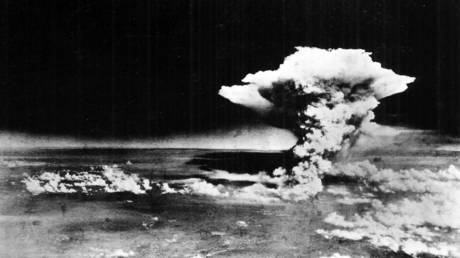
Global nuclear arsenals are undergoing a structural transition defined by the simultaneous expiration of bilateral arms control architecture and the comprehensive recapitalization of strategic delivery systems. While aggregate warhead numbers have declined from Cold War peaks, the qualitative composition of these arsenals is shifting.
Nine sovereign states possess an estimated 12,187 nuclear warheads. Approximately 9,745 of these reside in active military stockpiles, available for deployment across land, sea, and air vectors. Evaluating this status requires deconstructing the mechanics of modernization, the erosion of verification frameworks, and the economic cost function driving the current security environment.
The Triad Recapitalization Cycle
The primary driver of contemporary nuclear dynamics is not simple numerical expansion by Washington and Moscow, but the simultaneous aging and replacement of the strategic triad. Capital assets designed during the Cold War have exceeded their operational lifecycles.
The United States is executing a multi-decade modernization program encompassing all three legs of its strategic deterrent:
- Land-Based Component: The replacement of the Minuteman III intercontinental ballistic missile force with the Sentinel system involves rebuilding launch control facilities, silos, and command infrastructure.
- Sea-Based Component: The transition from Ohio-class to Columbia-class ballistic missile submarines ensures continuous at-sea deterrence, requiring sustained capital allocation for nuclear shipbuilding.
- Air-Based Component: The integration of the B-21 Raider stealth bomber alongside modernized standoff munitions and tactical gravity bombs, such as the B61-13, targets expanded target sets.
This capital expenditure cycle introduces specific economic and industrial bottlenecks. The National Nuclear Security Administration faces complex technical hurdles in re-establishing domestic plutonium pit production capabilities—a manufacturing requirement that dictates the pace of warhead life-extension programs.
Parallel pressures exist within Russian and Chinese force structures. Beijing is expanding its silo-based intercontinental ballistic missile fields and fielding mobile, solid-fueled delivery systems equipped with multiple independently targetable reentry vehicles. This expansion alters regional deterrence equations, shifting calculations from bilateral strategic stability to a complex multi-actor equilibrium.
The Post-Treaty Information Vacuum
The expiration of the New Strategic Arms Reduction Treaty (New START) eliminated formal numerical ceilings and mandatory on-site inspections for the two largest nuclear weapon states. This shift introduces structural information asymmetry.
Without binding verification protocols, strategic planners must model adversary capabilities based on worst-case assumptions derived from satellite telemetry and intelligence estimates. The absence of quantitative caps removes legal friction against "upload capacity"—the technical ability to rapidly attach stored warheads back onto deployed missiles and strategic bombers.
[Cold War Bi-Lateral Caps] ---> [Treaty Expiration] ---> [Information Asymmetry] ---> [Worst-Case Force Sizing]
This dynamic increases the velocity of potential horizontal and vertical proliferation. When transparency mechanisms decay, the margin for error in crisis decision-making narrows. Verification regimes do not merely restrict warhead totals; they reduce cognitive load for strategic commanders by bounding uncertainty.
The Cost Function of Modernization
Sustaining modernized nuclear forces imposes a compounding fiscal burden on state budgets. The projected lifecycle costs for the United States nuclear enterprise—spanning acquisition, maintenance, command and control recapitalization, and warhead production—exceed one trillion dollars over the multi-decade program horizon.
This expenditure creates an opportunity cost within defense portfolios. Capital dedicated to strategic nuclear modernization competes directly with conventional force structures, cyber defense capabilities, and readiness accounts.
For secondary nuclear-armed states, the economic mechanics differ. States maintaining smaller, minimum-deterrence postures, such as the United Kingdom, France, India, and Pakistan, optimize their spending around qualitative survivability rather than numerical parity. Their modernization cycles focus on submarine acoustic silencing, penetration aids to defeat advanced air defenses, and command-and-control hardening.
Escalation Management and Regional Vectors
Contemporary military doctrine increasingly emphasizes theater-level nuclear integration. Rather than serving purely as a strategic backstop against existential attacks, nuclear capabilities are evaluated through the lens of regional escalation management.
The introduction of dual-capable delivery systems—platforms designed to launch both conventional and nuclear payloads—blurs the operational threshold between conventional conflict and nuclear use. An adversary cannot readily determine whether an incoming missile or aircraft carries a conventional precision warhead or a strategic payload. This ambiguity compresses warning timelines and elevates the risk of inadvertent escalation during a high-intensity regional crisis.
Simultaneously, regional nuclear competition in South Asia and the Korean Peninsula continues to mature. Technical shifts toward tactical nuclear weapons designed for battlefield use lower the conceptual barrier to employment, challenging traditional deterrence theories predicated on unacceptable retaliatory damage.
Strategic Allocation and Force Posture Recommendations
To maintain strategic stability in an environment defined by unconstrained arsenals and simultaneous modernization, defense planners must decouple crisis management from numerical parity metrics.
- Institutionalize unilateral transparency protocols through reciprocal data exchanges regarding non-deployed warhead inventories, even in the absence of a ratified treaty.
- Separate conventional and nuclear command paths for dual-capable delivery systems to mitigate the risk of false-positive strategic warnings during regional conventional engagements.
- Prioritize resilience in command, control, communications, and early-warning architectures over raw warhead quantity expansions to reinforce second-strike credibility.