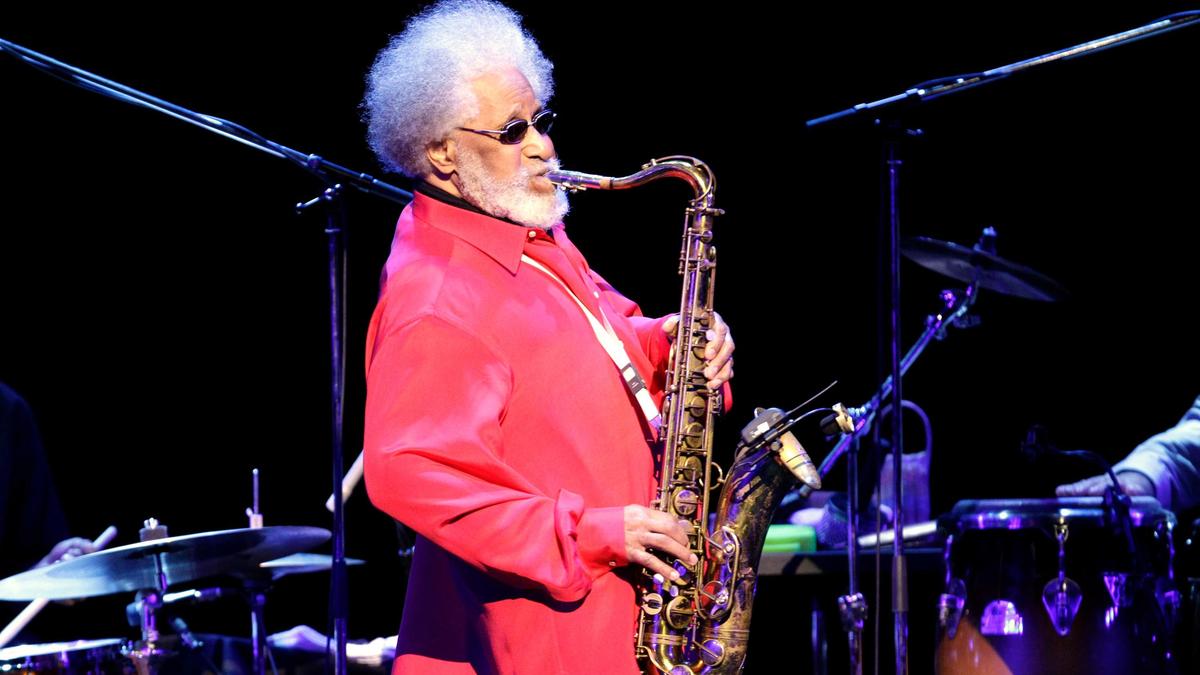
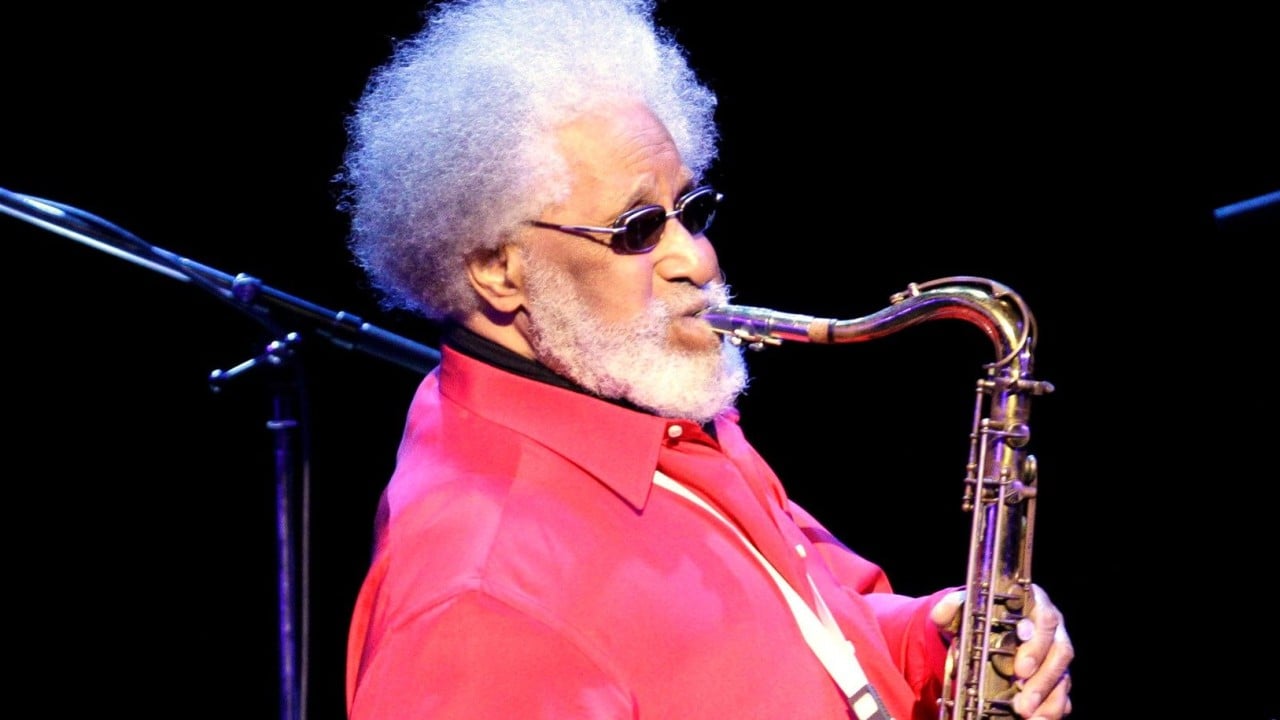
The death of Theodore "Sonny" Rollins on May 25, 2026, at age 95 marks the closure of the definitive era of modern jazz improvisation. Standard biographical accounts invariably frame Rollins through the lens of individual brilliance or erratic perfectionism, isolating his sudden sabbaticals and massive tonal presence as mystifying anomalies. This framework misinterprets his actual systemic contribution to music theory and performance. Rollins did not merely play the saxophone with unusual vigor; he engineered a rigorous, counter-intuitive methodologies that solved the primary structural crisis of mid-century jazz: the tendency of bebop improvisation to devolve into fragmented, predictable harmonic patterns.
By analyzing his technical deviations, architectural approach to phrasing, and intentional disruptions of typical industry workflows, we can map the exact mechanisms through which Rollins redefined the limits of solo wind instruments. His legacy is best understood through three distinct operational pillars: the invention of thematic improvisation, the deliberate removal of structural safety nets via the piano-less trio, and a unique optimization strategy driven by self-imposed isolation.
The Three Pillars of Rollins’ Musical Engineering
1. Thematic Improvisation vs. Harmonic Pattern Substitution
The prevailing bebop methodology pioneered by Charlie Parker and expanded by John Coltrane relied heavily on vertical chord-scale relationships. Musicians treated the stated melody (the "head") as a brief entry point, quickly discarding it to execute complex, rapid runs based on the underlying chord changes ($I-VI-II-V$ progressions). The structural vulnerability of this approach is its susceptibility to muscle memory; players frequently default to pre-learned licks over specific chord shapes.
Rollins rejected this paradigm by implementing horizontal thematic improvisation. Instead of abandoning the melody, he treated a song’s primary motif as a modular thesis. His mechanism involved taking a fragmented micro-phrase—often a simple three-note sequence from a show tune or a folk melody—and subjecting it to continuous, real-time compositional variations. He mutated the motif through three explicit vectors:
- Rhythmic Displacement: Shifting the entry point of the phrase across the bar line, transforming a downbeat anchor into an upbeat syncopation.
- Interval Inversion: Reversing the direction of the pitch shifts while retaining the rhythmic value of the original motif.
- Metric Modulation: Altering the underlying subdivision of the phrase (e.g., imposing triplet groupings over a steady $4/4$ pulse) to create temporal tension without losing the foundational swing engine.
This approach gave his solos an architectural continuity. Rather than a linear stream of harmonically correct eighth notes, a Rollins solo functioned as a macro-composition, where the final phrase remained logically and inextricably tied to the first.
2. Radical Stripping of the Harmonic Core: The Piano-less Trio
In 1957, with the release of Way Out West, followed by Freedom Suite in 1958, Rollins executed a structural intervention by entirely removing the chordal instrument (piano or guitar) from his recording and touring ensembles. This operational choice altered the fundamental economics of the jazz rhythm section.
In a standard quartet setting, the piano acts as a harmonic governor, dictating the specific voicing and extensions of each chord. This creates a rigid boundary for the soloist. By eliminating the piano, Rollins shifted the harmonic responsibility entirely onto a two-variable equation: the acoustic bass line and the soloist's internal pitch centering.
Standard Quartet: [Soloist] ---> Constrained by ---> [Piano Chords] + [Bass Line]
Rollins Trio:     [Soloist] <--- Interdependent Coordination ---> [Open Bass Line]
This structural omission created a dynamic feedback loop. The bass player was freed from hitting explicit roots on every downbeat, allowing for a fluid, contrapuntal dialogue. For Rollins, the lack of static chords opened up vast sonic territory. He could play "outside" the home key—introducing deliberate dissonance or polytonal implications—because there was no competing piano chord to expose his note choices as technically incorrect. The listener’s ear was forced to construct the missing harmony based purely on the trajectory of Rollins’ linear lines.
3. Systematic Attrition and the Strategy of the Sabbatical
The dominant narrative of Rollins' career focuses on his sudden disappearances from the public eye, most notably his 1959–1961 retreat to the Williamsburg Bridge. Industry commentators often characterize these periods as spiritual or psychological crises. Viewed through an operational lens, however, these sabbaticals were deliberate course corrections designed to counteract the diminishing returns of creative repetition.
By 1959, Rollins had achieved peak market penetration and critical acclaim following Saxophone Colossus. The commercial live performance circuit, however, imposes a strict bottleneck on artistic development. The nightly demand to perform established repertoire leaves zero bandwidth for technical experimentation or fundamental tonal rebuilding.
Rollins recognized that public performance reinforced comfortable habits. He used the physical environment of the Williamsburg Bridge as a specialized laboratory. The high volume of ambient traffic noise and the open-air acoustic environment forced him to alter his physical projection, directly contributing to the massive, dense, and un-miked tonal signature that defined his post-1962 output (beginning with The Bridge). The bridge sabbatical was an optimization strategy: trading immediate short-term commercial revenue for long-term technical mastery.
Technical Specifications of the Rollins Tone
The physical mechanism of Rollins’ sound generation diverged sharply from the smoother, highly polished classical embouchures of his contemporaries. His sonic signature was defined by a deliberately wide, hard-rubber Otto Link mouthpiece paired with stiff reeds, a configuration requiring immense pulmonary pressure to stabilize.
| Parameter | Standard Bebop Approach | The Rollins Framework |
|---|---|---|
| Harmonic Focus | Vertical (Chord Changes) | Horizontal (Motific/Thematic) |
| Ensemble Density | Dense (Piano/Guitar comping) | Minimalist (Sax, Bass, Drums) |
| Tonal Profile | Focused, clean, centered | Enormous, sub-tone heavy, multiphonic |
| Rhythmic Relationship | On or slightly ahead of the beat | Deeply behind the beat / Elastic elasticity |
His embouchure allowed for the calculated introduction of vocalized split-tones and multiphonics (producing two or more pitches simultaneously). This was not avant-garde noise for its own sake; it was utilized as a structural accent to signal the climax of an improvised paragraph or to mimic the polyphonic density of a brass section.
The 9/11 Performance and Late-Career System Strains
The operational resilience of Rollins’ methodology was tested during his late-career performances, specifically Without a Song: The 9/11 Concert, recorded in Boston four days after the September 11 terrorist attacks. Having been evacuated from his apartment near Ground Zero, Rollins performed under extreme physical and psychological strain. The resulting recording won a Grammy Award in 2006, not because of pristine technical execution, but because it demonstrated how his structural approach to improvisation could withstand real-time emotional trauma. The performance relied on raw motivic recycling—clinging to foundational American songbook themes and stress-testing them through sheer physical volume and rhythmic defiance.
The ultimate boundary constraint on Rollins’ career was not conceptual, but biological. The onset of pulmonary fibrosis in the early 2010s systematically degraded his respiratory capacity. Because his entire improvisational style depended on high-pressure air delivery to manipulate stiff reeds and generate his signature sub-tones, the reduction in lung elasticity created an insurmountable bottleneck. He performed his final concert in 2012 and ceased playing entirely in 2014.
The strategy for contemporary improvisers navigating the post-Rollins landscape requires abandoning the romantic myth of the intuitive, undisciplined jazz genius. The actionable lesson of his career lies in his commitment to structural subtraction. To transcend formulaic performance, an artist must deliberately remove the harmonic and commercial safety nets that incentivize mediocrity, systematically isolating their core technical variables until only the structural essence remains.
RIP Sonny Rollins - September 7, 1930 - May 25, 2026
This video essay provides an analytical breakdown of Sonny Rollins' signature thematic improvisation technique, his radical piano-less trio setups, and the structural legacy of his Williamsburg Bridge sabbatical.