War operates on a dual mechanism of destruction. The primary wave targets physical infrastructure and civilian populations through kinetic force, producing visible casualties and immediate displacement. The secondary wave operates invisibly, dismantling the neurological and psychological stability of non-combatants, particularly children. When children experience sustained armed conflict, their developing neural architecture adapts to an environment of chronic unpredictability. This adaptation, while evolutionarily sound for immediate survival, becomes maladaptive when displaced from the conflict zone. Humanitarian interventions designed to address this displacement frequently fail because they treat trauma as an emotional state rather than a complex, systemic disruption of cognitive processing, physiological regulation, and social attachment. Evaluating recovery models requires examining the structural mechanics of specialized rehabilitation facilities operating in neutral territories, such as those established in Italy for Ukrainian youth.
The Neurobiological Baseline of Conflict Adaptation
Exposing children to artillery fire, structural collapse, and prolonged separation from primary caregivers triggers a persistent state of hyperarousal. The amygdala remains locked in a dominant processing loop, chronically signaling threat, while prefrontal cortex development—responsible for executive function, emotional regulation, and impulse control—is structurally suppressed by sustained cortisol and adrenaline baths.
[Chronic Conflict Exposure]
       │
       ▼
[Amygdala Dominance / Cortisol Flood]
       │
       ▼
[Suppressed Prefrontal Cortex Function]
       │
       ▼
[Behavioral Manifestations: Hypervigilance, Dissociation, Emotional Regress]
When these children are removed from the active combat theater and relocated to safety, the biological threat response does not automatically deactivate. The nervous system remains calibrated to scarcity, danger, and volatility. Traditional talk therapy models frequently fail in this acute window because verbal processing centers are compromised under sustained neurochemical stress. Intervention strategies must prioritize bottom-up regulation before attempting top-down cognitive processing.
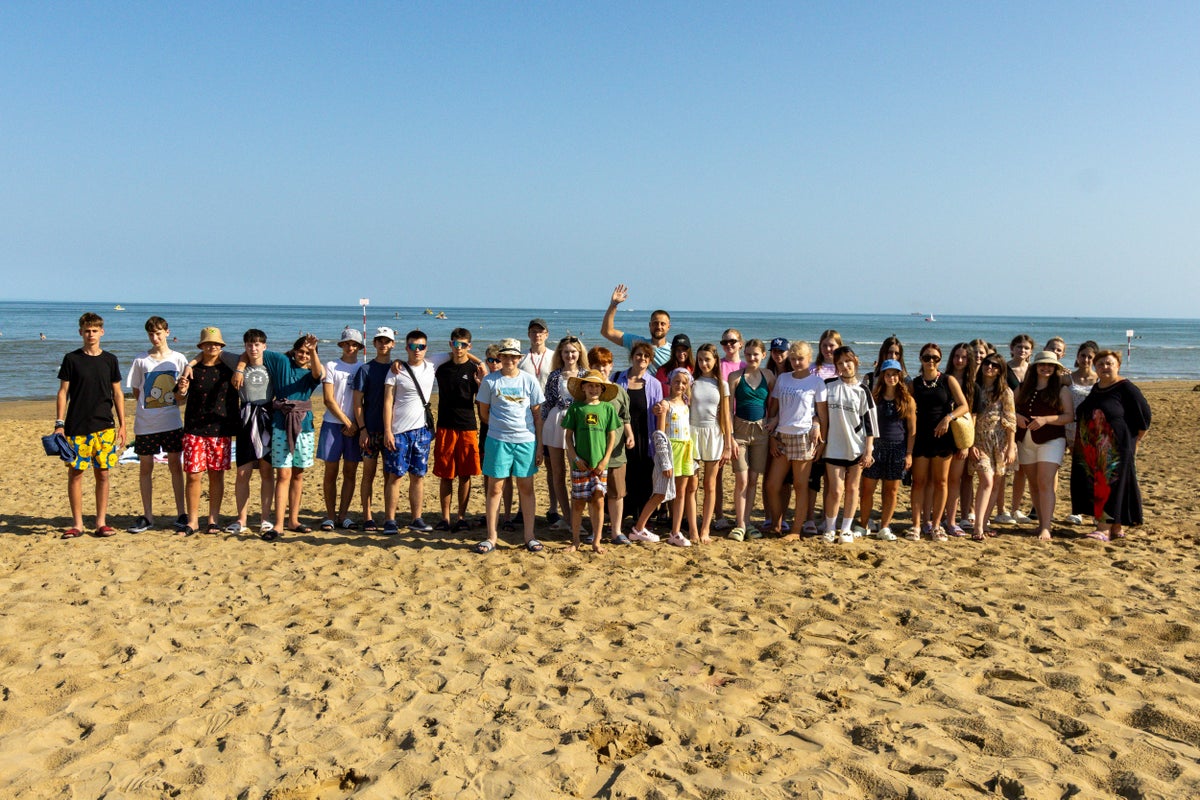
Specialized therapeutic camps in regions like the Italian Alps or coastal provinces function as controlled micro-environments specifically engineered to interrupt this neurobiological loop. The operational blueprint of these facilities relies on three distinct structural pillars: environmental predictability, somatic regulation, and peer normalization.
Pillar One: Environmental Predictability and Sensory De-Escalation
The primary vector of childhood war trauma is the absolute erosion of predictability. Children lose agency over their schedules, physical safety, and basic resource availability. Recovery cannot begin in an environment that mimics this chaos.
Effective rehabilitation centers implement hyper-structured daily routines where every transition point is anticipated and managed. The physical geography of the intervention site is strictly audited to remove acoustic triggers—such as low-frequency engine rumbles, sudden sharp noises, or sirens—that induce autonomic startle responses.
By eliminating environmental triggers, the child's baseline cortisol production begins to drop. This reduction is not achieved through conscious relaxation exercises, but through steady-state habituation to safety. The architecture of the space utilizes natural light cycles, open spatial layouts that prevent claustrophobic panic, and consistent nutritional schedules that signal metabolic security to the brainstem.
Pillar Two: Somatic Regulation and Expressive Modalities
Because verbal articulation of complex trauma requires intact prefrontal functioning that traumatized children temporarily lack, intervention protocols must rely on non-verbal somatic modalities. Art therapy, equine therapy, structured athletic movement, and cooperative physical labor serve distinct neurological functions.
Physical exertion burns excess catecholamines circulating in the bloodstream, mirroring the biological completion of the "fight or flight" cycle that was frozen during the actual trauma event. Expressive arts therapy allows children to externalize internal chaos onto a physical medium without the linguistic burden of narrative explanation.
Modality             Target System          Operational Output
-------------------------------------------------------------------------
Somatic Movement     Autonomic Nervous      Metabolizes residual adrenaline
                     System                 and cortisol
Expressive Arts      Limbic System          Externalizes non-verbal trauma
                                            memories
Equine Interaction   Vagus Nerve            Regulates heart-rate variability
                                            via mammalian synchrony
These modalities are not recreational distractions; they are clinical tools designed to foster neuroplasticity. By engaging motor and sensory cortices in safe, controlled sequences, the brain begins to form new neural pathways that contradict the previous survival conditioning.
Pillar Three: Peer Normalization and Social Cohesion
Trauma isolates the individual by distorting their model of social trust. Children from conflict zones often internalize a survivor's guilt or a profound sense of otherness compared to peers raised in stable environments.
Group dynamics within specialized camps are engineered to create a shared identity centered on resilience rather than victimhood. When a child observes peers exhibiting identical somatic symptoms—such as night terrors, hypervigilance, or selective mutism—the pathological isolation breaks down.
Facilitators utilize structured group challenges that require cooperative problem-solving without explicit competition. This rebuilds the capacity for inter-personal trust and collective agency. The social framework operates on the principle of mutual mirroring, where emotional regulation is reinforced collectively rather than demanded individually.
The Economic and Operational Bottlenecks of Scale
While the micro-environment model yields high efficacy rates, analyzing its deployment reveals severe structural limitations regarding global scalability. Specialized therapeutic interventions face three primary operational constraints:
- Human Capital Scarcity: Deploying trauma-informed clinicians, specialized somatic therapists, and bilingual psychological support staff incurs high operational costs and drains resources from frontline medical needs.
- Duration Constraints: Temporary intervention camps typically operate on two- to four-week cycles. While sufficient to reset acute hyperarousal, this timeframe is biologically inadequate to rewire deeply entrenched complex post-traumatic stress disorder.
- Re-Entry Shock: The most critical vulnerability in the current model is the return vector. A child stabilized in a serene Italian villa who is subsequently repatriated to a frontline city in Ukraine faces immediate re-exposure to air raid sirens, infrastructural collapse, and parental stress. The gains achieved in the controlled environment degrade rapidly upon re-entry into the stress matrix.
Addressing this re-entry shock requires shifting the strategic focus from isolated destination camps to decentralized, train-the-trainer models embedded directly within the affected nation's educational and municipal infrastructure.
Strategic Operational Directive
To maximize the efficacy of pediatric trauma intervention under conditions of protracted conflict, humanitarian allocators must reallocate capital from episodic destination retreats toward permanent, decentralized institutional training programs. Local educators, primary care physicians, and community leaders must be equipped with foundational somatic and psychological regulation frameworks to transform standard schools and community centers into daily micro-sanctuaries. True recovery does not occur in an isolated sanctuary abroad; it scales when safety is systematically woven back into the operational fabric of the child's permanent environment.