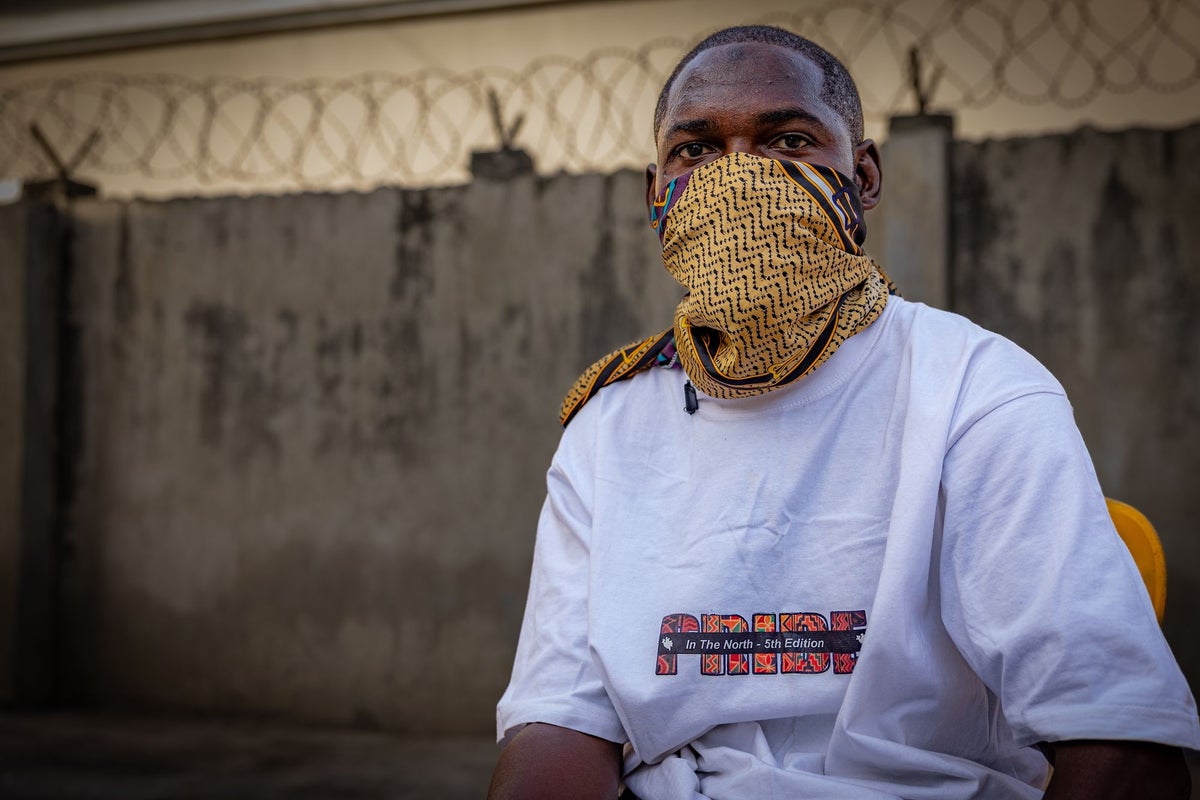
The trap usually begins with a photo. A profile on a geolocated dating application, a flattering direct message on social media, or a casual invitation to a private apartment in Lagos or Abuja. For queer Nigerians, navigating these digital spaces is not a matter of casual romance. It is a calculated gamble with survival.
Nigeria remains one of the most hostile environments on earth for LGBTQ+ individuals, a reality codified by the 2014 Same Sex Marriage (Prohibition) Act (SSMPA). While the law itself threatens up to 14 years in prison for same-sex relationships, the state rarely needs to enforce it. The legislation did something far more insidious. It effectively deputized the public, creating a legal vacuum where extortion rings, vigilante mobs, and corrupt police officers operate with total impunity. To understand the violence facing queer Nigerians, one must look past the courtroom dramas and examine a decentralized, highly organized economy of terror.
The Business Model of Digital Entrapment
Mob violence in Nigeria is rarely spontaneous. It is an industry. Organized syndicates explicitly target gay men through a method known locally as "kito"—a systemic practice of digital entrapment, kidnapping, and extortion.
These networks operate like corporate enterprises. A syndicate member creates a fake profile on an app, investing weeks into building rapport with a target. The goal is to lure the victim to a controlled location, usually a rented short-let apartment or an isolated room in a dense neighborhood.
Once the victim arrives, the trap snaps shut. A group of men armed with sticks, machetes, or firearms bursts into the room. The victim is stripped naked, beaten, and subjected to hours of psychological torture. The attackers record the entire ordeal on mobile phones.
This video footage is the primary commodity. The syndicates understand that in a deeply religious and conservative society, exposure is a social death sentence. Victims face losing their jobs, being disowned by their families, or being lynched by neighbors. The captors leverage this fear to demand exorbitant ransoms, sometimes stripping victims of their life savings or forcing them to take out instant bank loans while held at knifepoint.
State Complicity and the Uniformed Syndicate
The terror is not confined to civilian criminals. The police force frequently acts as an active participant in the extortion ecosystem rather than a shield against it.
When a victim manages to escape a civilian kito ring, reporting the crime to the authorities is almost never a viable option. Under the SSMPA, a victim attempting to report an assault or robbery can find themselves instantly turned into the accused. Officers routinely weaponize the law to justify the arbitrary arrest of anyone perceived to be queer based on their mannerisms, clothing, or phone contents.
+---------------------------------------------------------+
|             THE REVENUE STREAM OF A KITO RING          |
+---------------------------------------------------------+
|  1. DIGITAL LURE   -> Fake profiles on dating apps      |
|  2. THE AMBUSH     -> Physical containment & violence   |
|  3. CONTENT COIN   -> Recording forced "confessions"     |
|  4. LIQUIDATION    -> Immediate bank transfers & loans  |
|  5. DEBT BONDAGE   -> Long-term extortion under threat  |
+---------------------------------------------------------+
A distinct pattern emerges during these state-sanctioned raids. Police officers confiscate mobile phones without warrants, searching for keywords, dating apps, or private photographs. If any perceived evidence is found, the price of freedom is negotiated on the spot. These bribes, colloquially called "bail," can range from thousands to millions of naira. For those who cannot pay, the alternative is a crowded remand cell and a public parade before the media, a tactic designed to destroy the individual's reputation before they ever see a judge.
The Geopolitics of State Sanctioned Homophobia
To treat this crisis as a simple manifestation of tribal or religious conservatism misses the broader political utility of homophobia in West Africa. Anti-queer sentiment is a powerful political currency, used by ruling elites to deflect attention from systemic governance failures.
Whenever the Nigerian state faces intense public scrutiny over economic instability, inflation, or security crises, the enforcement of public morality laws tightens. The passage of the SSMPA in 2014 by then-President Goodluck Jonathan was widely analyzed by political observers as a cynical, highly successful bid to consolidate popularity among conservative northern Muslims and southern Christians ahead of a grueling election cycle.
The strategy works because it unites fractured demographics. Nigeria is a nation deeply divided along ethnic and religious lines, yet hatred of the LGBTQ+ community remains one of the few areas of absolute consensus between the Christian south and the Islamic north. The queer body has become the canvas upon which the state proves its moral legitimacy.
The Colonial Irony of Moral Legislation
There is a profound historical irony underlying Nigeria's current legal framework. The politicians who loudly defend the country’s anti-gay laws frame homophobia as a defense of traditional African values against Western cultural imperialism.
The historical reality is precisely the opposite.
Prior to the arrival of British colonial forces, many ethnic groups across what is now Nigeria held fluid understandings of gender and sexuality. The Hausa people of the north recognized the yan daudu, men who adopted feminine roles and behaviors, without subjecting them to systemic execution. Similarly, cross-gender religious roles existed within Yoruba and Igbo spiritual traditions.
       PRE-COLONIAL NIGERIA                   COLONIAL INTERVENTION
+---------------------------------+     +---------------------------------+
| Fluid gender roles accepted     |     | British Penal Code introduced   |
| Cultural integration of nuance  | --> | Section 214 criminalizes sodomy |
| No centralized sexual policing  |     | Victorian morality institutionalized
+---------------------------------+     +---------------------------------+
                                                        |
                                                        V
                                             MODERN NIGERIAN STATE
                                        +---------------------------------+
                                        | SSMPA 2014 intensifies policing |
                                        | Framing bias as "indigenous"    |
                                        +---------------------------------+
The criminalization of homosexuality was imported directly by the British Empire via the colonial penal code. Section 214 of the 1901 Criminal Code introduced formal punishments for "carnal knowledge against the order of nature." When the Nigerian legislature passed the SSMPA a century later, it did not protect indigenous culture. It merely radicalized an old British import.
The Shadow Networks of Survival
In response to this multi-layered threat, Nigeria’s queer community has built a sophisticated, subterranean infrastructure dedicated to keeping people alive.
Activists and community leaders run covert safe houses, known colloquially as "sanctuaries," where victims of kito attacks or family expulsions can find temporary shelter, medical treatment, and psychological support. Because public hospitals frequently report queer patients to the police or deny them treatment based on moral objections, the underground network relies on a hand-picked directory of empathetic, discreet medical professionals.
Security protocols within the community have shifted entirely to digital counter-intelligence. Activists maintain vetted databases of known kito operators, cross-referencing phone numbers, bank account names used for extortion, and photographs of suspects.
Before going on a date, individuals use secure messaging channels to share their live locations, the name of the person they are meeting, and an agreed-upon "duress code." If the code is sent, or if the individual fails to check in at a specific time, emergency extraction teams of lawyers and fixer-activists are mobilized to track down the victim before the extortion turns fatal.
The Failure of International Intervention
Western diplomatic pressure has repeatedly failed to alter this trajectory. In fact, heavy-handed statements from foreign governments often exacerbate the danger for locals.
When the United States or European nations threaten to cut foreign aid over human rights abuses against LGBTQ+ Nigerians, domestic politicians use those threats to fuel nationalist fervor. They paint local activists as foreign agents working to corrupt Nigerian sovereignty for Western funds. This rhetoric directly endangers grassroots organizers on the ground.
Effective international pressure requires moving away from loud public pronouncements and focusing instead on targeting the financial mechanisms of accountability. Randsom money squeezed from queer victims flows directly through local banks and digital fintech platforms. International financial institutions and human rights monitors have largely ignored the complicity of the banking sector, which facilitates the rapid transfer of extorted funds without triggering anti-money laundering or suspicious transaction alerts.
The fight for survival in Nigeria is not being won in international forums. It is being fought in the dark, on encrypted phone screens, and in unmarked safe houses where the state cannot see.