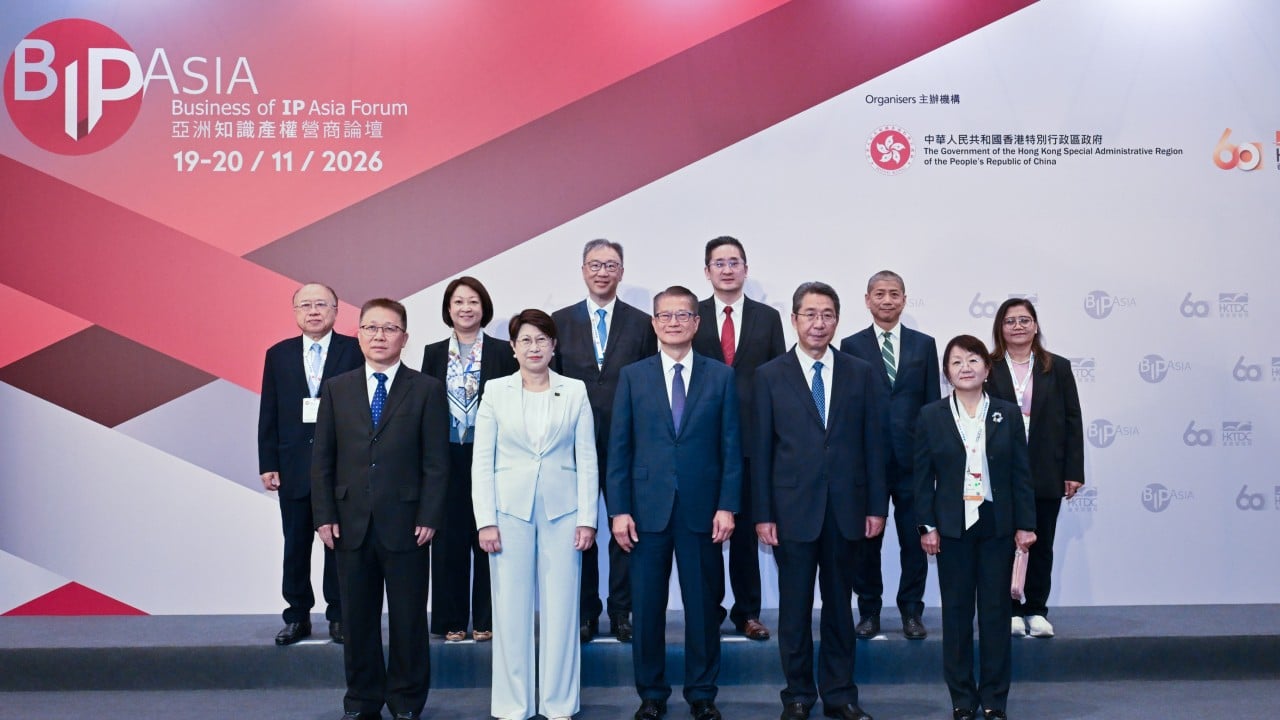
Deeper institutional cooperation between the World Intellectual Property Organization (WIPO) and the Hong Kong Special Administrative Region is not a routine diplomatic gesture. It represents a structural effort to convert Hong Kong from a traditional financial intermediary into an operational clearinghouse for intangible assets across the Asia-Pacific region. By aligning Hong Kong’s common law legal infrastructure with WIPO’s global registration, dispute resolution, and data networks, both entities are engineering a cross-border mechanism to price, protect, and commercialize intellectual property (IP) within the Guangdong-Hong Kong-Macao Greater Bay Area (GBA) and along Belt and Road trade corridors.
The Structural Thesis of Cross-Border IP Intermediation
Standard reporting treats pledges of cooperation between UN specialized agencies and regional governments as ceremonial milestones. That framing misses the underlying economic mechanics. In modern knowledge economies, capital allocation stalls when intangible assets—patents, trademarks, industrial designs, and proprietary data—cannot be reliably valued, collateralized, or adjudicated across jurisdictions.
Hong Kong occupies a distinct institutional position under the "One Country, Two Systems" framework. It is the sole common law jurisdiction within China, maintaining an independent judiciary, English-language legal proceedings, and high alignment with international commercial standards. Meanwhile, mainland China generates the highest volume of patent and trademark filings globally, led by innovation clusters in Shenzhen, Guangzhou, and Dongguan.
The friction between these two realities creates a specific market inefficiency: mainland enterprises produce massive quantities of intellectual property, yet face regulatory, linguistic, and legal barriers when attempting to monetize or defend those assets in Western and Southeast Asian markets. Conversely, foreign enterprises entering the Chinese market require a predictable legal buffer zone to ring-fence their proprietary technologies.
WIPO’s deepened engagement with the Hong Kong Intellectual Property Department (IPD) and the Department of Justice (DoJ) directly targets this bottleneck. Rather than duplicating national patent examination offices, the partnership optimizes the transactional layer of intellectual property—specifically international filing treaties, alternative dispute resolution (ADR), and IP-backed financing.
The Three Pillars of Operational Alignment
To evaluate the practical impact of WIPO-Hong Kong cooperation, the initiative must be broken down into three functional mechanisms rather than diplomatic talking points.
1. Treaty Extensions and Multilateral Filing Routing
The foundational layer of IP integration relies on extending WIPO-administered international treaties to Hong Kong. Under China's sovereign ratification, critical frameworks such as the Patent Cooperation Treaty (PCT), the Madrid System for the International Registration of Marks, and the Hague System for the International Registration of Industrial Designs establish standardized pipelines for securing multi-jurisdictional protection.
When these systems operate smoothly through Hong Kong’s registry, transaction costs drop significantly for regional enterprises. A technology firm based in the Greater Bay Area can use Hong Kong’s bilingual legal and patent agent ecosystem to structure international filings, reducing the administrative friction of navigating separate national patent offices.
The operational constraint here lies in examination capacity and talent density. Historically, Hong Kong operated primarily as a re-registration jurisdiction for patents granted by designated offices (such as the China National Intellectual Property Administration, the European Patent Office, or the UK Intellectual Property Office). While Hong Kong introduced its Original Grant Patent (OGP) system in 2019 to build domestic substantive examination capabilities, scaling that capacity requires continuous technical training and database integration—areas where WIPO’s technical assistance programs provide direct institutional transfer.
2. Alternative Dispute Resolution as a Capital Preservation Tool
Litigating cross-border IP disputes in traditional courts is capital-destructive. Multi-jurisdictional patent litigation routinely spans years, drains liquidity, and exposes trade secrets in public dockets.
A primary focus of WIPO’s cooperation with Hong Kong is strengthening the WIPO Arbitration and Mediation Center’s presence and case routing in the city. Hong Kong already ranks among the top global seats for international arbitration, underpinned by the Arrangement Concerning Mutual Assistance in Court-ordered Interim Measures in Aid of Arbitral Proceedings between the Mainland and Hong Kong. This mechanism allows parties in Hong Kong-seated arbitrations to apply directly to mainland Chinese courts for asset preservation and injunctive relief—a legal instrument unavailable to arbitral seats outside China.
Integrating WIPO’s specialized IP mediation and arbitration rules into this framework creates a high-efficiency dispute resolution corridor:
- Confidentiality preservation: Trade secret and licensing disputes remain out of public court records, protecting corporate valuations.
- Technical adjudication: WIPO maintains a specialized roster of neutrals with deep domain expertise in telecommunications, pharmaceuticals, and software architecture, avoiding the risk of generalist judges misinterpreting complex technical claims.
- Enforceability: Arbitral awards rendered in Hong Kong benefit from both the New York Convention globally and the reciprocal enforcement arrangements with mainland China.
3. Intangible Asset Valuation and IP Financing
The third pillar addresses the conversion of legal rights into liquid capital. In traditional banking systems, physical real estate and heavy machinery serve as primary collateral. Technology-driven enterprises, however, hold their enterprise value in patent portfolios and software code.
Hong Kong’s financial sector has historically under-indexed on IP-backed lending due to valuation volatility and liquidation risk. If a borrower defaults, a commercial bank struggles to price and sell a specialized semiconductor patent compared to a commercial office tower.
Deepening ties with WIPO supports the standardization of IP valuation methodologies and market data sharing. By connecting Hong Kong’s financial institutions with WIPO’s global patent analytics (such as PATENTSCOPE) and commercialization frameworks, regulators aim to establish standardized metrics for assessing patent strength, freedom-to-operate, and marketability. This data infrastructure is a prerequisite for developing secondary IP trading markets, securitization products, and IP insurance instruments.
Cause-and-Effect Dynamics in the Greater Bay Area
Understanding the strategic logic of this cooperation requires tracing the downstream effects across the regional innovation supply chain.
- Upstream R&D Concentration: Cities like Shenzhen and Dongguan possess dense manufacturing supply chains and hardware prototyping capabilities, driving rapid patent generation.
- Midstream Legal Structuring: As these firms scale internationally, uncoordinated national filings create vulnerabilities to patent trolls and exclusionary injunctions in foreign markets. Hong Kong’s IP service sector—supported by WIPO’s multilateral filing protocols—acts as the structuring hub to consolidate global IP holdings.
- Downstream Capital Formation: Once an enterprise’s IP portfolio is audited, standardized, and ring-fenced under Hong Kong’s common law regime, international institutional investors and venture capital funds can price the equity with lower legal risk discounts.
This division of labor reflects classic comparative advantage. Mainland hubs optimize for engineering velocity and manufacturing scale; Hong Kong optimizes for legal certainty, tax efficiency, and capital markets access; WIPO provides the multilateral regulatory standardization that prevents regional fragmentation.
Structural Bottlenecks and Execution Risks
No institutional framework eliminates underlying market friction entirely. Relying on Hong Kong as a WIPO-aligned IP hub introduces specific operational limitations that executives and policymakers must account for.
- Talent Scarcity in Substantive Patent Examination: While Hong Kong possesses an abundance of commercial lawyers and corporate litigators, it faces a structural shortage of patent attorneys with advanced STEM degrees (particularly in biotechnology, artificial intelligence, and materials science) capable of drafting complex claims from scratch. Until domestic technical talent scales, reliance on external examination authorities will persist.
- Geopolitical Bifurcation of Technology Standards: WIPO operates on multilateral consensus, yet global technology ecosystems are increasingly fragmented by export controls, national security reviews, and divergent standard-essential patent (SEP) royalty rate rulings across the US, EU, and China. Hong Kong’s intermediary role cannot insulate enterprises from extraterritorial sanctions or unilateral trade restrictions imposed by third-party jurisdictions.
- Valuation Liquidity Risk: Even with improved WIPO data integration, secondary markets for IP assets remain thin. Standardizing valuation frameworks reduces information asymmetry, but it does not automatically create deep pools of buyers willing to acquire distressed patent portfolios during economic downturns.
Tactical Integration for Enterprises and IP Practitioners
For technology enterprises, institutional investors, and legal practitioners operating across Asia, the WIPO-Hong Kong alignment alters optimal IP management strategy.
- Restructure Regional IP Holding Entities: Enterprises with R&D operations in mainland China and commercial distribution in ASEAN or Western markets should evaluate consolidating international patent and trademark portfolios within a Hong Kong corporate entity. This isolates foreign IP assets under common law governance while maintaining proximity to mainland engineering teams.
- Mandate WIPO-Hong Kong ADR Clauses in Cross-Border Contracts: In joint development agreements, technology transfer contracts, and cross-border licensing deals involving Chinese and international counterparties, replace generic litigation clauses with hybrid mediation-arbitration clauses specifying WIPO rules seated in Hong Kong. This secures access to mainland interim relief mechanisms while preserving technical neutrality.
- Leverage WIPO Global Databases for Pre-Filing Freedom-to-Operate Audits: Before committing capital to Hong Kong’s Original Grant Patent pipeline or Madrid System extensions, integrate WIPO’s global patent and brand databases into early-stage R&D gates. Filtering out crowded technical spaces prior to filing prevents wasted legal expenditure and strengthens subsequent IP valuation claims when seeking institutional financing.
The trajectory of WIPO and Hong Kong cooperation points toward a clear institutional reality: intellectual property governance in Asia is shifting from passive registration toward active financial and legal intermediation. Organizations that align their corporate IP architectures with Hong Kong’s multilateral treaty infrastructure and specialized dispute resolution mechanisms will capture lower cross-border transaction costs and stronger balance-sheet defensibility.