When Peter Thiel’s investment vehicle, Thiel Macro LLC, moved to acquire 1.2 million American Depositary Shares of Vista Energy, the market reacted with predictable excitement. The stock ticked upward, observers noted the 1% stake, and the financial press quickly framed the event around the billionaire’s meeting with President Javier Milei four months ago. Yet, reducing this transaction to a simple political endorsement or a routine portfolio diversification ignores the underlying mechanics of how modern capital is actually hunting for returns.
This is not merely an oil play. It is a calculation regarding the intersection of energy density, computational growth, and the structural rehabilitation of Argentina as a commodity exporter. Meanwhile, you can explore similar stories here: Inside the Channel Tunnel Monopoly Crisis and the Long Road to True Rail Competition.
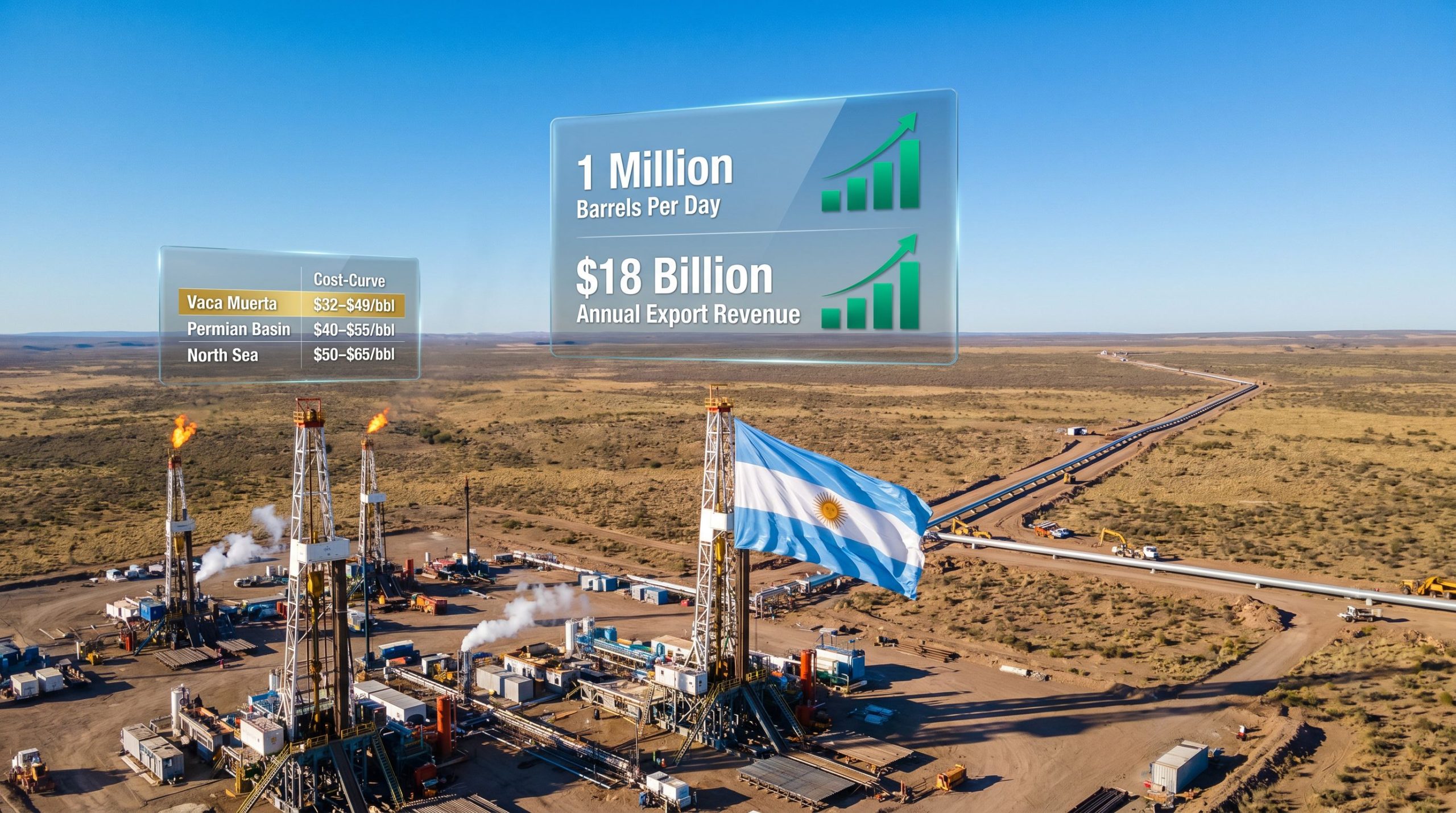
Vista Energy occupies a distinct space in the Vaca Muerta basin. As the largest independent operator in a region often described as the world’s fourth-largest shale oil reserve, the company has spent years building the technical and logistical capacity to bypass the constraints that historically hindered Argentine production. They are not just drilling; they are managing an export pipeline network that transforms trapped geological wealth into liquid currency.
Investors like Thiel are increasingly moving toward assets that provide the foundational inputs for high-growth sectors. If the thesis of the next decade involves an unrelenting demand for power—driven by the infrastructure required for artificial intelligence and large-scale data processing—then the traditional distinction between technology investments and energy investments begins to dissolve. To explore the bigger picture, check out the recent article by The Wall Street Journal.
Consider the requirements of modern compute. Hyperscale data centers demand massive, reliable, and geographically diverse energy sources. While domestic production in developed economies often faces regulatory bottlenecks, peripheral markets with massive, untapped reserves and newly business-friendly regimes offer a different risk-reward profile. Argentina under Milei presents exactly that environment: a commitment to tearing down the state-imposed barriers that previously made the extraction costs in Vaca Muerta prohibitive.
The political alignment between Thiel and Milei is often cited as the catalyst, but capital of this magnitude rarely moves on ideology alone. It moves on the removal of friction. When an administration signals that it intends to dismantle wealth taxes and reopen capital markets to international drillers, it changes the internal rate of return for every project in the basin. Infrastructure projects, such as the upcoming VMOS shale oil pipeline, are the real story. They represent the physical hardware that turns a theoretical resource into a globally traded commodity.
Critically, Vista’s focus on the Vaca Muerta formation suggests they are banking on the scalability of unconventional extraction. They have identified thousands of ready-to-drill locations, effectively creating a multi-year inventory of production growth. This is a industrial manufacturing model applied to the earth. By standardizing the extraction process, they aim to minimize the geological uncertainty that has plagued smaller operators in the region.
However, the path forward is not devoid of hazard. Betting on an emerging market for energy production requires a high tolerance for the volatility of Argentine politics and the long-term uncertainty of commodity cycles. Even with a supportive president, the logistical challenges of Patagonia are immense. Moving millions of barrels from remote shale patches to global markets requires not just a pipeline, but a sustained, decade-long stability in both capital investment and regulatory consistency.
There is also the matter of Thiel’s broader portfolio, which includes exposure to traditional power producers and nuclear reactor development. This creates a clear pattern. The goal is not to find the next search engine; it is to secure the energy commodities that will power the next phase of industrial automation. If you believe that the growth of computational capacity is a physical necessity rather than a software trend, then owning the source of the energy that powers that growth is the most logical position to hold.
While the retail market watches the daily price action of Vista’s ADRs, the strategic move here is much deeper. It is an acknowledgment that the bottleneck for future productivity is not just code or chip design, but the raw, unrefined energy required to keep the lights on and the processors running at scale.
Argentina is now positioning itself as a vital node in this supply chain. Whether that bet yields the returns investors expect depends on whether the infrastructure buildout stays ahead of the political tide. History in South America has shown that such alignments are often fragile, yet the sheer scale of the Vaca Muerta reserves provides a gravitational pull that is difficult for global capital to ignore.
For those following the money, the takeaway is clear. Stop looking for the next digital disruption and start tracking where the physical energy is flowing. The most significant gains of the coming years will not happen in the cloud, but in the ground, in the pipelines, and in the energy markets that enable the digital future to actually function.