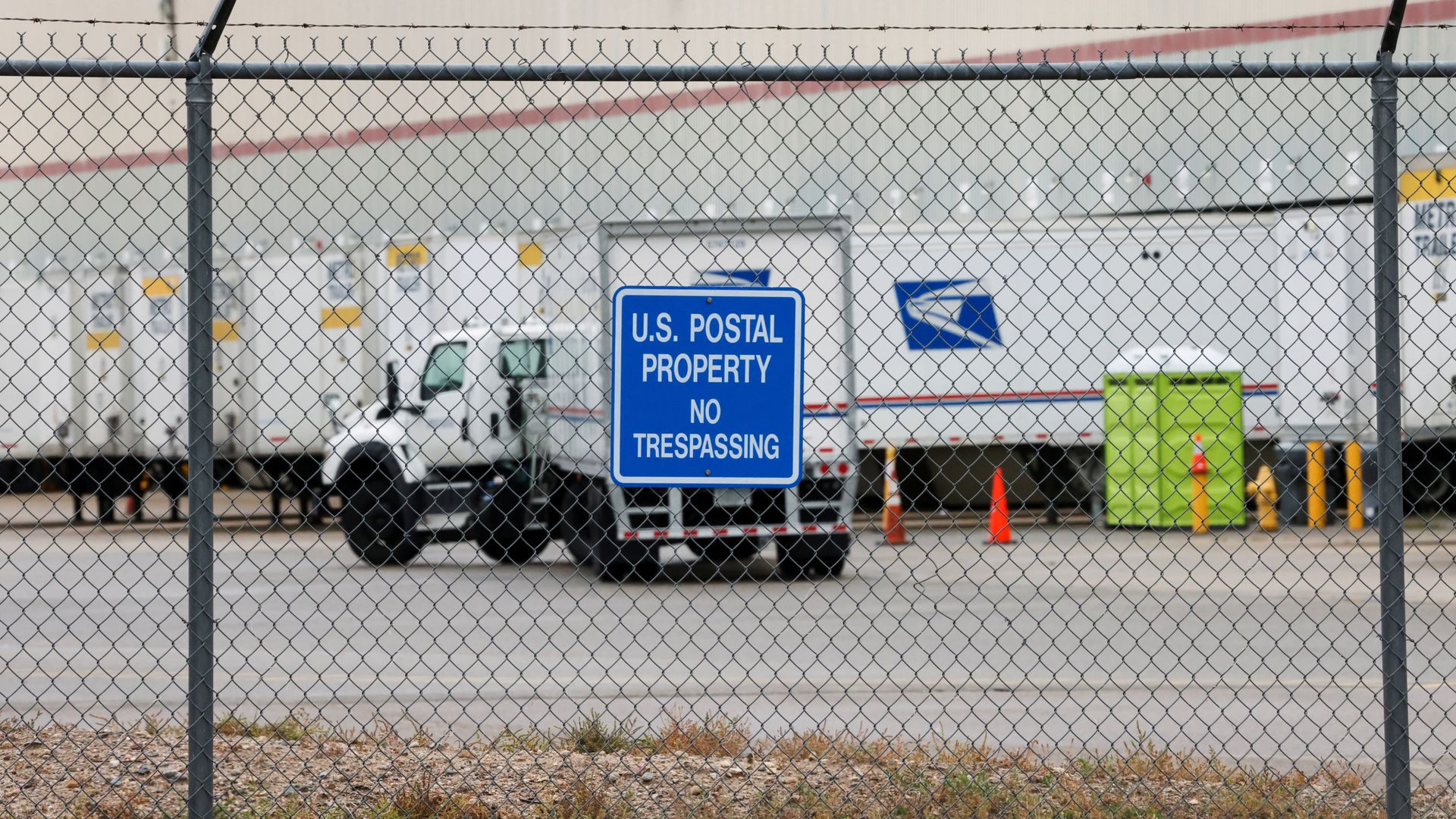
Handcuffs went on a man in Pakistan. Prosecutors pointed to over $126 million in alleged losses to the U.S. Postal Service. Headlines cheered. Law enforcement celebrated.
Do not pop the champagne yet.
Arresting a single operator behind a site like LabelsBank.com feels like justice served on a silver platter. It gives the public a neat villain, a tidy dollar figure, and a comforting illusion that the leak is plugged. That is the lazy consensus in standard coverage of the arrest of Faheem Akram—a neat story of digital villains, cross-border police work, and a giant heist finally caught.
It misses the real story completely.
Counterfeit shipping labels do not survive because one clever coder in Khanewal figured out how to print fake barcodes. They survive because a multi-billion-dollar logistics network has built-in blind spots, razor-thin margins, and an incentive structure that rewards speed over verification. Catching one vendor is like swatting one mosquito in a swamp and declaring victory over malaria.
Why Standard Coverage Gets Counterfeit Postage Backwards
Most reporting on major postal fraud cases treats the fraudster as the central engine of the crime. The narrative runs like this: a bad actor builds a storefront, sells cut-rate labels—allegedly around $2 a pop regardless of weight or zone—and millions of fake labels slip into the mail stream until investigators track down the operator.
That framing is backward. A counterfeit label is useless without two things: a buyer willing to slap it on a box, and a sorting pipeline that moves that box without catching the fraud until long after the truck rolls.
Over 5,200 buyers and more than 5.1 million alleged labels did not appear by accident. In e-commerce, shipping is often the difference between a profitable order and a dead-on-arrival business model. When legitimate rates climb and third-party marketplaces squeeze seller margins, underground label brokers step into the gap with flat-rate shortcuts. Some sellers knowingly buy cheap labels to pad their margins. Others get burned by shady fulfillment middlemen or resellers who promise discounted postage without disclosing where the labels originate.
Blaming everything on one offshore website lets domestic participants off the hook far too easily. If demand for cheap labels disappears, the supply dries up overnight. As long as sellers keep chasing cut-rate shipping outside authorized channels, another domain will pop up the week after the old one gets seized.
The Anatomy of a $126 Million Blind Spot
To understand how millions of questionable labels move through high-volume mail networks, you have to look at the tension between throughput and verification.
Modern postal and parcel hubs process tens of millions of pieces every day. Automated sorting equipment relies on optical scanners and Intelligent Mail barcodes or shipping label barcodes to route parcels at high speed. When a label looks formatted right, scans cleanly enough to trigger a routing event, or enters the network through bulk drop-offs or consolidators, the system wants to keep moving. Stopping every suspect parcel for manual inspection clogs belts, delays delivery windows, and triggers service failures.
Imagine a scenario where a regional sorting hub flags 2% of incoming parcels for manual postage verification. On a normal day with 500,000 pieces, that means 10,000 manual checks. Without enough human eyes or automated pre-acceptance checks at induction points, high-volume fraud exploits the lag between physical movement and financial reconciliation.
In fact, post-hoc revenue audits—where discrepancies are tallied weeks or months later—explain why loss estimates often run into the tens or hundreds of millions. By the time accounting reconciles label usage against legitimate postage sales, the packages have already been delivered, the money has moved across borders, and the labels have already done their job.
I have worked closely with logistics and supply chain teams that bled cash on shipping discrepancies before tightening their controls. I have seen companies blow millions chasing flashy software fixes while ignoring basic chain-of-custody gaps at the dock or warehouse level. Fraud thrives in the seams between systems—between label generation, induction scanning, weight/dimension capture, and billing reconciliation.
What People Also Ask About Counterfeit Postage Schemes
How does someone sell millions of fake shipping labels without getting caught right away?
They hide inside volume. When legitimate commercial shipping runs at massive scale, a high-volume illicit seller looks like just another discount broker—until patterns in pricing, batch generation, or invalid tracking/indicia data stand out. Flat-rate pricing that ignores package weight and distance is a classic red flag because real postal economics scale with weight, dimensions, and zones. When a label charges $2 for something that costs far more to move, someone is eating the difference—and usually, it is the carrier.
Why do U.S. prosecutors and postal inspectors pursue cases across borders?
Because cyber-enabled fraud does not respect borders, and neither do financial trails. When a scheme drains tens of millions from a public institution and touches thousands of domestic buyers, federal prosecutors and postal inspectors treat it as a systemic revenue and consumer-protection threat, not a minor nuisance. Arresting a suspect overseas takes serious diplomatic and investigative coordination, and it sends a loud deterrent message. Still, deterrence works best when paired with technical barriers that make fake labels fail before or at acceptance, not months later in court filings.
Can e-commerce sellers get in trouble for using cheap third-party shipping labels?
Yes. Ignorance is a shaky shield when an account gets flagged or investigated. Even if a seller buys discount postage through a third-party platform or fulfillment partner, using unauthorized or counterfeit labels can expose the business to account suspension, financial clawbacks, seized inventory, or legal scrutiny depending on intent and scale. If a shipping rate looks too good to be true compared to standard commercial tiers, assume there is a catch until proven otherwise.
The Uncomfortable Truth About "Crackdowns"
Law enforcement deserves credit when coordinated raids and digital forensics take down an alleged ringleader. Cross-border cases are slow, messy, and full of dead ends.
Yet industry veterans in logistics security—and investigators who study payment and fulfillment fraud—know a hard truth: enforcement is a lagging indicator, not a structural fix.
Every time authorities shut down one marketplace or arrest one operator, the underground adapts. Scammers shift domains, rotate payment rails, split operations across smaller cells, or target different carriers. Meanwhile, the underlying incentives remain intact:
- Margin pressure on small and mid-sized sellers pushes desperate operators toward gray-market shortcuts.
- Complex multi-hop logistics creates multiple points where label authenticity can be checked late—or inconsistently.
- Delayed financial detection allows high-volume abuse to compound over months or years before full accounting catches up.
Taking a contrarian view on enforcement does have a real downside. Downplaying a major arrest can sound cynical or dismissive of the officers and prosecutors who put in the work. It can also make people underestimate the real legal and financial consequences facing suspects and complicit buyers. Arrests matter—they disrupt networks, freeze funds, and put bad actors on notice. They just cannot carry the entire weight of postal security on their own.
What Actually Works Instead of Celebratory Headlines
If shipping networks and e-commerce operators want fewer nine-figure fraud stories, nobody needs another press release celebrating a single takedown. They need sharper friction where the fraud actually happens.
- Stop treating label validation as an afterthought. Real-time cryptographic or centralized verification at induction and sortation—paired with automated weight-and-zone checks—shrinks the window for counterfeit postage to ride for free.
- Audit your shipping supply chain like a finance team. If you run an e-commerce brand or prep center, verify that every postage channel you touch is authorized and auditable. Never outsource compliance to a discount link with no paper trail.
- Follow the buyer incentives, not just the seller. Cut off the demand side through marketplace enforcement, payment monitoring, and clear penalties for repeat offenders using bogus postage.
One arrest closes a chapter in a criminal case file. Fixing the incentives and chokepoints that made a $126 million scheme possible is the part nobody has finished.