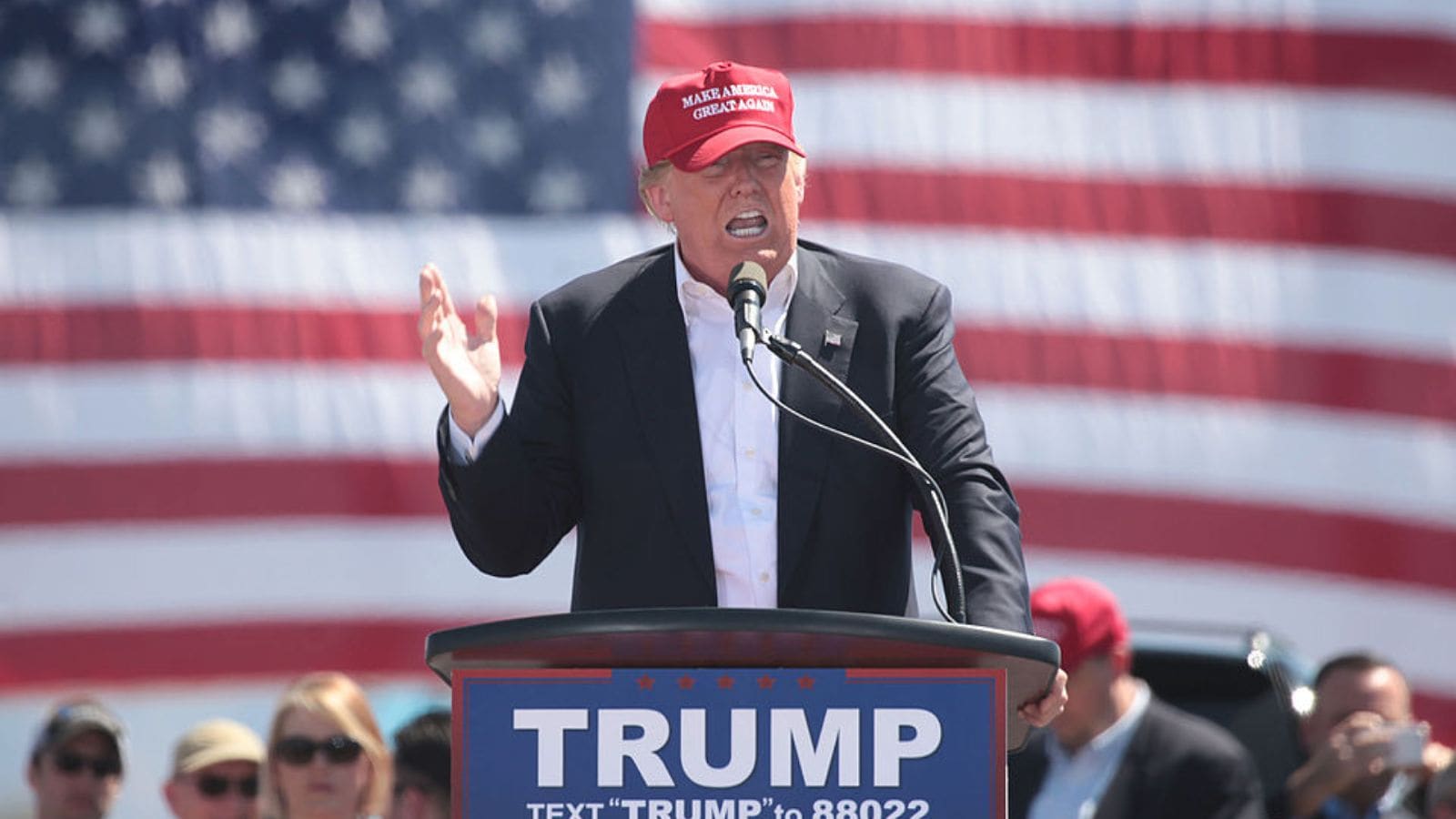
President Donald Trump abruptly abandoned his radical proposal to levy a 20 percent transit fee on commercial shipping through the Strait of Hormuz, swapping the legally toxic toll for a vague promise of sweeping Gulf state investments in the United States. The swift reversal followed a weekend of sheer panic across global energy markets, intense blowback from international maritime agencies, and frantic phone calls from Middle Eastern monarchs who realized that a 20 percent tax on raw cargo would effectively paralyze the global economy. By swapping a maritime toll for corporate investments, Washington avoided an unprecedented legal crisis while allowing the administration to claim a multi-billion-dollar victory.
The original threat was classic theater. On social media, the administration declared the United States the official guardian of the chokepoint and demanded direct financial compensation for keeping the lanes free from Iranian aggression. The financial math behind the proposal was staggeringly detached from global shipping realities.
A Mathematical Nightmare for Global Supply Chains
Calculating a fee based on cargo value rather than ship tonnage is a fundamental misunderstanding of maritime logistics. Industry analysts immediately sounded the alarm. A single Very Large Crude Carrier carrying two million barrels of crude oil at eighty dollars a barrel holds a cargo worth 160 million dollars. A 20 percent tariff on that single voyage translates to a 32 million dollar fee.
Such numbers are not minor adjustments to shipping budgets. They are terminal. If a maritime logistics firm operates on thin margins, an arbitrary multi-million-dollar tax per transit forces an immediate rerouting of assets or an instantaneous spike in global fuel costs. The International Maritime Organization and major logistics corporations like Hapag-Lloyd wasted no time pointing out that the policy was unworkable.
The shipping industry does not operate like a toll road. Ocean liners and energy cartels rely on predictable pricing mechanisms bound by international treaties. Lloyd’s List and various shipping boards noted that trying to collect these fees would require an aggressive, physical enforcement mechanism that the United States military was not prepared to manage. Had the administration proceeded, naval vessels would have been forced to act as high-seas tax collectors, boarding neutral ships or blocking allied tankers that refused to pay.
The Sovereignty Trap and the Ghost of Grotius
Freedom of the seas is the bedrock of international law. For nearly four centuries, since the formulation of the Mare Liberum doctrine, international straits have been legally protected from the sovereign taxation of neighboring powers.
By asserting that the United States could charge an arbitrary fee for transit passage, Washington inadvertently validated the exact legal argument that adversarial regimes have used for decades. Iran has long claimed the right to police, restrict, or tax the Strait of Hormuz based on its geographic proximity. If the Western superpower declared that global waterways are pay-to-play zones governed by military might, it would hand Tehran the ultimate justification to impose its own rival toll booth.
The Iranian foreign ministry even mocked the American proposal on social media, suggesting that twenty percent was a bit steep but welcoming the idea that whoever guards the strait deserves a cut of the profits. This rhetorical trap deeply alarmed career diplomats in Washington. Setting a precedent where a superpower can monetize international security would trigger a contagion across other vital chokepoints. The Bab el-Mandeb, the Malacca Strait, and the Turkish Straits could all devolve into localized extortion zones.
The Secret Diplomacy of Kings and Emirs
The pushback that mattered did not come from European legal scholars or maritime bureaus. It came from the oil-rich capitals of the Persian Gulf.
According to Oval Office accounts, leaders from Saudi Arabia, the United Arab Emirates, and Kuwait rapidly coordinated a series of direct phone calls to the American president. These states are entirely dependent on the unhindered flow of energy through that narrow strip of water. They recognized that an American blockade of Iranian cargo combined with an indiscriminate 20 percent tax on all other shipping would provoke an unmitigated disaster.
The Gulf states offered an alternative that appealed directly to the administration’s preferred style of transactional diplomacy. Rather than paying an illegal, highly visible toll that would anger their own state-owned oil enterprises, they promised massive domestic capital investments directly into the United States economy. This allowed the White House to retreat from an impossible legal position while framing the climbdown as a masterful financial negotiation.
It remains highly unclear whether these promised investments represent genuine new capital or merely a rebranding of existing sovereign wealth fund allocations. Gulf state funds routinely pour billions into Western infrastructure, real estate, and tech sectors. Labeling these standard financial operations as an alternative to the maritime reimbursement fee is a classic exercise in political face-saving.
The Reimposed Blockade and the Reality of Kinetic Warfare
While the financial toll is dead, the physical reality of the conflict remains incredibly dangerous. The United States has officially reinstated its full naval blockade targeting all ships carrying Iranian cargo or heading to Iranian ports.
This is not a diplomatic gesture. It is an act of war. Central Command has launched multiple waves of airstrikes against coastal defense systems, drone launch facilities, and missile installations inside Iran. The brief, fragile interim peace deal that was supposed to secure the waterway is dead, replaced by burning tankers and active air defense sirens across the region.
The tactical situation on the water is chaotic. Commercial tankers like the Mombasa, the Al Bahiyah, and the Stolt Magnesium have already faced direct missile and drone strikes, suffering fires and casualties. The European Union Aviation Safety Agency has issued urgent warnings for commercial airlines operating over the airspace of Bahrain, Qatar, and the UAE, citing the highly volatile use of long-range air defense systems.
For the shipping industry, the removal of the 20 percent fee does not mean a return to normalcy. Insurance premiums for transiting the chokepoint have skyrocketed to prohibitive levels. Some maritime transport firms are choosing to disable their automatic identification systems to slip through the passage undetected, a tactic that carries immense risk in a zone monitored by advanced naval radars.
The Illusion of Total Control
Superpowers often operate under the assumption that global trade routes can be managed via executive decrees and naval posturing. The reality of modern asymmetrical warfare challenges this notion.
Iran does not need a conventional navy to disrupt the chokepoint. It relies on a dense network of mobile, land-based anti-ship cruise missiles, swarm boats, and loitering munitions hidden along its rugged coastline. Even with a massive Western naval presence, complete security is an illusion. The physical geography of the strait, measuring just twenty-one miles wide at its narrowest point, gives a localized actor an inherent tactical advantage.
The administration’s sudden pivot from a direct tariff to investment deals exposes the limits of using commercial leverage in complex geopolitical arenas. You cannot run global maritime security like a Manhattan real estate portfolio. When the threat of an unworkable fee met the stubborn realities of international law and energy economics, the policy folded within twenty-four hours.
The true cost of protecting the world's most critical energy artery will not be settled by corporate acquisitions or sovereign wealth fund transfers in Washington. It will be determined by the raw, unpredictable calculation of deterrence, hardware deployment, and the constant threat of open warfare along the coast of Oman. The toll booth has been dismantled before it could even open, but the price of admission remains blood, steel, and skyrocketing insurance rates.
:max_bytes(150000):strip_icc():focal(749x0:751x2)/auschwitz-2-691cb034ee9e43cfa45a0969012c6337.jpg)