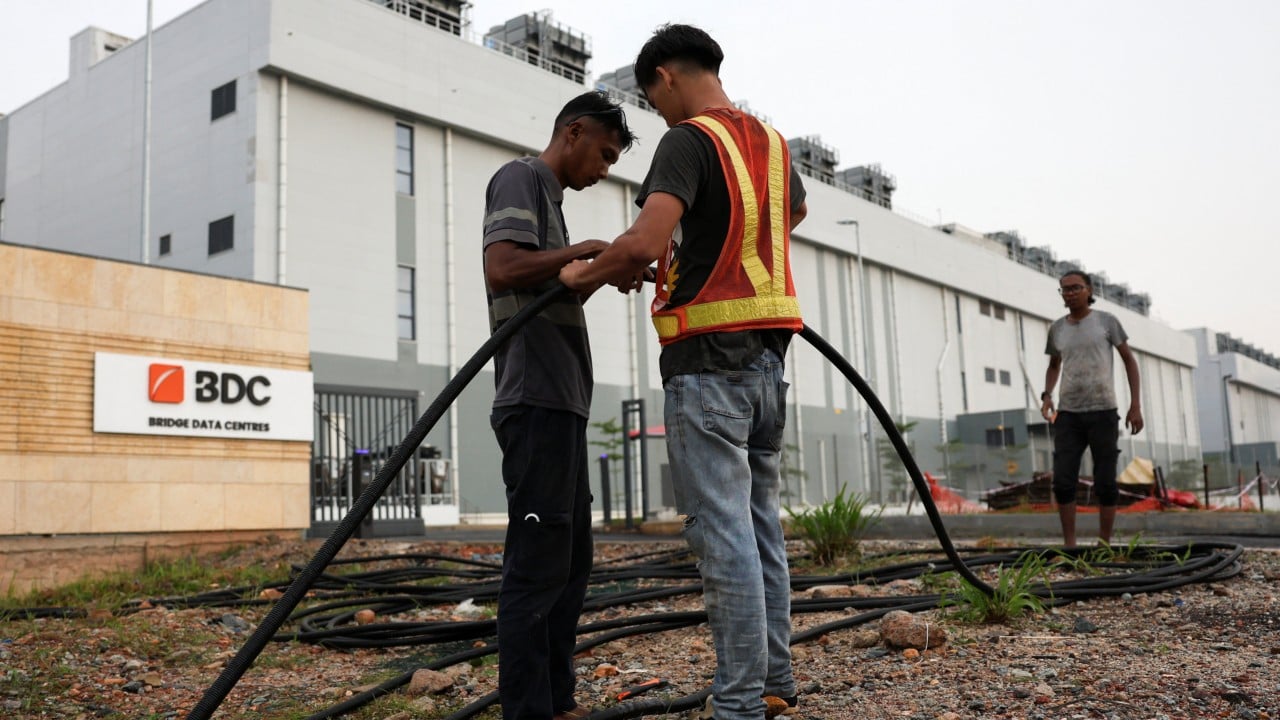
The modern technological landscape leaves zero room for neutral bystanders. Right now, Washington and Beijing are locked in a high-stakes duel for global artificial intelligence supremacy. Every major semiconductor fab, every cloud computing cluster, and every breakthrough large language model gets pulled into this gravitational orbit. If you run a digital economy in Southeast Asia, you feel this squeeze every single day.
Most observers frame this as a simple choice between two superpowers. Pick a side, take the grants, buy the hardware, and accept the terms. That mindset will destroy the region's long-term economic sovereignty. ASEAN cannot afford to become a digital colony for either superpower. Securing true strategic autonomy in artificial intelligence isn't just a policy nice-to-have. It's an absolute survival requirement.
The Trap of Technological Dependence
Let's be honest about how regional digital infrastructure grew over the past decade. Southeast Asian nations happily imported cheap cloud credits from American tech giants while simultaneously integrating telecommunications hardware built by Chinese conglomerates. It worked fine when technology stayed relatively modular. It fails completely in the age of generative artificial intelligence.
Artificial intelligence isn't just another software upgrade. It's the operating system for future national security, healthcare, financial networks, and industrial automation. When your entire administrative apparatus runs on models trained abroad, you outsource your society's brain.
Data sovereignty remains a massive blind spot for many regional policymakers. Local companies generate immense volumes of transactional, linguistic, and biometric data daily. Yet, that data often flows straight to servers located in California or Shenzhen to train foreign models. You basically hand over your raw materials for free, only to buy back the finished intelligence at a premium price.
Governments must mandate strict local data residency requirements while building domestic processing capacity. Indonesia and Singapore already made strides here, but smaller member states lag behind dangerously. Without local compute power, regional startups will always remain subcontractors rather than innovators.
Building Indigenous Capabilities Without Picking Sides
Splitting the difference sounds appealing in diplomatic circles, but neutrality requires actual capability. You cannot claim non-alignment if your engineers rely entirely on foreign APIs that can be revoked with a single regulatory update or export control sanction.
ASEAN needs a coordinated regional compute grid. No single country outside of perhaps Singapore or Indonesia possesses the capital to build world-class sovereign AI infrastructure alone. Pooling resources changes the math completely. Imagine a shared supercomputing network funded by a regional consortium, training multilingual models tuned to local dialects, cultural nuances, and regional legal frameworks.
We already see glimpses of this pragmatism. Local research labs in Bangkok and Kuala Lumpur are building open-source models trained on regional languages like Bahasa, Thai, and Vietnamese. This approach bypasses the massive capital barriers required to compete with US tech monopolies head-on. Instead of trying to build the biggest general model on earth, regional developers should focus on specialized, high-impact enterprise applications tailored to local agriculture, supply chains, and public administration.
Talent retention remains another hurdle. Top-tier machine learning engineers from Vietnam or the Philippines traditionally pack their bags for Silicon Valley or Shenzhen the moment they graduate. Governments need to offer competitive research grants, clear regulatory sandboxes, and equity incentives to keep sharp minds at home.
The Geopolitical Tightrope Walk
Navigating US export controls on advanced chips while keeping Chinese supply chains open requires diplomatic gymnastics. Washington demands compliance with chip bans, threatening secondary sanctions against foreign firms that service restricted hardware. Meanwhile, Beijing remains a dominant trade partner and a major investor in physical digital infrastructure across the Mekong subregion.
Smart regional leaders treat this tension as leverage rather than a trap. They play the compliance game just enough to keep Western supply chains accessible, while aggressively investing in alternative hardware architectures and open-source ecosystems that bypass traditional chip bottlenecks.
You must diversify your technological dependencies. Buying chips exclusively from one supplier creates a single point of failure that a hostile trade policy can exploit overnight. Regional telecom operators and enterprise buyers need multi-vendor strategies that decouple software layers from hardware dependencies.
What Needs to Happen on the Ground
Action beats diplomacy every single time. Regional enterprises and policymakers need concrete steps to fortify their technological footing before external shocks force their hands.
- Audit your software stack immediately to identify hidden dependencies on foreign proprietary AI models and cloud services.
- Redirect corporate research budgets toward open-source foundational models that allow local fine-tuning and offline deployment.
- Form cross-border engineering task forces between universities in Jakarta, Hanoi, and Manila to pool scarce computational resources.
- Push national regulators to modernize data privacy laws that protect citizens while encouraging safe, localized AI experimentation.
The window to lock in regional technological independence is closing fast. Ignore the noise coming out of Washington and Beijing. Focus ruthlessly on building local competence, securing indigenous data pipelines, and treating artificial intelligence as critical infrastructure rather than a consumer gadget.