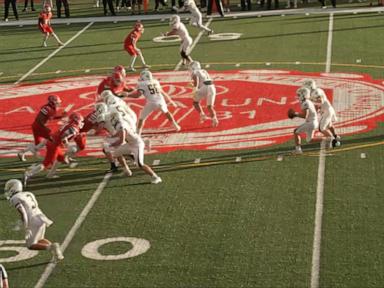
On a Saturday night in September, Sue D. Cooley Stadium at Lahainaluna High School hosted a football game that broke the usual arithmetic of high school sports. The matchup featured the Lahainaluna Lunas and the Paradise Bobcats, two programs representing communities charred by historic conflagrations. Paradise, California, lost its physical infrastructure to the 2018 Camp Fire. Lahaina, Maui, absorbed a parallel erasure during the August 2023 wildfires. When these squads stepped onto the turf for the inaugural Unity Bowl, they were not merely playing four quarters of high school football. They were performing a public ritual of survival that corporate sponsors and municipal planners have spent years trying to package, monetize, and simplify.
The sports media prefers a clean narrative. A television broadcast loves a neat arc of tragedy followed by instant redemption. But veteran observers who spend time talking to locals in Butte County or West Maui understand that trauma does not expire when a stadium lights up. The reality on the ground is messier, defined by protracted insurance litigation, displaced families living in temporary modular units, and tax bases hollowed out for generations. High school athletics often becomes the sole remaining civic anchor when local commerce and government institutions fail to provide quick answers.
Athletic directors Jerry Cleek of Paradise and Jonathan Conrad of Lahainaluna understood the weight of what they were engineering. Bringing teenagers across thousands of miles of ocean isn't cheap. Logistics required complex coordination, fundraising, and institutional backing from donors who wanted to attach their names to a feel-good story. Yet beneath the corporate banners and the national news vans lay an unvarnished truth about American small towns. When the state and federal safety nets tear open, neighbors rely on mutual aid, and teenagers put on shoulder pads to give their elders something to cheer about on a Saturday night.
The Cost of Reconstruction
To comprehend why a football game matters to a burned-out town, you have to look at the balance sheets of rural school districts post-disaster. Paradise High School saw its enrollment crater following the 2018 fire, dropping from over a thousand students to a fraction of that as families fled the region. Football rosters shrank. Equipment budgets evaporated as local businesses that once bought program ads burned to the ground. The story in Lahaina mirrors this economic displacement. Families who have lived in Maui for generations find themselves priced out or forced to relocate to the other side of the island, tearing apart the feeder systems that supply local athletic programs.
When a school loses its town, the school often becomes the town.
Football teams in these environments function as surrogate civic governments. They organize blood drives, clear debris, and maintain morale when local morale is subterranean. When Paradise students sent handmade banners of support to Lahaina immediately following the 2023 disaster, it wasn't a PR stunt. It was an inter-community transmission of survival knowledge. They were telling the kids in Maui that the third year is harder than the first year. They were warning them about the bureaucratic fatigue that settles in once the national media caravans pack up and leave.
Beyond the Scoreboard
The final score of the Unity Bowl mattered very little to the people sitting on the aluminum bleachers. Wins and losses belong to normal seasons. This game belonged to a different category entirely, sitting somewhere between a memorial service and a family reunion.
For the visiting Paradise players, stepping onto the Lahaina campus offered a jarring mirror image. They looked up at the surrounding hillsides and saw the same scrub brush, the same stark reminders of how fast a windstorm can rewrite a zip code. On the field, the blocks were hard and the hits were real. Neither team asked for or expected pity. Competitive pride remains the currency of the sport, and players on both sides hit with a ferocity born of frustration that had nothing to do with the opponent across the line of scrimmage.
Critics of disaster-themed sporting events often point out the risk of trauma tourism. Networks descend with cameras, capture the tears of a grieving mother or a exhausted coach, and then vanish back to metropolitan headquarters. But talking to the families in the stands reveals a different perspective. They wanted the world to look. They wanted people to remember that rebuilding a town takes decades, not news cycles.
The Long Tail of Community Trauma
The real work happens long after the stadium lights click off and the visitors fly back to the mainland. A return game is scheduled for Paradise in 2027, setting up a multi-year dialogue between two places that share an accidental fraternity.
Consider how rural America handles grief. We build monuments, we hold vigils, and then we demand that people get back to work. In communities where the timber industry or tourism defines the local economy, vulnerability is treated as a liability. The football field provides a sanctioned space for rage, solidarity, and joy to occupy the same thirty yards of grass.
As the players shook hands at midfield under the Maui sky, the cameras stopped rolling and the announcers lowered their microphones. The teenagers walked toward the stands to hug parents who had lost homes, jobs, and friends. The scorebook closed, leaving behind the stark reality of two towns still figuring out how to rebuild their foundations one yard at a time.
Two schools scarred by wildfires find hope in a football game
This short video provides a concise visual overview of the historic connection between Paradise High School and Lahainaluna High School as they united through football following devastating wildfires.
http://googleusercontent.com/youtube_content/1