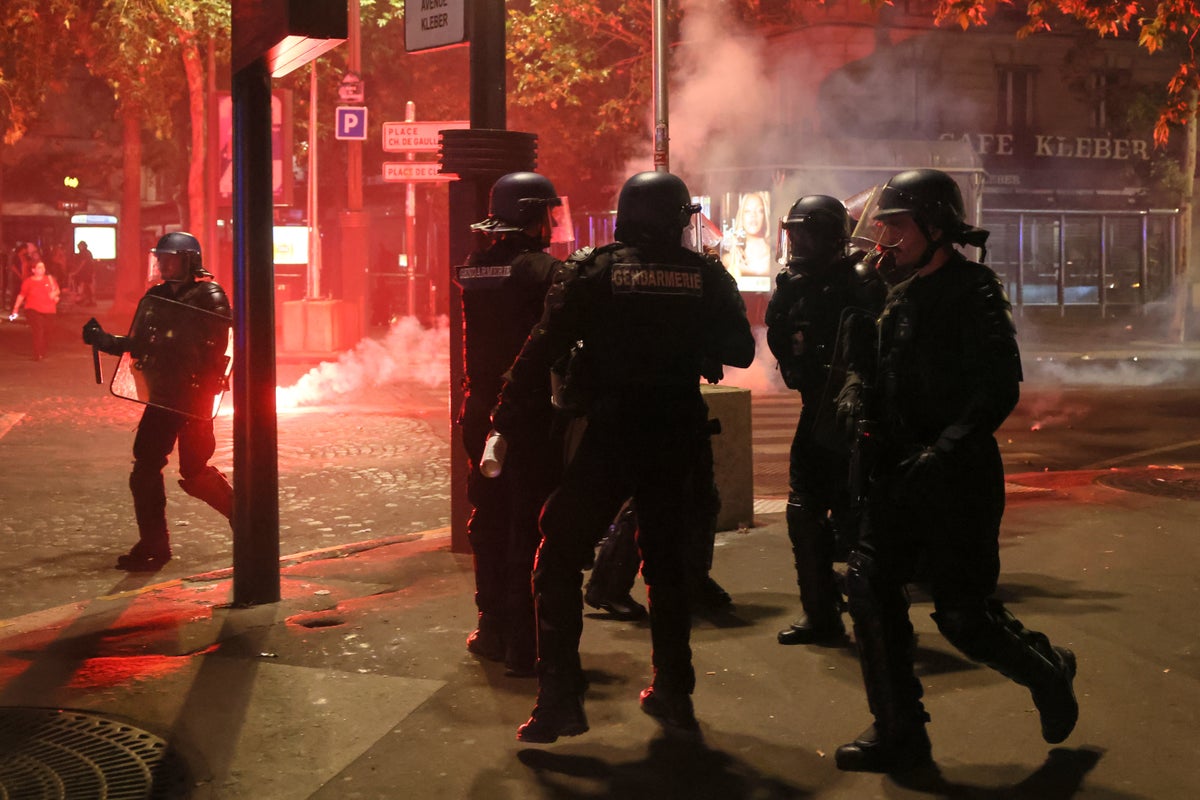
The roar of a packed stadium usually stays trapped within the concrete and steel of its own architecture. But on a crisp December night in 2022, the sound of a single whistle in Qatar tore across the Mediterranean, swept through the narrow, blue-washed alleys of Chefchaouen, and exploded into the crowded cafes of Casablanca.
Morocco had just defeated Portugal to reach the World Cup semi-finals. They were the first African and Arab nation to ever do so.
To the casual observer watching from a bar in London or a living room in New York, it felt like a flash in the pan. A soccer miracle. A beautiful, fleeting underdog story fueled by adrenaline, luck, and an fiercely passionate fan base. We love those stories because they require nothing from us but temporary wonder.
But miracles are a myth in modern sports.
What happened in Qatar, and what is currently building toward the Africa Cup of Nations and the 2026 World Cup, is the result of a cold, calculated, and wildly expensive architectural rewrite of a nation’s identity. It was not luck. It was engineering.
The Ghost of 1998
To understand why this rise feels so seismic, you have to understand the quiet heartbreak that preceded it. Walk into any old tea shop in Rabat and ask about the late 1990s. The walls are often adorned with faded posters of Mustapha Hadji, his long hair flying as he struck a breathtaking volley against Norway in the 1998 World Cup.
That tournament was supposed to be the launching pad. Instead, it became a ceiling.
For the next two decades, Moroccan football entered a dark age of stagnation. The national team failed to qualify for four consecutive World Cups. Domestically, the infrastructure was crumbling. Promising young players kicked deflated balls on gravel pitches, their talent withered by a lack of scouting, poor coaching, and nonexistent funding. The brilliant diaspora of Moroccan talent born in Europe—in the suburbs of Amsterdam, Brussels, and Paris—looked at the national team and saw chaos.
When a football federation loses its way, the symptoms aren't just visible on the scoreboard. They bleed into the culture. Football is a mirror in Morocco. When the Atlas Lions stalled, a bit of the national pride stalled with it.
The turning point did not come from a locker room speech or a tactical shift. It came from a realization that football, in the 21st century, is an industry. If you want to harvest talent, you cannot rely on the wild rain. You must build an irrigation system.
The Million-Dollar Sandbox
In 2009, King Mohammed VI initiated a project that many critics initially dismissed as a billionaire's vanity project. They built the Mohammed VI Football Academy near Rabat.
Imagine a sprawling, ultra-modern oasis carved out of the North African landscape. It cost roughly $16.8 million. It features Olympic-standard pitches, state-of-the-art medical centers, schools, and hotels. It looks less like a sports complex and more like a high-tech incubator you would find in Silicon Valley.
This was the crucible.
The strategy was simple yet brutal in its execution: find the best raw talent across the kingdom, isolate them from the systemic failures of the old club system, and give them elite, European-standard development for free.
Consider a hypothetical kid from the working-class neighborhoods of Fez. Let's call him Youssef. In 2005, Youssef’s football education was survival-based. He played on concrete, avoiding cars, learning to dribble because the ground was too uneven to pass. If he broke his ankle, his career was over before it began.
By 2012, a kid with Youssef’s talent was scouted by an academy scout using data metrics. He was flown to Rabat. He was given a diet designed by sports nutritionists. He slept in climate-controlled dorms. He was taught tactical geometry by UEFA-licensed coaches.
The academy produced Youssef En-Nesyri—the man who would later leap into the Qatari sky, out-jump the Portuguese goalkeeper, and score the goal that shook the world. It produced Nayef Aguerd, a defensive pillar who went on to command multimillion-dollar transfer fees in the English Premier League.
The sandbox worked. The investment wasn't just in grass and bricks; it was an investment in human optimization.
The Dual-Nationality Dilemma
But fixing the domestic pipeline was only half the battle. The unique heartbeat of modern Moroccan football lies in its diaspora.
Morocco’s scouting network became an intelligence agency. They realized that hundreds of elite footballers holding Moroccan heritage were being born and raised every year in the world-class academies of the Netherlands, Spain, France, and Germany.
Historically, these players chose to represent their European birth countries. The pull of playing for France or the Netherlands was too strong, offering a clearer path to glory and prestige. Morocco was seen as an afterthought, an unstable environment.
The federation set out to change the emotional economics of that choice.
They didn't just send scouts with clipboards. They sent representatives who spoke to the parents, who reminded these young men of their roots, and who presented them with a grand vision. They didn't offer a chaotic setup; they offered a professional environment that matched—or exceeded—what they had in Europe.
Look at Achraf Hakimi. Born in Madrid, trained in the prestigious Real Madrid system. He could have easily worn the red and gold of Spain. Look at Hakim Ziyech, born and bred in the Dutch football system, possessing a creative arrogance that traditional Dutch coaches struggled to manage.
Morocco offered them something Europe never could: the chance to be icons of an entire continent and culture, backed by an infrastructure that respected their elite status.
When Hakimi stepped up to take the decisive penalty against Spain in the 2022 World Cup knockout stage, the pressure was immense. A whole nation held its breath. He didn't just score; he chipped the ball down the middle with a cheeky Panenka, a stroke of pure, unadulterated confidence. That confidence came from knowing he was exactly where he belonged.
The Blueprint Expands
The success of the men’s national team is the visible tip of an iceberg, but a true powerhouse requires a deeper foundation. You cannot have a top-tier football ecosystem if half the population is excluded from it.
While the world was paying attention to the men in Qatar, a quieter revolution was taking place in the domestic women’s game. The Moroccan federation became one of the few in the world to fully fund a two-tier professional women's league. They guaranteed salaries for players and staff across every club.
The result? The Atlas Lionesses marched to the final of the Women’s Africa Cup of Nations in 2022, playing in front of a record-breaking, sold-out crowd of over 50,000 fans in Rabat. They followed it up by reaching the knockout rounds of the 2023 Women's World Cup, eliminating established giants like Germany in the process.
This isn't just about sports metrics. It changes the social fabric. A young girl in Marrakech now watches television and sees women celebrated as national heroes, their faces plastered on billboards across the country. The invisible stakes of football are always cultural. It redefines what is possible for a generation.
The Long Road to 2026
Now, the focus shifts to the horizon. The 2026 World Cup, co-hosted by the United States, Canada, and Mexico, looms large. But before that, Morocco will host the Africa Cup of Nations. The pressure is no longer that of the plucky underdog. It is the heavy, suffocating pressure of a favorite.
The infrastructure is expanding again. Stadiums are being remodeled, high-speed rail lines are connecting cities, and grassroots pitches are being laid down in the most remote corners of the Atlas Mountains.
The challenge of staying at the top is infinitely harder than getting there. Teams now scout Morocco with fear and precision. The element of surprise is gone. The tactical genius of manager Walid Regragui, who constructed a defensive masterpiece in Qatar, must now evolve into an attacking dominance.
But the machine they built is designed for longevity, not a single tournament cycle. The academy continues to churn out prospects. The scouting network in Europe continues to secure commitments from teenagers who have never set foot in Morocco but feel the pull of the red and green jersey in their blood.
The Final Chord
Step away from the tactics, the budgets, and the political strategy for a moment.
Go back to that night in Casablanca after the Portugal match. The streets were an absolute sea of humanity. Grandmothers stood on balconies waving flags. Corporate executives hugged street vendors. Teenagers who had known nothing but the footballing disappointment of their parents' stories were weeping openly on the hoods of parked cars.
For a few weeks, a country that had often been defined from the outside by its struggles, its geography, or its colonial history redefined itself on its own terms through eleven men on a patch of grass.
That is what the competitor's spreadsheets and match reports miss. They miss the soul of the project. Morocco did not become a football powerhouse because they found a golden generation. They became a powerhouse because they decided that their children deserved a stage big enough to hold their dreams.
The world will watch them in 2026. But the victory has already been won in the minds of every kid currently kicking a ball against a sun-baked wall in Tangier, knowing that the path from that wall to the greatest stadiums on earth is no longer a fantasy. It is a paved road.