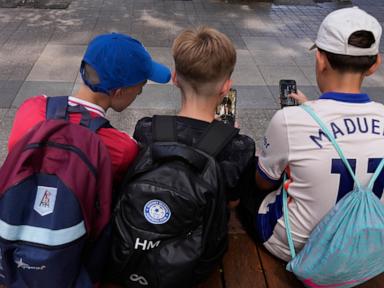
When Australia passed its world-first law blocking kids under 16 from social media, politicians promised a clean break from screen addiction and toxic algorithms. The law rolled out on December 10, 2025, threatening tech giants with massive $49.5 million AUD fines if they didn't purge underage accounts from platforms like Instagram, TikTok, and YouTube.
Six months later, the experiment is falling apart.
Data published in June 2026 by the British Medical Journal paints a brutal picture of reality on the ground. An observational study by the University of Newcastle found that roughly 85% of young people aged 12 to 15 are still actively using social media. They didn't pack up their digital bags and head outside. They simply walked right through the state's expensive digital front door.
Now, Prime Minister Anthony Albanese admits the current rules have a problem. The government is scrambling to patch the holes, promising to beef up enforcement and expand the powers of the country's online watchdog, the eSafety Commissioner. But doubling down on a broken blueprint won't fix the underlying issue.
The Age Verification Illusion
The biggest flaw in the legislation was the belief that tech companies could easily verify age without invading everyone's privacy. The law required platforms to take "reasonable steps" to verify users, but left the actual mechanics vague.
Predictably, social media companies took the path of least resistance.
According to the Newcastle study, while two-thirds of teenagers faced some kind of verification check, only 5% of 12- to 13-year-olds were asked for official ID. Instead, platforms relied on weak alternative methods. Teens were prompted to upload a quick selfie for AI age estimation or just type in a fake birth year.
It took zero effort to bypass. Kids quickly realized they could retry the automated selfie checks until the AI cleared them, or they just adjusted their device settings. Around 15% to 19% of teens admitted to using fake accounts, while others quietly routed their traffic through a VPN.
The eSafety Commissioner, Julie Inman Grant, warned that the current legislative framework provides "thin scaffolding." Tech platforms are running out the clock, doing the bare minimum while major players like Reddit launch High Court challenges against the validity of the ban.
Moving the Goalposts to Algorithms and Duty of Care
Recognizing that simple age gates don't work, the federal government is shifting its strategy toward a broader concept: a legislative digital duty of care.
Instead of just trying to lock kids out of the building, the new approach aims to force platforms to fundamentally change how their products are engineered. Prime Minister Albanese flagged that upcoming reforms will look directly at algorithms, endless feeds, and hyper-targeted push notifications that keep young minds hooked.
This shifts the legal burden. Instead of proving they checked an ID, platforms will have to prove their systems aren't causing foreseeable psychological harm.
The focus is also widening to target adjacent online spaces. The eSafety Commission recently forced three AI-powered deepfake and "nudifying" apps to pull out of the Australian market or enforce strict age blocks. It shows the regulatory perimeter is expanding rapidly because kids who leave Instagram don't stop using the internet; they just migrate to darker, less regulated corners.
What Needs to Happen to Make Compliance Real
If the government wants these laws to survive legal scrutiny and actually alter teenage behavior, the current soft approach to enforcement has to go. Treating tech monopolies with kid gloves has resulted in massive compliance gaps.
To turn things around, regulatory updates must focus on three core shifts:
- Mandate Concrete Age Assurance Standards: Scrap self-declared checkboxes and basic facial analysis loops. Platforms must be forced to integrate with secure, third-party age verification providers or utilize a standardized government digital ID framework that verifies age without logging user browsing history.
- Enforce Inter-Platform Data Signals: The regulator needs the authority to make platforms share basic, non-identifying signals. If a user is flagged as under 16 on Facebook, that data point should automatically prevent them from spinning up a new profile on TikTok using the same device metrics.
- Audit the Product Design, Not Just the Sign-Up Flow: Real compliance means checking what happens after a user logs in. Regulators must audit features like infinite scroll, disappearing stories, and public comment metrics for accounts showing adolescent behavioral patterns, regardless of what age the profile claims to be.
The next few months will determine if Australia's bold experiment becomes a template for global tech regulation or a cautionary tale about performative politics. Countries like the UK, which plans its own under-16 ban for 2027, are watching closely. The lesson from the ground in Australia is simple: if you don't rewrite the rules for how big tech designs its products, the kids will always find a way around the fence.