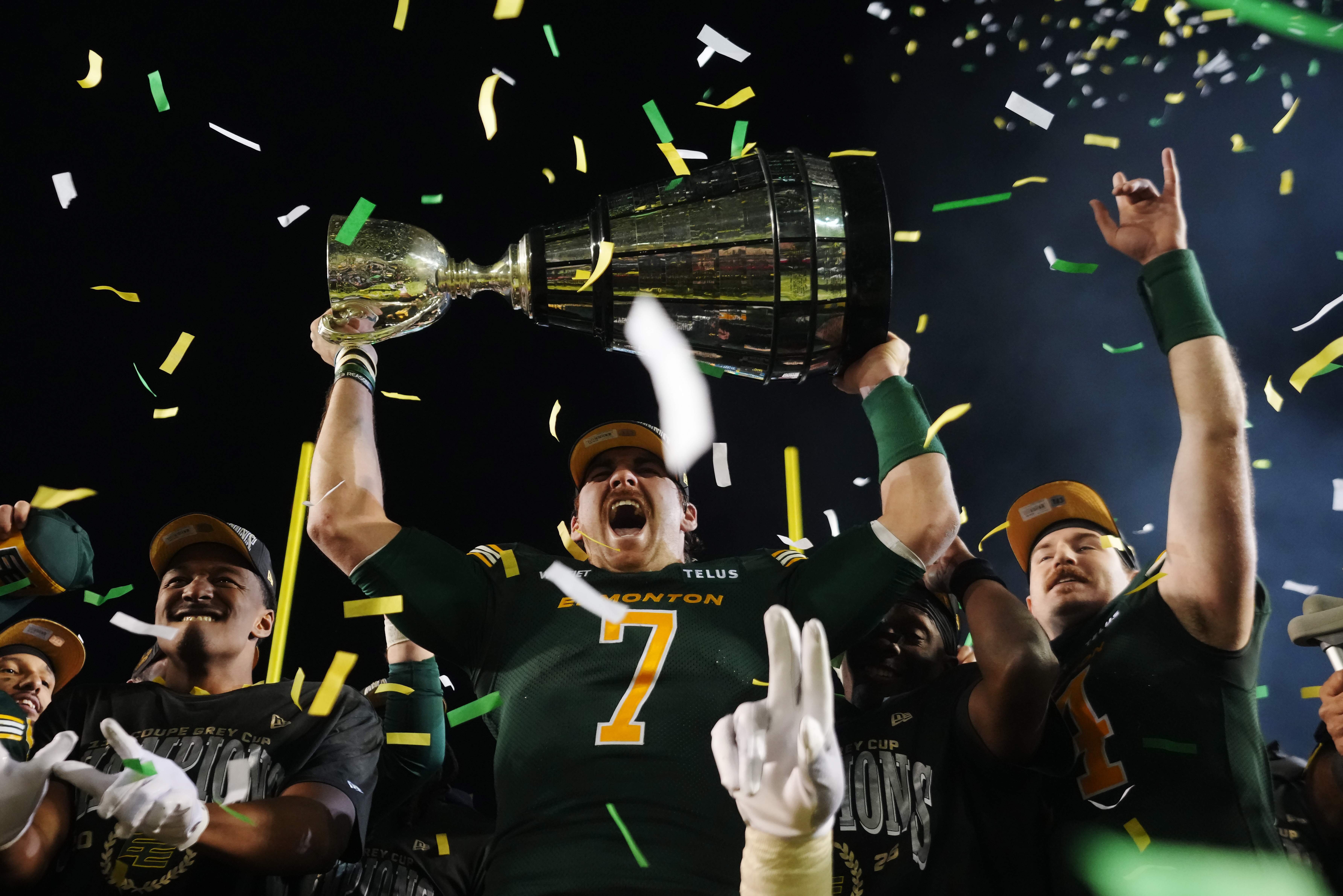
Handing a consolation trophy to a receiver on the losing side of a championship game is not an act of sportsmanship. It is an admission that the league’s voting bloc fundamentally misunderstands how championship football is won.
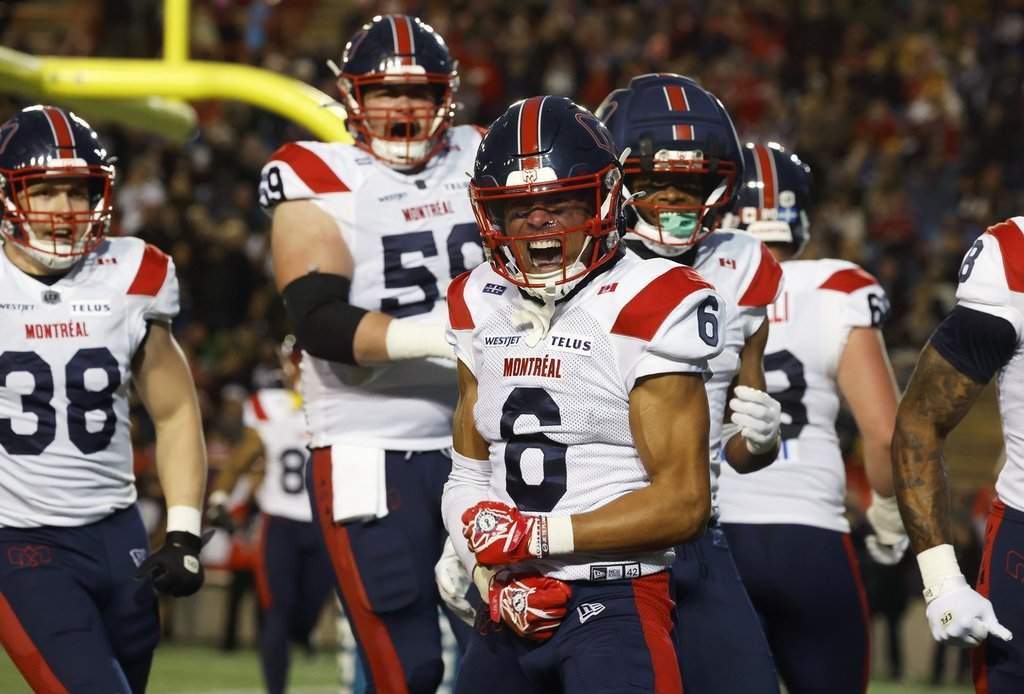
When Montreal Alouettes wideout Tyson Philpot was named the Grey Cup’s Most Valuable Canadian following a defeat—a rare feat mirroring his own heroics in 2023 when he actually won the ring—the mainstream sports press immediately defaulted to its favorite lazy narrative. They called it a "silver lining." They praised his grit. They pointed to the box score, nodded at the reception totals, and congratulated themselves for recognizing individual brilliance in the face of collective failure. Discover more on a similar subject: this related article.
They missed the entire point of three-down football.
Volume statistics in a trailing game script do not equate to championship value. In the Canadian Football League, where the clock stops inside three minutes and the field is twenty yards wider than its American counterpart, a passing attack playing from behind will naturally accumulate inflated yardage against soft zone coverage. Rewarding a player for piling up catches while his team fails to control the line of scrimmage or finish drives in the red zone isn't honoring excellence. It is confusing activity with impact. Additional journalism by CBS Sports delves into related views on the subject.
The Consolation Trophy Fallacy
The Grey Cup Most Valuable Canadian award—historically known as the Dick Suderman Trophy—was never meant to be a participation ribbon for the losing locker room’s brightest spot. Yet every few years, voters fall into the exact same trap. They look at a stat sheet, see a Canadian receiver with eight or nine grabs and a hundred-plus yards, and ignore the actual leverage of those plays.
Let’s strip away the sentimentality and look at football mechanics.
When a team falls behind in the second half of a Grey Cup, defensive coordinators shift into preventative architectures. They trade real estate for time. They concede the underneath routes, rally to the tackle, and force the trailing offense to execute twelve-play drives while the clock bleeds out. A talented slotback like Philpot—who possesses elite short-area quickness and reliable hands—will feast in those windows. He will catch seven-yard hitches. He will convert second-and-sixes between the hashes. The box score will swell.
Meanwhile, the winning team’s Canadian linemen, ratio-breaking linebackers, or situational running backs are quietly suffocating the game. Their contributions don't show up in fantasy-friendly columns, so the voting pool ignores them.
I have sat in enough film rooms and front-office draft meetings to watch coaches tear apart tape that fans and beat writers celebrated the night before. A receiver can log 110 yards on 14 targets and still grade out negatively if two of those misses happened on second-and-short in the red zone, or if his route depth failed to clear the line to gain against Cover 3. Box scores are liars. In a championship game, only high-leverage snaps matter.
The Ratio Distortion
To understand why this voting habit is so corrosive, you have to understand the CFL’s National ratio rules. Under league bylaws, every roster must start a mandatory minimum of National (Canadian) players, with specific snap-count thresholds required across the game.
Because Canadian quarterbacks are functionally non-existent at the starter level, smart general managers build their National core inside-out:
- Offensive Line: Controlling the trench with domestic guards and centers allows teams to spend American import spots on edge rushers and boundary corners.
- Interior Defensive Line & Linebackers: Domestic players who can hold the point of attack against the run free up the secondary to play aggressive man coverage.
- Special Teams: Field position in three-down football—where a missed field goal can still yield a rouge and a 35-yard punt return flips the entire geometry of the field—is governed almost entirely by National depth players.
When voters hand the Most Valuable Canadian trophy to a wide receiver on the losing team simply because he caught passes in a losing effort, they validate a shallow, Americanized view of the sport. They treat the CFL like a miniature NFL, ignoring the structural realities of the ratio that actually decide who lifts the Grey Cup.
Why Voters Keep Falling for the Box Score Trap
The root of the problem isn't malice; it's structural laziness in how championship awards are balloted.
Grey Cup MVP and Most Valuable Canadian ballots are submitted in the final minutes of the fourth quarter, often before the final whistle even blows. Reporters are scrambling to file game stories on tight deadlines. Nobody is watching all-22 coaches' film. Nobody is calculating Expected Points Added (EPA) per target or tracking pass-protection efficiency on third-and-two.
They look at the live stat feed on their laptops. They sort by receiving yards. They pick the highest-ranking Canadian name on the sheet.
Imagine a scenario where a Canadian left guard on the winning team pitches a shutout against an All-CFL defensive tackle for sixty minutes, paving the way for 160 rushing yards that ice the fourth quarter. That guard will never win the Dick Suderman Trophy. He doesn't have a stat column. Voters can't quantify a sealed B-gap in thirty seconds while trying to write an 800-word gamer before the locker rooms open.
So the trophy goes to the skill-position player with the loudest numbers, even if his team walked off the turf empty-handed.
The Ghost of 2023
Part of the narrative inertia around Philpot stems from his legitimate heroics in the 110th Grey Cup in Hamilton. In that game, Philpot caught the game-winning touchdown with 13 seconds left to beat the Winnipeg Blue Bombers, capping a performance where every single yard carried maximum championship equity. He earned both the ring and the hardware that night.
Voters love a sequel. When Philpot puts up volume in a subsequent Grey Cup appearance, the media already has the pre-written storyline loaded in the chamber. The hometown kid does it again. Philpot shines on the biggest stage.
Pre-baked narratives are the enemy of accurate evaluation. The 2023 performance was defined by situational clutch play that swung win probability by over 60 percent on a single snap. A high-volume performance in a loss—where the offense stalls out in the red zone and settles for field goals while the opponent scores touchdowns—is the exact opposite. Treating them as equivalent diminishes what made his 2023 title run genuinely historic.
What Championship Value Actually Looks Like in Three-Down Football
If you ask any veteran CFL defensive coordinator—men like Rich Stubler in his prime or Noel Thorpe—what actually keeps them awake the night before a Grey Cup, they will never say "a slot receiver catching six-yard outs."
They worry about three things:
- Second-Down Conversion Rate: In a league with only three downs, second-and-seven is a passing down where the defense dictates the terms. Winning offenses stay in second-and-four or better. That happens because of interior blocking and physical backs, not late-game catch totals.
- Red-Zone Touchdown Efficiency: Kicking field goals from the 15-yard line is how you lose Grey Cups. The field shrinks in the red zone—the 20-yard end zone helps, but vertical space disappears quickly. Receivers who cannot win contested catches in tight windows inside the ten-yard line are liabilities when the game is on the line.
- Turnover Margin and Hidden Yardage: One dropped punt, one missed block on a blitz pickup, or one penalized hold that negates a first down shifts win probability more than five uncontested catches between the twenties.
When a team loses the Grey Cup, it is almost always because they lost at least two of those three battles. By definition, their offensive engine failed to solve the opponent's defensive blueprint when the stakes were highest.
Dismantling the "He Did Everything He Could" Defense
Whenever someone pushes back against a losing-team MVP award, the standard rebuttal is predictable: Football is a team sport. One player can't play defense or block for himself.
That excuse holds water in baseball, where a pitcher can throw eight scoreless innings and lose 1-0 because his lineup struck out fifteen times. It holds water in hockey, where a goaltender can stop 48 of 49 shots in a double-overtime loss.
It does not hold water for a wide receiver in football.
A receiver is entirely dependent on the ecosystem around him. His targets are dictated by the offensive coordinator's play-calling, the offensive line's pass protection, the quarterback's progression reads, and—most critically—the opposing defense's coverage shell. When an offense falls behind, the defense wants the quarterback to throw short completions in bounds to keep the clock moving. The receiver isn't beating the defense; he is cooperating with the defense's clock-management strategy.
Crediting a receiver for accumulating catches in a losing game script is like crediting a poker player for winning small blinds while bleeding out his stack on the river.
The Uncomfortable Truth About Domestic Star Power
There is an unspoken commercial motive behind these votes, and anyone who has spent time around league marketing departments knows it. The CFL desperately needs recognizable Canadian superstars.
For decades, the league’s biggest marketable faces have predominantly been American quarterbacks—Doug Flutie, Anthony Calvillo, Ricky Ray, Bo Levi Mitchell, Zach Collaros. While fans love them, the league’s broadcast partners and sponsors constantly hunt for homegrown heroes who can anchor national ad campaigns from Vancouver to Halifax.
Tyson Philpot—young, articulate, bilingual-market friendly in Montreal, part of a Canadian football family alongside his twin brother Jalen and father Cory—is a marketing department’s dream. Giving him national hardware on the league's biggest broadcast night keeps his face on highlight reels and promotional graphics all offseason, regardless of the final score.
I understand the business impulse. Growing the domestic brand matters for a nine-team league fighting for relevance against the NFL and NHL.
Still, sacrificing analytical integrity for marketing convenience erodes the credibility of the awards. Fans aren't stupid. They watched the game. They saw which team controlled the fourth quarter, which defense forced the critical punts, and which players actually dictated the outcome. When the postgame ceremony hands a trophy to a player from the losing side while the winning team’s Canadian standouts watch from the sidelines, it feels manufactured.
To Be Fair: The Rare Exceptions That Prove the Rule
Does a player on the losing side never deserve championship recognition? Of course exceptions exist, though they are far rarer than voters pretend.
History gives us one undeniable benchmark: Chuck Howley in Super Bowl V, or closer to home, rare Grey Cup performances where a single player single-handedly kept a vastly inferior roster competitive until the final whistle through explosive, game-altering plays.
For a losing player to legitimately warrant Most Valuable Canadian honors, three strict conditions must be met:
- Explosive Play Dominance: The yardage must come from chunk plays—30-plus-yard gains, broken tackles after the catch, or vertical shots that flip field position instantly—not high-volume, low-depth checkdowns.
- Red-Zone Conversion: The player must directly account for touchdowns, not stalled drives.
- Absence of a Dominant Winner: The winning roster must have distributed its domestic contributions so evenly across twelve different players that no single Canadian standout separated himself from the pack.
Unless all three boxes are checked, the trophy belongs on the winning podium. Period.
How to Fix Grey Cup Voting Before Next November
If the CFL wants its championship hardware to carry actual weight rather than serving as a box-score popularity contest, the voting process needs an immediate overhaul.
First, delay the ballot submission until ten minutes after the final whistle. Forcing writers to submit votes with four minutes left in the fourth quarter guarantees they miss the highest-leverage sequence of the entire season. A ten-minute buffer allows voters to see how the game actually closes out—who makes the final stop, who converts the game-sealing first down, and whose stats were empty calories.
Second, include mandatory situational metrics on the live media stat sheet. Don't just show raw receptions and yards. Display yards after catch (YAC), first-down conversions, red-zone targets, and fourth-quarter production. Force voters to look at when and where the yards happened, not just the total sum.
Third, establish a clear tie-breaker principle favoring winning impact. Make it an explicit directive to the voting committee: when two players have comparable statistical footprints, the tie goes to the player whose contributions resulted in a championship ring.
Tyson Philpot is a phenomenal football player with a long career ahead of him, and he will likely win more Grey Cups before he hangs up his cleats. He doesn't need pity hardware from a game his team lost. Stop rewarding empty box-score volume in defeat, and start honoring the players who actually win the football game.