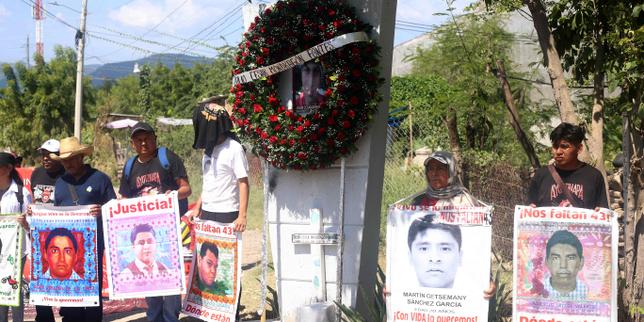
Ten years have passed, yet the ghosts of Iguala refuse to rest. When forty-three students vanished into the dark September night of 2014, the shockwaves shook Mexico's political foundations. Families demanded answers. The government offered lies. What followed was a decade of cover-ups, compromised investigations, and institutional stonewalling that exposed the raw rot at the core of the state.
If you think this is just another cold case buried in bureaucratic red tape, you're missing the entire point. Ayotzinapa isn't history. It's an ongoing wound. Every new arrest, every newly identified suspect, and every leaked military document reminds the public that the machinery of power went to extraordinary lengths to protect the guilty.
The Night That Changed Everything
The timeline of September twenty-sixth, 2014, remains etched in infamy. Students from the Raúl Isidro Burgos Rural Teachers' College of Ayotzinapa traveled to Iguala, Guerrero, planning to commandeer buses for a protest in Mexico City. Local police didn't just stop them. They ambushed them.
Gunfire erupted. Six people died on the spot. Forty-three young men were rounded up, bundled into police cruisers, and handed over to local cartel enforcers belonging to Guerreros Unidos. Then they vanished.
The official narrative pushed by the Enrique Peña Nieto administration was insulting in its absurdity. Investigators claimed local cartel members murdered the students, tossed their bodies into a garbage dump in Cocula, and incinerated them in a blazing pyre so intense that virtually no forensic trace remained. Officials called it the historical truth. Everyone with half a brain knew it was a fairy tale designed to close a messy file.
Why the Official Story Fell Apart
Independent experts didn't buy the government's convenient bonfire theory. The Interdisciplinary Group of Independent Experts (GIEI) stepped in alongside forensic specialists from Argentina to pick apart the official story.
Physics didn't lie. Chemistry didn't lie. Independent scientists proved that burning forty-three human bodies to ash in an open dump required an astronomical amount of fuel and oxygen that simply wasn't present. Witnesses reported torture. Evidence was tampered with. Crime scenes were manipulated before investigators even arrived.
The state wanted a quick closure. Instead, they manufactured a scandal of monumental proportions. When independent monitors pointed out these glaring fabrications, government officials retaliated, spying on human rights defenders and forcing investigators out of the country.
The Military and Institutional Cover-Up
You cannot understand Ayotzinapa without looking directly at the military's role. For years, the armed forces maintained a wall of absolute silence. They claimed they had no presence, no operational awareness, and no responsibility for what happened in Iguala that night.
That lie crumbled piece by piece. Telecommunications data, internal military logs, and whistleblower testimonies revealed that battalion personnel watched the events unfold in real-time. They monitored the student movements. They tracked the police communications. Some soldiers allegedly even collaborated directly with criminal elements operating in the region.
When prosecutors finally tried to issue arrest warrants for high-ranking military officers, political interference reared its ugly head. Files were redacted. Warrants were mysteriously canceled or scaled back. The institutional reflex to protect the uniform outweighed the moral imperative to deliver justice.
New Suspects and Ongoing Arrests
The investigation didn't freeze. Even as political administrations shifted under President Andrés Manuel López Obrador and later Claudia Sheinbaum, investigators continued hunting for missing pieces. New suspects keep emerging from the shadows.
Recent breakthroughs have focused on identifying local police chiefs, municipal officials, and cartel operators who managed the logistics of the cover-up. Prosecutors have pieced together financial trails and witness statements pointing to regional politicians who gave orders or looked the other way.
Every time a new suspect gets cornered, the network of complicity shrinks. Yet, the core frustration remains. Arresting low-level enforcers doesn't satisfy families who want the masterminds behind bars. Identifying suspects is a step forward, but trials must follow through with actual convictions to mean anything.
What Real Justice Looks Like Now
The tragedy of Ayotzinapa exposes the dangerous intersection of organized crime and state power in Latin America. Cartels don't operate in a vacuum. They thrive because corrupt police forces, complicit politicians, and compromised military units provide them with operational safety.
Families of the missing students have spent over a decade marching under pouring rain and scorching sun. They don't want empty rhetoric from politicians. They want the truth about where their sons are, and they want every single person involved in the conspiracy held accountable.
Stopping corruption requires tearing down the walls of institutional impunity. Until the state stops shielding its own military and political elite, the shadow of Iguala will hang over every election, every reform promise, and every claim of democratic progress.
Do not look away from Ayotzinapa. The fight for truth matters.


