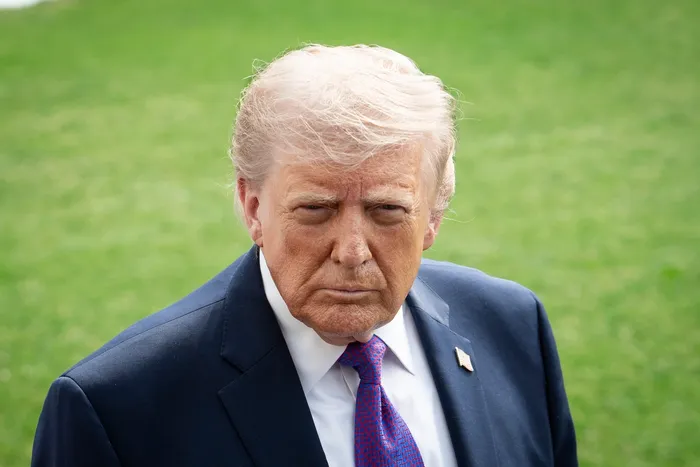
Donald Trump has secured a fragile ceasefire between Israel and Lebanon, leveraging a mix of personal diplomacy and the threat of economic isolation to halt a conflict that has defied international mediation for over a year. While the surface-level narrative credits simple dialogue, the reality involves a high-stakes squeeze on regional players who found themselves caught between the outgoing administration’s inertia and the incoming president’s unpredictable brand of "maximum pressure." This agreement does not just silence the guns. It resets the power dynamics of the Levant by forcing Lebanon’s government to choose between sovereign control and its long-standing, forced alignment with paramilitary interests.
Power Without a Portfolio
The unique nature of this deal stems from its timing. Trump initiated these negotiations while still in the transition phase, bypassing traditional State Department channels to engage directly with Lebanese officials and Israeli leadership. This isn't how diplomacy usually works. Normally, an incoming leader waits for the formal handover of power to avoid violating the Logan Act or muddying the waters of current foreign policy.
Trump disregarded those norms. He understood that the warring parties were exhausted. Israel had achieved significant tactical victories against Hezbollah's leadership but faced the prospect of a grinding war of attrition in the mud of southern Lebanon. Conversely, the Lebanese state was staring down a total collapse of its remaining infrastructure. By stepping in early, Trump offered both sides an "out" that they couldn't take from the current administration, which many in the region viewed as too bogged down in procedural red tape to act decisively.
The Lebanese Lever
The lynchpin of the ceasefire is a renewed commitment to UN Resolution 1701, but with a sharper edge. For years, 1701 was a paper tiger. It mandated that only the Lebanese Armed Forces (LAF) and UN peacekeepers could carry weapons south of the Litani River. In practice, Hezbollah ignored it, building a sophisticated network of tunnels and missile sites right under the noses of the international community.
The new arrangement changes the enforcement mechanism. Trump’s team reportedly tied future financial aid packages and IMF debt restructuring for Lebanon—a country currently experiencing one of the worst economic depressions in modern history—directly to the LAF’s performance. If the Lebanese army fails to dismantle militia infrastructure, the money stops. This turns the Lebanese military from a passive observer into a stakeholder in the country’s survival. It is a brutal calculation. Either the Lebanese state asserts its monopoly on force, or it watches its economy evaporate.
Israel’s Tactical Pivot
For Prime Minister Benjamin Netanyahu, the ceasefire provides a necessary breathing room. The Israeli Defense Forces (IDF) have spent months engaged on multiple fronts. While the air campaign in Lebanon was devastatingly effective, the ground reality was becoming increasingly complex.
Israel’s primary objective was the return of its citizens to the northern Galilee. This requires more than just a pause in rocket fire; it requires a physical buffer zone that the residents can trust. Trump’s assurance to Israel reportedly includes a "side letter" or a memorandum of understanding that grants Israel the right to act unilaterally if the Lebanese government fails to prevent a re-emergence of threats. This is a significant departure from previous international agreements that often required Israel to wait for a UN investigation before responding to cross-border incursions.
The Iranian Variable
Tehran's silence during these negotiations has been deafening. Usually, any deal involving Lebanon requires a nod from the Islamic Republic, given their deep ties to the political and military structures in Beirut. However, the shadow of a second Trump term has forced a recalibration in Tehran.
The Iranian leadership remembers the "maximum pressure" campaign of 2018. They are currently dealing with internal unrest and a crippled economy. They cannot afford a direct confrontation with an American administration that has shown it is willing to use targeted strikes against high-level officials. By allowing the ceasefire to move forward, Iran is effectively conducting a tactical retreat, preserving what is left of its influence in Lebanon rather than risking a total loss through continued escalation.
The Verification Gap
Despite the fanfare, the deal rests on a shaky foundation of verification. The history of the Middle East is littered with ceasefires that lasted only as long as it took for the participants to re-arm. The current plan relies on an international monitoring committee, likely led by a combination of French and American oversight, to ensure compliance.
There is a significant hurdle here. The Lebanese Armed Forces are competent but underfunded and politically divided. Asking them to move against a domestic force that is arguably better equipped and more ideologically driven is a tall order. If the LAF enters a village in the south and finds a hidden stockpile of Grad rockets, will they seize it? Or will they look the other way to avoid a civil war?
Trump’s approach bets on the idea that the threat of American withdrawal and renewed sanctions will be enough to keep everyone in line. It is a high-risk gamble that assumes economic incentives can outweigh decades of sectarian loyalty.
Rebuilding From the Rubble
The physical cost of the conflict has been staggering. Entire villages in southern Lebanon have been leveled, and northern Israel remains a series of ghost towns. The ceasefire includes provisions for reconstruction, but the flow of capital will be strictly monitored to prevent funds from being diverted to military use.
This creates a new kind of "peace through prosperity" experiment. By flooding the border regions with development aid that is contingent on peace, the deal attempts to create a civilian barrier against future conflict. If the local population sees that their homes and businesses are being rebuilt specifically because of the ceasefire, they may be less likely to support the presence of non-state actors in their midst. It is an old strategy, but one that has rarely been applied with this level of blunt-force economic pressure.
The Role of Regional Arab Powers
One cannot overlook the quiet involvement of Gulf states like Saudi Arabia and the UAE. These nations have been hesitant to bail out Lebanon in the past, citing the heavy influence of Iran-backed groups in the government. Trump has reportedly been working the phones with Riyadh, suggesting that a stabilized Lebanon could be a candidate for broader regional integration.
If Saudi Arabia agrees to reinvest in Lebanon, it would provide the final piece of the puzzle. The Gulf monarchs have little interest in seeing another failed state on the Mediterranean. They want stability for their own ambitious economic projects. By aligning the ceasefire with the interests of the region's wealthiest players, Trump has created a coalition of the willing that extends far beyond the borders of the Levant.
The Long Road to Enforcement
The next sixty days will be the true test. This period is designated for the gradual withdrawal of Israeli forces and the deployment of the Lebanese army to the south. It is a delicate dance. Any small skirmish or a stray rocket from a rogue cell could shatter the agreement.
The transition team has made it clear that they will not tolerate "accidental" violations. This lack of ambiguity is intentional. In previous years, the U.S. often sought to "de-escalate" by urging restraint from both sides. The new directive appears to be different: the terms are set, and the consequences for breaking them are pre-emptively defined. This shift from mediation to enforcement is the defining characteristic of this new diplomatic era.
The Geopolitical Ripple Effect
What happens in Lebanon never stays in Lebanon. This ceasefire sends a clear message to other actors in the region, including the Houthis in Yemen and militias in Iraq. The message is that the era of open-ended, low-intensity conflict may be coming to a close, replaced by a more transactional and forceful American foreign policy.
Critics argue that this approach ignores the underlying grievances that fuel these conflicts in the first place. They claim that by focusing solely on security and economics, the deal fails to address the political disenfranchisement felt by many in the region. There is some truth to this. A ceasefire is not a peace treaty. It is a cessation of hostilities that buys time.
The Burden of Proof
The success of this move will be measured not by the signing ceremony, but by the silence of the border in six months. If the rocket sirens in Haifa remain quiet and the shops in Tyre reopen, the gamble will have paid off. However, if the LAF proves unable or unwilling to hold the line, the region will find itself back at square one, but with a significantly more volatile Washington watching from the sidelines.
The Trump administration has bypassed the polite fictions of traditional diplomacy to deliver a result that seemed impossible just weeks ago. They have traded nuances for results, betting that the threat of a stick is more effective than the promise of a carrot. For the people living in the crosshairs of this conflict, the "how" matters far less than the "now." The guns have stopped. The challenge now is making sure they stay that way in an environment where trust is the rarest commodity of all.
Hezbollah now faces an existential crossroads. Deprived of their primary theater of "resistance" and under pressure from a domestic population that is tired of being used as a human shield, the group must decide if it wants to remain a military force or transition fully into a political entity. The deal is designed to make the latter the only viable path to survival. The Lebanese state must now prove it is a state in more than name only.
The international community is watching to see if this "disruptor" style of foreign policy can yield a sustainable peace or if it is simply a temporary lull before an even larger storm. The blueprint is clear, the stakes are documented, and the players have been briefed. Enforcement is the only metric that remains.