The air inside the county clerk’s office usually smells of old paper and industrial floor wax. It is a quiet place, a cathedral of administrative boredom where the most exciting event is often a jammed printer. But lately, that silence has been replaced by a low, vibrating hum of anxiety. For decades, the process of voting in Nebraska was a clockwork ritual, as predictable as the harvest cycles. You showed up, you signed the book, you fed a piece of paper into a machine, and you went home.
That predictability just died.
In a political upset that has sent tremors through the limestone foundations of the State Capitol in Lincoln, a sitting Secretary of State—the very architect of the state's voting systems—was just unseated. This wasn't a loss to a traditional platform of tax cuts or infrastructure. It was a loss to a ghost. It was a loss to the pervasive, unshakeable feeling that the machines can’t be trusted.
The Architect and the Outsider
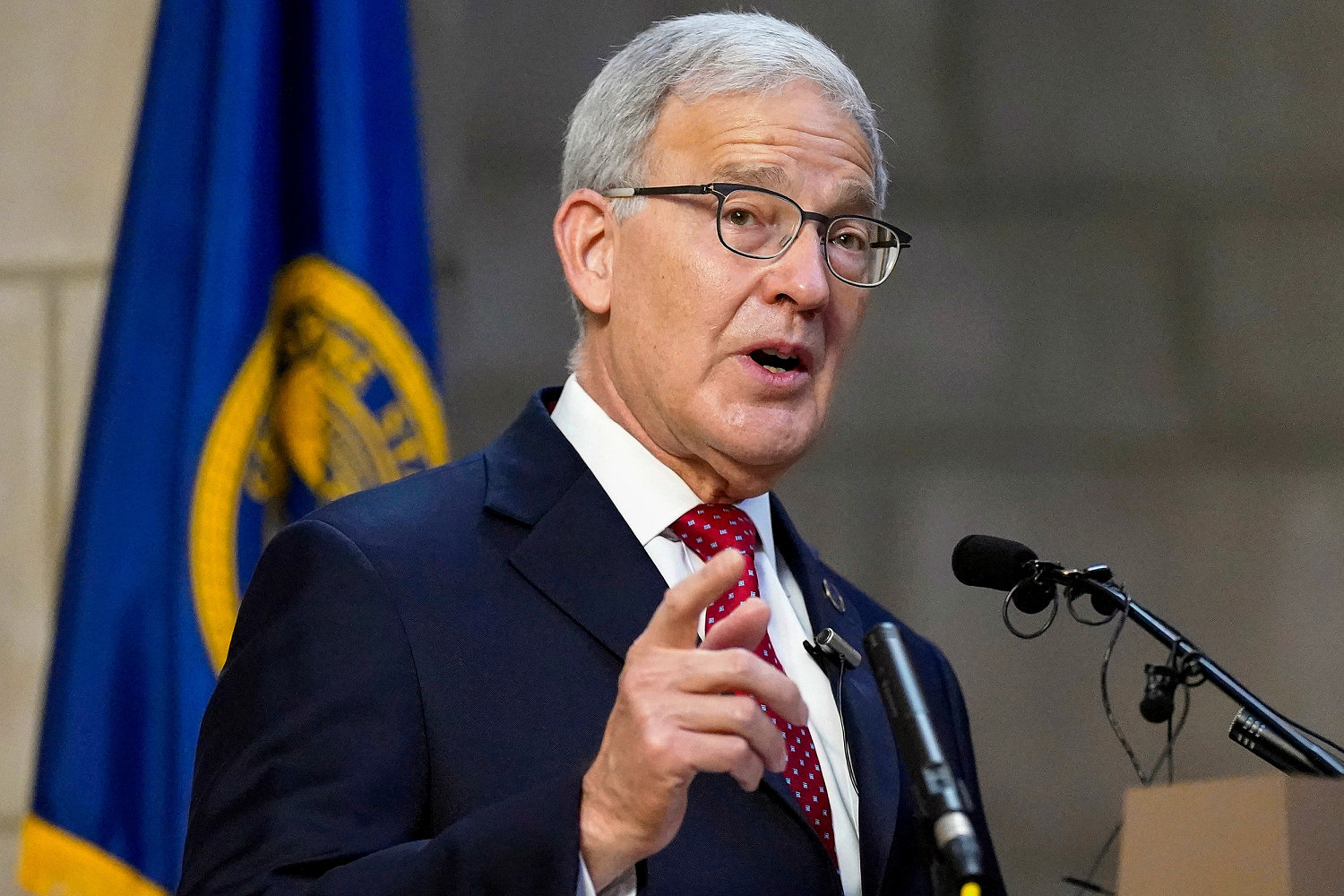
Bob Evnen didn't look like a man about to lose his job. As the incumbent, he carried the resume of a true believer in the system. He spent his term defending the integrity of Nebraska’s elections, insisting that the multi-layered security protocols were ironclad. He spoke in the language of facts, data points, and logic. He pointed to the lack of evidence. He pointed to the audits.
His challenger, Robert J. Borer, spoke a different language.
Borer didn't need a spreadsheet to win. He needed a story. He tapped into a deep-seated suspicion that has been simmering in the rural coffee shops and town squares far away from the legislative chambers. His campaign wasn't built on policy tweaks; it was built on a fundamental rejection of the status quo. He campaigned on the idea that electronic voting machines are a black box—a "black hole" where trust goes to die.
Consider a hypothetical voter named Elias. Elias has lived in the same Nebraska county for sixty years. He trusts his neighbors. He trusts his local sheriff. But Elias stares at a digital screen or a high-speed scanner and sees something alien. He sees a vulnerability that he cannot touch or verify with his own eyes. When a candidate like Borer tells Elias that his intuition is right—that the machines are the problem—Elias doesn't just listen. He feels heard.
This primary wasn't an election about who would be the best administrator. It was a referendum on reality itself.
The Mechanics of Doubt
To understand how a seasoned incumbent loses to a challenger focused on election security, you have to look at the machinery—both literal and metaphorical. Nebraska uses optical scanners. These are the devices that "read" the bubbles you fill in with a black pen. On paper, this is a hybrid system: a physical trail backed by digital speed.
Evnen’s defense was grounded in the physical reality of those paper ballots. He argued that because the paper exists, the digital tally can always be verified. But in the modern political climate, "can be verified" is not the same as "is trusted."
The skepticism isn't just about the hardware. It’s about the software, the proprietary code, and the invisible hand of technology. Borer’s campaign leaned heavily into the demand for hand-counted paper ballots. It is a slow, arduous, and arguably more error-prone method, yet it offers something technology cannot: the sight of a human hand holding a human choice.
A House Divided by a Firewall
The tension in this race reflects a broader American fracture. On one side, you have the institutionalists. They are the ones who believe in the "firewall"—the idea that the system is protected by layers of encryption, air-gapped computers, and bipartisan oversight. They see the skepticism as a dangerous fire being stoked for political gain.
On the other side are the skeptics. They don't care about the firewall. They believe that if a system can be built by a human, it can be broken by a human. To them, the refusal to move back to manual counting is a sign of a cover-up, not a commitment to efficiency.
When the results started trickling in, the map told the story. The urban centers, where the complexity of modern life is often accepted as a necessity, held some ground for the incumbent. But in the vast stretches of the state, where self-reliance is a religion, the message of "taking back the vote" resonated with the force of a gale-out-of-the-north.
The incumbent was trapped in a paradox. The more he defended the security of the machines, the more his detractors claimed he was part of the very system that needed dismantling. You cannot use logic to defeat a feeling of betrayal.
The Weight of the Invisible
What is the cost of this shift? It isn't just a change in personnel. It is a change in the social contract.
When we vote, we are performing an act of faith. We are dropping a piece of ourselves into a box and trusting that it will be counted fairly, even if our side loses. That faith is the only thing that keeps the peace. If the person running the elections is elected specifically because they don't trust the elections, the foundation begins to crack.
Imagine the poll workers. Usually, these are retirees, civic-minded neighbors who show up at 5:00 AM for the price of a cheap lunch and a sense of duty. Now, they find themselves on the front lines of a cold war. They are the ones being watched. They are the ones being questioned. The administrative boredom of the past has been replaced by a high-stakes scrutiny that feels personal.
The primary result in Nebraska is a signal. It tells us that for a significant portion of the electorate, the "standard" way of doing things is no longer an option. They would rather have the slow, the manual, and the laborious if it means they can see the gears turning.
The Harvest of Suspicion
The sun sets over the Platte River, casting long, orange shadows across the fields. In a few months, the general election will arrive. The winner of this primary will carry the banner of a movement that views the last decade of election technology as a mistake.
This isn't just about Nebraska. This is a preview. It is a case study in what happens when the "facts" provided by an institution no longer align with the "truth" felt by the people.
We are moving into an era where the process of counting is becoming more important than the count itself. The mechanics of democracy are being stripped down to the studs, and there is no guarantee that the people doing the stripping know how to put the house back together.
The machines sit in storage for now, cold and silent. But the argument over what they are doing inside their metal casings is louder than it has ever been. It is a noise that won't be silenced by an audit or a press release. It is the sound of a public that has decided it no longer wants to take the expert’s word for it.
They want to see the ballots. They want to touch the paper. They want to know, with a certainty that only a human hand can provide, that their voice wasn't lost in the wires.
The tragedy of the situation is that in the quest for perfect security, we may be sacrificing the very thing that makes the system work: the willingness to accept the outcome. Without that, the ballot is just a piece of paper, and the box is just a crate.
The lights in the Secretary of State’s office will eventually go out tonight. A new occupant is coming. They will bring with them a mandate to look for ghosts in the machines. Whether they find any or not is almost beside the point. The hunt itself has already changed the landscape.
The quiet ritual is over. The noise has just begun.